
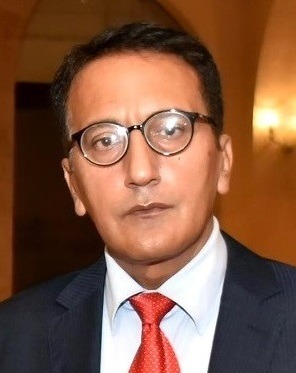
Tazeen Akhtar
Japan the largest trade partner of Pakistan is not only fouces upon the trade but social, human, cultural side is equally important for the country and the same was in the center of a meeting and interaction of Ambassador of Japan H.E Akamatsu Shuichi with Pakistani media persons at the residence on 06 Feb 2026. H.E shared his vision for future cooperation with P2P relations and promotion of cultural and traditional bonds at the outset of 74 years of diplomatic relationd between the two countries.
Ambassador in his speech at the occasion, first of all expressed condolences for the victims of the blast at a masjid in outskirts of Islamabad. He wished early recovery of the injured and well being for them ahead. The staff of the embassy from different sections were also present.
Both countries established diplomatic relations in 1952. Since then the leaders of both sides have been visiting each other to further cementing the economic cooperation and mutual ties.
More than 80 Japanese companies are working in Pakistan in various sectors promoting the economic cooperation and employing more than 100,000 people. The number of Pakistanis living in Japan is more than 26 thousand including a large number of students. Trade volume, according to MOFA of Japan on 2023,
Exports: JPY 33.7 billion (cotton products, textile goods, chemical products etc.)
Imports: JPY 146.9 billion (automobiles, machinery, steel etc.)
Japan’s economic cooperation ,
Loans: 817.48 billion yen (up to 2023)
Grants: 307.59 billion yen (up to 2023)
Technical Cooperation: 67.05 billion yen (up to 2023)
H.E Shuichi, in his address,shared a robust agenda for 2026 and ahead, focusing on economic expansion, technological collaboration, and the legacy of the historic Osaka-Kansai Expo 2025.
Recounting his travels since arriving in November 2024—from Punjab and Sindh’s industrial hubs to Mohenjo-daro, Taxila, and the Northern areas—the Ambassador praised Pakistan’s cultural richness and warm people. “Each visit has left unforgettable memories and deep appreciation for its rich history and culture,” he said.
“One of the things that has impressed me most since I arrived in Pakistan is the trust and affection that the people of Pakistan have for Japan. This is the result of various factors such as 74 years of diplomatic relations, Japan’s support through ODA, the presence of Japanese companies, and the trust in Japanese products”, said the Ambassador.

Ambassador outlined his key priorities for the future of bilateral relations: expanding and deepening mutual understanding and cooperation through human-to-human interaction, strengthening economic ties, and promoting Japanese cuisine.
On the promotion of P2P relations, the Ambassador said that Pakistani youth is taking immense interest in Japan and noted that the number of young Pakistanis studying Japanese language has been increasing sharply, with over 1,000 candidates recently sat for every Japanese Language Proficiency Test.
The Ambassador highlighted economic synergy in AI and IT, noting Pakistan’s rapidly growing IT sector and Japanese companies’ efforts to connect with skilled professionals.
Following a successful AI seminar with NUST in Islamabad and the 8th Japan-Pakistan Government-Business Joint Dialogue in Tokyo, the Ambassador announced a Japan-Pakistan Business Seminar to be held on February 10, which responds to the concerns of Pakistani business people.
The Ambassador celebrated the success of the Pakistan Pavilion at the Osaka–Kansai Expo 2025, which won the Bronze Award for Exhibition Design and attracted 1.8 million visitors, fostering a new sense of closeness toward Pakistan among the Japanese public.
Looking ahead, he invited Pakistani people to engage with the 20th Asian Games and 5th Asian Para Games in Nagoya, Aichi Prefecture, in September-October 2026.
On culinary diplomacy, the Ambassador noted that Japanese cuisine—linked to Japan’s world top level life expectancy—is surging in popularity in Pakistan. “I often meet young Pakistanis who love it. While sushi and tempura are well-known, wagyu beef is gaining fans too. Sharing cuisines builds mutual understanding and friendship,” he emphasized.
Prof. Dr. Yasar Ayaz, Chairman of NCAI and Head of NUST’s Robotics Department, speaking on the occasion, praised Japan’s legacy of trust, quality, and reliability—rooted in teamwork, humility, work ethic, cleanliness, punctuality, respect, and traditions.
A MEXT scholarship alumnus with a PhD in Robotics from Tohoku University (2005-2009), Dr. Ayaz said he applied these values post-2009 return to Pakistan, building NUST’s top Robotics & AI department and founding NCAI.
Dr. Ayaz highlighted collaborations with Japanese universities and companies, including a Frailty Assessment System with Juntendo University and the Sakura Wheelchair Project with Saito Kobo—AI wheelchairs using EEG brain control, eyeball movement, and autonomous navigation, backed by JICA and University of Tokyo expertise.
At NCAI, Dr. Ayaz informed that his team deployed AI systems across Pakistan. He thanked Japan for scholarships enabling Pakistani students to study there, fostering a knowledge-based economy.
He mentioned the relevance of these AI systems in countering crime and improving the security to prevent the terror attacks like one that took more than 100 lives on the same day in Islamabad. He said, our AI system can be checked and installed to further strengthen the security from such attacks. He was confident that if our system is used , it can check such suicide bombers before they blast in the public.
This scribe , in one to one discussion with Ambassador, suggested HAIKU and IKEBANA events to be hosted jointly by the Pakistan in the World media group and the Embassy of Japan in coming weeks in Islamabad. He invited the Ambassador to his forums that are regularly held on bilateral relations in collaboration with the embassies on discussions how to promote the existing level of cooperation.
