
By:Nadeem Faisal Baiga
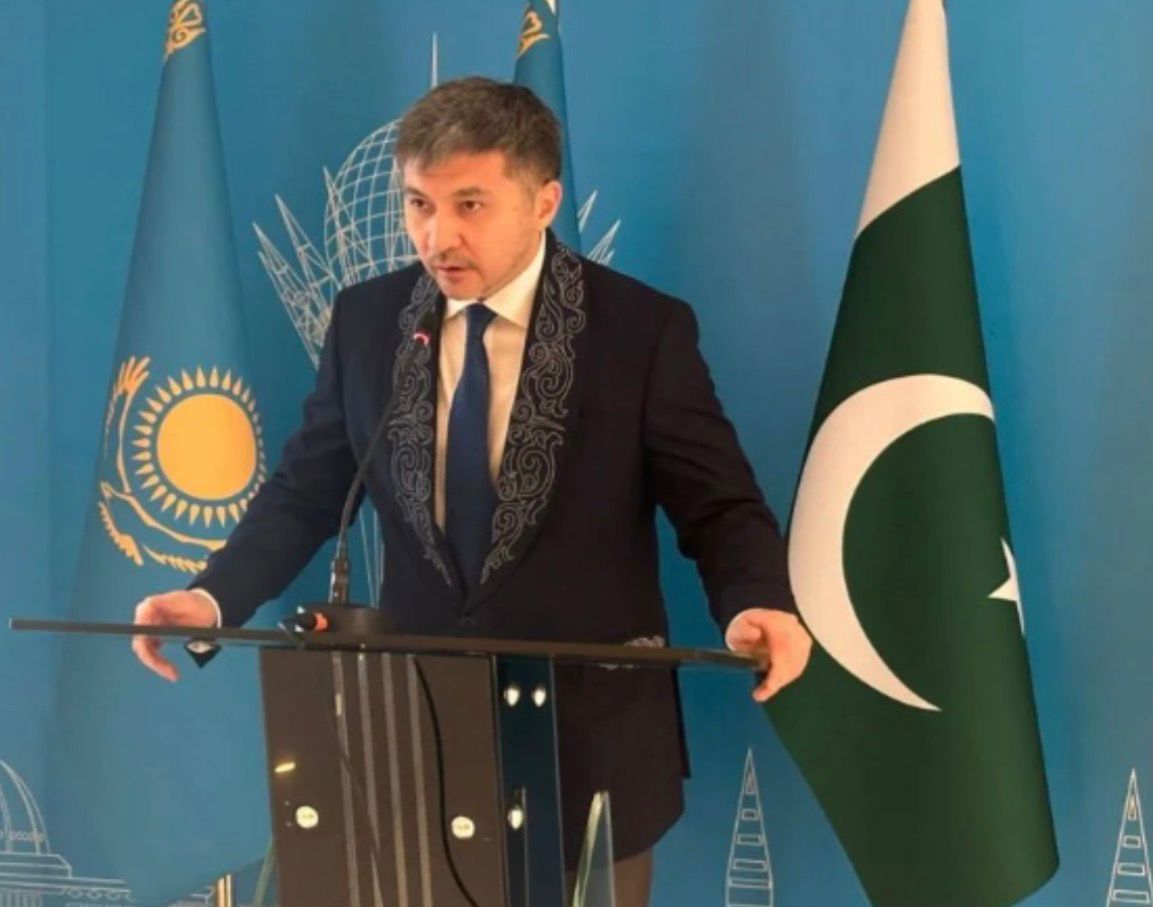
ISLAMABAD : The Institute of Strategic Studies Islamabad (ISSI), in collaboration with the Embassy of the Republic of Kazakhstan, hosted a high-level conference titled “Pakistan–Kazakhstan Relations: Post-Visit Reflections and Pathways for Strategic Cooperation” at the Movenpick Hotel Islamabad. The event marked the first major institutional follow-up to the historic state visit of Kassym-Jomart Tokayev to Pakistan.
The conference brought together ambassadors, policymakers, academics, and foreign policy experts from both countries to evaluate the outcomes of the presidential visit and identify actionable strategies for advancing bilateral cooperation across diplomacy, trade, connectivity, science, and culture.
In his welcome address, Ambassador Khalid Mahmood, Chairman of the ISSI Board of Governors, described President Tokayev’s February 2026 visit as a transformative moment that elevated bilateral ties to a strategic partnership. He highlighted convergence on key regional issues, including Afghanistan and Jammu and Kashmir, and underscored connectivity and transport corridors as priority areas. He also announced the signing of a Memorandum of Understanding between ISSI and Kazakhstan’s Foreign Policy Research Institute to institutionalize sustained strategic dialogue.
H.E. Yerzhan Kistafin characterized the presidential visit as the beginning of a “new chapter” in bilateral relations. He outlined concrete follow-up measures including operationalizing the joint declaration on strategic partnership, enhancing cultural and academic exchanges, strengthening business-to-business linkages, promoting direct air connectivity, and advancing the trans-Afghan railway and diversified Eurasian transport corridors.
Dr. Askhat Kessikbayev of the Turkic Academy emphasized the civilizational foundations of cooperation and called for expanded academic partnerships and joint research initiatives in sustainable development and water security. Prof. Dr. Muhammad Iqbal Choudhary, Coordinator-General of OIC-COMSTECH, highlighted Kazakhstan’s investments in higher education and scientific research and advocated science diplomacy and structured academic exchange programs as pillars of the partnership.
Mr. Fahad Haroon, Special Assistant to the Prime Minister, termed the summit a strategic reaffirmation of mutual trust, stressing the need for institutionalized follow-up mechanisms and sustained policy dialogue to ensure tangible outcomes.
During the first working session, officials discussed operationalizing the strategic partnership through a forthcoming Strategic Dialogue framework, a five-year roadmap for trade and economic cooperation, and progress on transit trade agreements. Pakistan’s export potential to Kazakhstan was estimated at US$1.7 billion, underscoring significant untapped opportunities.
Speakers identified connectivity as the central pillar of cooperation, linking CPEC, regional energy infrastructure, multimodal transport solutions, and regulatory harmonization. Enhanced collaboration in artificial intelligence, robotics, and medical imaging was also proposed as part of an innovation partnership aligned with Kazakhstan’s digital transformation agenda.
The second working session focused on economic integration and societal linkages. Experts described Pakistan as a maritime gateway and Kazakhstan as a Eurasian land bridge, calling for implementation-driven cooperation rather than symbolic agreements. Recommendations included visa facilitation, structured joint ventures, SME collaboration, tourism promotion, and deeper engagement within regional platforms such as the Shanghai Cooperation Organization.
In the concluding session, Engineer Khurram Dastgir Khan observed that bilateral relations are entering a decisive phase structured around political dialogue, security cooperation, trade and investment, transport and logistics, education and human capital, science and technology, cultural diplomacy, climate action, and regional coordination. He emphasized that the principal challenge now lies in execution rather than conceptualization.
Delivering the vote of thanks, Ambassador Khalid Mahmood underscored the importance of systematic implementation of the joint declaration and associated memoranda of understanding. He expressed appreciation to the Embassy of Kazakhstan and all participants, proposing structured follow-up engagements to ensure that the ambitious objectives of the strategic partnership are progressively realized.
