
By Junaid Qaiser
Navigating Pakistan’s economic landscape has never been straightforward. We often find that periods of advancement are followed by setbacks, leaving both policymakers and citizens searching for a sustainable way forward. In these times, one lesson stands out: we can’t achieve national progress through isolated efforts or political maneuvering. It takes unity, coordination, and a collective commitment to the future of our country.
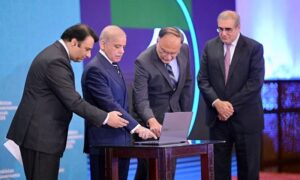
At the Pakistan Governance Forum 2026, Prime Minister Shehbaz Sharif highlighted the necessity of a “whole-of-government” strategy to tackle the economic challenges we face. His words reveal a broader truth about governance in Pakistan: structural issues like energy losses, tax inefficiencies, and slow export growth can’t be solved by a single ministry or agency. They require teamwork across the government and constructive collaboration with the private sector.
Pakistan’s economy is currently grappling with a mix of old and new challenges. The inefficiencies in the power sector are still draining billions from the country, while the tax system is struggling to keep up with compliance and growth. On top of that, for Pakistan to stay competitive in a fast-evolving global market, it needs to ramp up its investments in productivity, exports, and innovation. These issues are complex and call for ongoing, coordinated efforts to tackle them effectively.
What makes this moment particularly crucial is the understanding that economic advancement relies not just on policy choices but also on the political climate in which those policies are enacted. When national discussions are overshadowed by blame game and conflict, genuine reform often suffers. This leads to a situation where governments may change, but the underlying structural problems remain largely unaddressed.
Moving beyond this cycle is essential. Economic growth thrives in an atmosphere of stability and cooperation. Investors—whether domestic entrepreneurs or international partners—seek clarity, predictability, and confidence in the direction of policy. When institutions work together and political actors focus on solutions rather than accusations, the country sends a powerful signal that it is serious about reform.
Another important aspect of the prime minister’s remarks was the emphasis on the government’s role as a facilitator rather than a competitor in business. Around the world, successful economies are built on vibrant private sectors supported by effective governance. When governments concentrate on regulation, infrastructure, and enabling policies, businesses are better positioned to expand production, increase exports, and create jobs.
The Minister for Planning, Development and Special Initiatives, Ahsan Iqbal, underscored the need to transform dialogue into real reform. While speaking at the forum, he pointed out that the Pakistan Governance Forum was meant to be more than just a space for conversation; it aimed to create practical solutions for the country’s economic future. He expressed hope that if reforms are pursued consistently and with national unity, Pakistan could realistically aim to become a $1 trillion economy by 2035, especially if economic policies foster investment and ease the burden on businesses by lowering direct taxes.
For Pakistan’s fiscal health, it’s essential to broaden the tax base and maintain transparency in how revenue is collected. A solid tax system does more than just fill the coffers; it empowers the state to invest in crucial areas like development, education, and social welfare. Yet, making these improvements happen requires everyone to pitch in—businesses and citizens alike need to see tax compliance as a shared responsibility.
Moreover, Pakistan’s greatest strength lies in its people, particularly its youthful demographic. The swift growth of the IT sector highlights the amazing opportunities that arise when talent is matched with the right chances. By investing in technical education, vocational training, and digital infrastructure, Pakistan’s youth could become a key force in transforming the economy in the years to come.
None of these ambitions will come to fruition without a united effort. Economic recovery and long-term growth aren’t tasks that can be tackled by governments alone. They need a partnership between federal and provincial authorities, active collaboration with the private sector, and a political atmosphere that values national interests over party politics.
Pakistan has faced tough times before and has proven its resilience in bouncing back. The challenge now is to build on that strength by nurturing a spirit of cooperation that goes beyond institutional and political divides. If the country can shift from a blame game to a culture of teamwork, it won’t just stabilize its economy; it will also tap into the immense potential that has been just out of reach for too long.
