
By Junaid Qaiser
The first official meeting of the Board of Peace in Washington is happening at a crucial time for Gaza — and it’s also significant for how Pakistan is positioning itself diplomatically. While the focus is on a step-by-step approach to disarmament and rebuilding in the Palestinian territory, Pakistan’s involvement shows a larger strategy: they’re aiming to influence the new peace frameworks instead of just watching from the sidelines.
The Board’s agenda is ambitious but structured. A phased disarmament process is expected to begin with the dismantling of tunnels, followed by weapons production sites, heavy munitions, and ultimately small arms. The sequencing signals a recognition that durable security arrangements require verification and political calibration, not sweeping declarations. Alongside this framework, U.S. President Donald Trump has announced that member states are expected to pledge more than $5 billion for Gaza’s reconstruction and humanitarian needs. Thousands of personnel have reportedly been committed toward a UN-authorised stabilisation force and support for local policing structures.
For Pakistan, this isn’t uncharted territory. Over the past sixty years, it has sent more than 150,000 peacekeepers to various UN missions. This extensive experience gives Islamabad valuable insights into what makes multinational stabilization efforts work — and where they tend to stumble. So, when it comes to participating in the Board of Peace, it’s not just about being symbolic; it’s about drawing on a wealth of institutional knowledge.
On the diplomatic front, Pakistan holds a distinctive position. It remains engaged with the OIC while also interacting with major powers across different factions. In today’s fragmented global landscape, this ability to bridge divides is incredibly valuable. Islamabad can facilitate communication among groups that often find it hard to agree. Its presence in Washington signifies not just support for stabilizing Gaza but also a strong message that Muslim-majority countries should play a direct role in shaping the frameworks for post-conflict rebuilding.
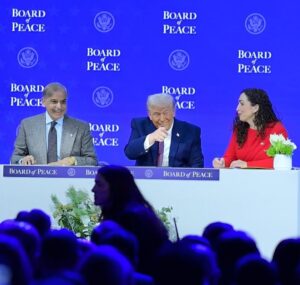
There is also a strategic dimension tied to statecraft and image. As a nuclear-armed country, Pakistan is often viewed through a narrow security lens. Engagement in a peace-oriented multilateral forum projects a different narrative — one that aligns strategic capability with responsible diplomacy. At the same time, such participation carries expectations. Nuclear status amplifies scrutiny, and constructive engagement within a UN-authorised framework reinforces Pakistan’s credentials as a mature actor in global security discussions.
Islamabad also brings experience in managing internal stabilization challenges. Over two decades, it has confronted insurgency and non-state actors through a combination of military action, rehabilitation initiatives, and institutional reform. While no model is flawless, lessons in counter-radicalisation and balancing security with civil governance are relevant to post-conflict environments like Gaza.
Economic diplomacy is likely to be another area where Pakistan can make a meaningful impact. Reconstruction goes beyond just building infrastructure; it also needs credible governance, economic revival, and strong institutions. During the Board’s discussions, Islamabad can push for reconstruction models that blend development with accountability, ensuring that Palestinian political aspirations are at the forefront, not sidelined.
Some observers have raised concerns that the Board of Peace might undermine existing UN mechanisms. However, the focus on UN authorization and coordination seems more about complementing rather than competing with them. For Pakistan, staying aligned with multilateral legitimacy is crucial. The country has consistently stated that stabilization should enhance — not overshadow — the broader political journey toward Palestinian statehood.
The Board of Peace meeting aims to align phased disarmament, international stabilization, and large-scale reconstruction within a single, coordinated roadmap. For Pakistan, participation marks a potential transition — from being primarily a peacekeeping contributor to becoming a policy influencer in emerging peace architectures.
In a world marked by institutional fatigue and geopolitical polarization, credibility matters. Islamabad’s engagement in the Board of Peace combines operational experience, geopolitical positioning, and symbolic stature.
For Gaza, the path ahead remains complex. But for the first time in years, stabilization is being discussed not as a temporary pause between crises, but as a structured process built on phased disarmament and shared international responsibility. That, in itself, is a measure of hope.
