
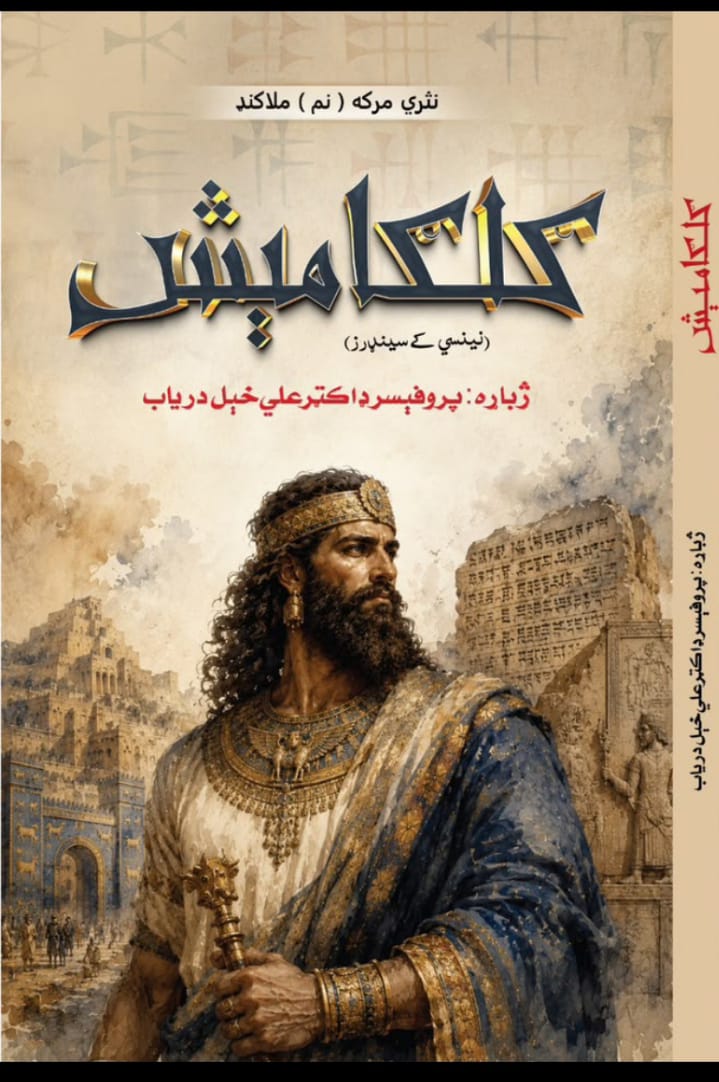
Gilgamesh is universally recognized as one of the oldest surviving masterpieces of world literature and is widely regarded as the earliest known epic in human history. Originating in ancient Mesopotamia, this monumental work explores enduring themes of kingship, friendship, mortality, human aspiration, and the timeless quest for wisdom and immortality. Its profound literary, historical, and philosophical significance has earned it a permanent place among the foundational classics of human civilization.
Dr. Ali Khel Daryab’s Pashto translation is based on the celebrated English version by Nancy K. Sandars, whose interpretation of Gilgamesh is internationally acknowledged for its literary excellence and accessibility. By rendering Sandars’ distinguished work into Pashto, Dr. Daryab has successfully introduced one of humanity’s greatest literary achievements to Pashto readers while strengthening the connection between Pashto literature and the broader heritage of world literature.
The most remarkable achievement of this translation is its linguistic and literary excellence. Rather than producing a literal, word-for-word rendering, Dr. Daryab has skillfully conveyed the epic’s emotional depth, philosophical richness, and artistic grandeur in fluent, natural, and elegant Pashto. His translation captures not only the meaning of the original text but also its tone, rhythm, and aesthetic appeal, allowing the work to read as an authentic literary masterpiece in its own right.
Equally impressive is the translator’s thoughtful selection of vocabulary, idiomatic expressions, and stylistic features. His command of Pashto enables him to preserve the intellectual and poetic atmosphere of the original while maintaining the beauty, dignity, and expressive power of the language. This careful balance between fidelity to the source text and literary readability reflects the craftsmanship of an accomplished translator.
Dr. Ali Khel Daryab deserves sincere appreciation for making this timeless epic accessible to the Pashto-speaking world. His translation enriches Pashto literary scholarship by bringing one of the earliest monuments of world literature into the language with remarkable clarity and artistic sensitivity. More than a translation, it is a significant cultural and literary contribution that broadens the intellectual horizons of Pashto readers and reinforces the place of Pashto among languages capable of embracing the world’s greatest classics.
This translation stands as a landmark achievement in Pashto literary translation. It is destined to remain an invaluable resource for students, scholars, researchers, and all readers interested in comparative literature, ancient civilizations, and the enduring legacy of world classics.
