
By Junaid Qaiser
There are certain moments in diplomacy when our hopes seem to overshadow the reality of the situation. The first official meeting of the Board of Peace in Washington feels like one of those significant occasions. After enduring months of war, heartache, and fragile ceasefires, the idea that world leaders are coming together with a structured plan for stabilizing Gaza offers a rare glimpse of something we’ve been longing for: cautious hope.
When Donald Trump announced that member states had pledged more than $5 billion for reconstruction and committed thousands of personnel to an International Stabilisation Force (ISF), it was a clear signal of intent. However, the true importance of this first summit lies not just in the impressive numbers. It’s about whether those commitments can actually lead to real security on the ground and restore dignity to the people of Gaza.
The February 19 meeting, hosted at the Donald J Trump Institute of Peace, marks the operational launch of a body that was proposed in September and formally endorsed by a United Nations Security Council resolution last November. Under the framework of a ceasefire that began in October, the Board has been authorised to help oversee stabilisation efforts and support Gaza’s transition from conflict to recovery.
The proposed structure is quite ambitious. Along with a multi-billion-dollar reconstruction fund, the ISF is set to implement its plans in phases, focusing on securing vital infrastructure, aiding local police, and allowing the National Committee for the Administration of Gaza to take charge of civil governance. US officials stress that the emphasis is strictly on Gaza. The primary aim is to reinforce the ceasefire and prevent a return to large-scale violence.
For Pakistan, this summit is particularly meaningful. Prime Minister Shehbaz Sharif, joined by Deputy Prime Minister and Foreign Minister Ishaq Dar, is attending with a clear purpose: to support credible peace initiatives while maintaining Pakistan’s long-held position on Palestinian self-determination. Islamabad has consistently championed a two-state solution and has a strong track record in UN peacekeeping operations.
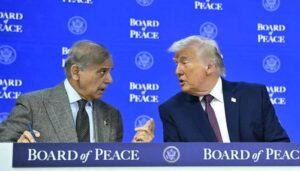
Defence Minister Khawaja Asif has articulated the parameters with clarity. Pakistan is open to contributing troops—provided the mission is a genuine peacekeeping operation under defined terms of reference. Participation would be aligned with maintaining security and supporting humanitarian stability, not coercive disarmament or political enforcement. This distinction underscores Pakistan’s principled yet pragmatic approach.
The stabilisation phase will inevitably face obstacles. The ceasefire remains fragile. Trust deficits persist. Trump’s call for Hamas to commit to demilitarisation. Under the proposed plan, incentives such as amnesty for those renouncing violence and safe passage for others aim to reduce friction, but the durability of these arrangements will depend on buy-in from all stakeholders.
However, what distinguishes this summit is the breadth of participation. Regional powers including Turkey, Egypt, Saudi Arabia and Qatar are engaged, alongside Indonesia and Pakistan. Israel has also joined the Board. For now, Board of Peace’s mandate is anchored in UN authorisation and confined to Gaza. Its credibility will be judged by discipline: clarity of command, transparency in funding, and adherence to international law.
If the inaugural meeting succeeds in solidifying financial commitments, defining the ISF’s chain of command, and reinforcing humanitarian corridors, it could mark the beginning of a structured transition from war to reconstruction. If it falters, scepticism will deepen.
For Pakistan, engagement in this process aligns moral conviction with strategic responsibility. Supporting stabilisation in Gaza is not merely an act of solidarity; it is a contribution to regional equilibrium and global multilateralism. Islamabad’s participation signals that emerging powers are prepared to shoulder responsibility in shaping peace frameworks.
The inaugural summit, is an opportunity to convert pledges into protection, and rhetoric into recovery. Gaza’s people have endured immense hardship. If the Board of Peace can translate collective resolve into measurable stability, February 19 may be remembered not simply as a meeting in Washington—but as the first decisive step toward reshaping Gaza’s future.
