
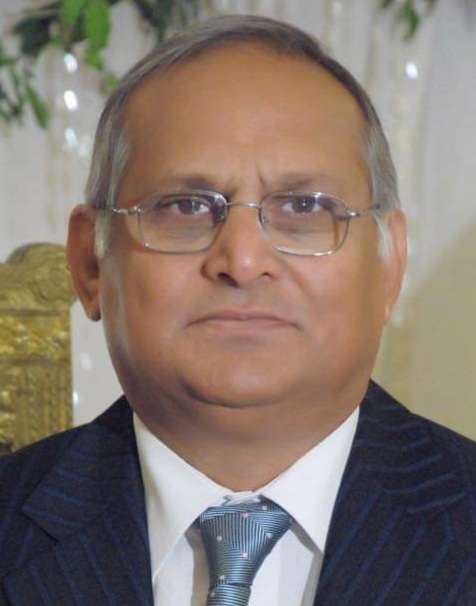
By Ghulam Haider Shaikh
Sohail Afridi’s statement that providing facilities to citizens at their doorstep is the government’s top priority reflects a welcome shift in development thinking, one that recognizes the essence of governance as service delivery rather than rhetoric. In a province like Khyber Pakhtunkhwa, where infrastructure, accessibility, and administrative capacity remain uneven, translating this vision into tangible results will be both a challenge and an opportunity.
Governance, at its core, is about convenience, access, and inclusion. For far too long, ordinary citizens have been forced to travel long distances to access basic services, from birth certificates to healthcare, education, and welfare assistance. Decentralizing these functions and ensuring that people can benefit from them without bureaucratic hurdles could transform the relationship between the state and its citizens. The emphasis on “doorstep governance” aligns well with modern public administration principles, which favor efficiency, transparency, and citizen-centered service delivery.
However, declarations alone will not suffice. The success of such an initiative depends on a robust institutional framework. Local governments must be empowered both administratively and financially to execute these plans effectively. Technology can also play a decisive role: digital platforms for e-governance, telemedicine, and mobile documentation services could drastically reduce red tape and bring efficiency to rural and urban communities alike.
Equally important is the issue of accountability. For doorstep services to be sustainable, transparency mechanisms should be built into every stage of delivery, from procurement to implementation. Without monitoring and citizen feedback, even the most well-intentioned projects risk falling prey to inefficiency or corruption.
It is also essential to recognize that providing facilities at home is not merely a logistical challenge, it is a political commitment. It demands a government that listens, anticipates, and adapts to the evolving needs of its people. In areas such as healthcare, water supply, electricity, and education, the difference between a responsive and a disconnected administration can be measured in lives and livelihoods.
Afridi’s focus on public convenience is timely. As inflation and unemployment strain household resources, bringing essential services closer to the people can ease frustration and restore confidence in governance. If implemented with seriousness and transparency, this approach could become a model for citizen-centered development, one that redefines public service as not an obligation, but a right delivered at the doorstep.
A Decade of Misrule in KP?
PML-N leader Ameer Muqam’s strong criticism of Pakistan Tehreek-e-Insaf (PTI), accusing it of “destroying the province in eleven years,” adds another layer to the increasingly heated political discourse in Khyber Pakhtunkhwa. His statement, while politically charged, raises legitimate questions about the legacy of PTI’s prolonged rule in the province, a government that came to power on the promise of change, accountability, and good governance.
Over the past eleven years, PTI’s leadership in Khyber Pakhtunkhwa has claimed several reforms, particularly in health, education, and policing. The Sehat Card program, police autonomy, and initiatives for transparency were presented as models for other provinces. However, the gap between promises and delivery has often been wide. Public sector education continues to struggle with quality and infrastructure issues; hospitals remain understaffed; and development projects, particularly in rural and tribal areas, have faced significant delays or inefficiencies.
Ameer Muqam’s criticism must also be seen in the context of political polarization. The upcoming elections have intensified rhetoric on both sides, with parties seeking to position themselves as champions of reform and stability. Yet, beyond political point-scoring, the real question remains: what tangible improvements have reached the common citizen?
The province continues to face challenges, economic stagnation, unemployment, and growing insecurity, particularly in newly merged districts. Many residents complain of being left behind in the post-merger development process, while infrastructure in urban centers such as Peshawar has failed to keep pace with population growth. These are not merely governance failures; they reflect a lack of long-term vision and continuity in policymaking.
If Ameer Muqam’s criticism is to hold weight, it must go beyond rhetoric and offer a constructive alternative. Merely condemning the past will not rebuild what is broken. PML-N and other opposition parties must present a clear, implementable roadmap for reform, one that prioritizes institutional stability, job creation, and equitable resource distribution.
The people of Khyber Pakhtunkhwa deserve more than slogans. They deserve a government, any government, that learns from past mistakes and restores faith in public service. Political blame games may win headlines, but only honest governance will win the province’s future.
