
TP Report
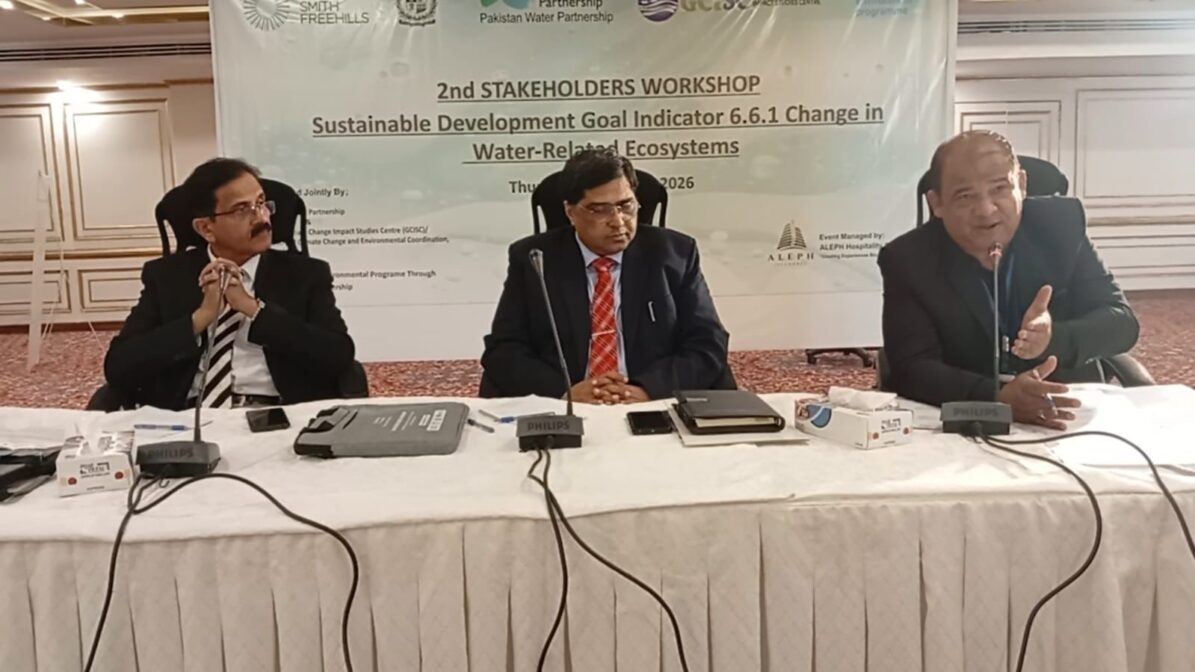
ISLAMABAD: The Pakistan Water Partnership (PWP), in collaboration with the Global Change Impact Studies Centre (GCISC), organized the 2nd Country Stakeholder Consultation Workshop on SDG Indicator 6.6.1 (Change in Water-Related Ecosystems) in Islamabad. The event brought together representatives from government institutions, academia, civil society, development partners, and the private sector to discuss strategies for protecting and restoring Pakistan’s freshwater ecosystems.
The consultation is part of the Pakistan SDG 6.6.1 Project (2024–2026) supported by the United Nations Environment Programme (UNEP) through UNEP-DHI and implemented by the Global Water Partnership (GWP) network. The initiative aims to help Pakistan align national commitments with SDG 6.6 by strengthening governance, policy integration, and data-driven decision-making to safeguard freshwater ecosystems.
Speaking on the occasion, Muhammad Awais, Country Director of Pakistan Water Partnership, highlighted the importance of collective action and stakeholder engagement. He said the workshop provided a valuable platform for dialogue, knowledge sharing, and identifying practical strategies to protect and restore Pakistan’s freshwater ecosystems.
Ahmed Kamal, water expert and former Chairman of the Federal Flood Commission, appreciated the initiative and stressed the need for integrated water resources management and improved data systems to support effective policy decisions. He noted that close collaboration among national institutions and experts is essential for the sustainable management of Pakistan’s water resources.
Arif Goheer, Executive Director of the Global Change Impact Studies Centre (GCISC), who inaugurated the workshop, reiterated Pakistan’s commitment to advancing the Sustainable Development Goals and strengthening climate-resilient water management. He emphasized that multi-stakeholder consultations play a key role in aligning national policies with global sustainability targets and ensuring the long-term protection of freshwater ecosystems.
During the workshop, participants reviewed key findings from the first consultation and discussed potential response strategies, governance improvements, and institutional coordination mechanisms needed to accelerate progress toward SDG 6.6.1. The recommendations gathered will contribute to the development of a Country Implementation Roadmap, outlining priority actions, timelines, and stakeholder responsibilities.
The consultation concluded with strong stakeholder support for enhanced cooperation and coordinated national efforts to protect Pakistan’s freshwater ecosystems and ensure sustainable water resources management for future generations.
