

By Junaid Qaiser
A quiet but consequential shift is underway in the South Caucasus. With sustained diplomatic engagement, strategic investment, and a clear vision for regional connectivity, the United States is positioning itself not merely as a mediator between Armenia and Azerbaijan, but as an anchor of long-term stability.
Vice President JD Vance’s recent visits to Yerevan and Baku were more than just a historic milestone. They demonstrated Washington’s resolve to strengthen the peace agreement brokered by President Donald Trump in 2025 between these two long-time adversaries, embedding it within a broader context of economic interdependence and energy security. The message was loud and clear: peace must be underpinned by infrastructure, trade, and opportunities.
In Armenia, the highlight of the visit was wrapping up negotiations on a civil nuclear cooperation agreement, often referred to as the “123 Agreement.” This framework paves the way for US companies to export nuclear technology, fuel, and services, which will aid in replacing Armenia’s aging Metsamor nuclear power plant. With potential commitments reaching up to $9 billion in exports and long-term contracts, this initiative provides Yerevan with a solid opportunity to modernize its energy sector while reducing its reliance on Russia.
For Armenia, diversifying energy sources goes beyond just economics; it’s about strategic independence. A modern nuclear program, built on partnerships with the West, enhances resilience and supports the country’s reform efforts. For the United States, this agreement not only upholds non-proliferation standards but also boosts advanced technology exports, showcasing that American involvement can lead to real, positive outcomes.
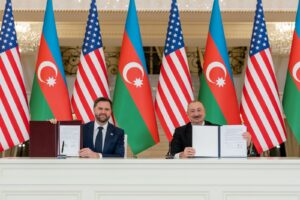
In Baku, the visit underscored the critical need for balance. Azerbaijan is not only a significant energy supplier but also a key connector between Central Asia and Europe. The signing of the US-Azerbaijan Charter on Strategic Partnership, which includes economic cooperation, defense collaboration, artificial intelligence, and critical minerals, highlights a common interest in achieving stability and modernization.
Central to this vision is the Trump Route for International Peace and Prosperity (TRIPP), an ambitious road-and-rail corridor designed to connect Azerbaijan with its Nakhchivan exclave and integrate the region into a broader east-west trade artery. By strengthening transport links that bypass traditional chokepoints, TRIPP could transform the South Caucasus from a zone of contestation into a corridor of commerce.
Economic integration has long been the missing ingredient in peace efforts between Armenia and Azerbaijan. The 2025 accord committed both sides to renounce territorial claims and refrain from force. Embedding that commitment within shared infrastructure and mutually beneficial trade flows makes conflict less rational and cooperation more rewarding.
Challenges remain. Ratification of the peace agreement requires political courage in both capitals. Domestic sensitivities, unresolved humanitarian concerns, and the legacy of decades of conflict cannot be dismissed. However, the overall trajectory is encouraging. Rather than managing crises episodically, Washington is investing in structural change — energy partnerships, defense cooperation, and infrastructure projects that build interdependence. The approach reflects a broader understanding that durable peace is sustained not only by diplomacy, but by development.
Historically, the South Caucasus has been influenced by various empires and changing power dynamics. Today, it’s on the brink of a new model — one that emphasizes connectivity, sovereignty, and practical cooperation. By aligning strategic goals with economic opportunities, the United States is playing a key role in this transformation.
If the peace agreement is ratified and consistently implemented, the region could move beyond the shadows of Karabakh and towards a future marked by shared prosperity. The groundwork is being laid. With ongoing engagement and regional commitment, the South Caucasus could become a shining example of what sustained American diplomacy can achieve.
