
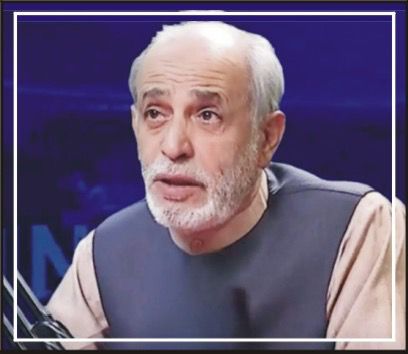
Shamim Shahid
The recent US-Israel military actions against the Islamic Republic of Iran have intensified tensions across the Islamic world, particularly impacting smaller regional states. While proponents argue potential justifications, the coordinated attacks by Washington and Tel Aviv are widely viewed as a clear act of aggression, raising fears of broader instability in South and Central Asia.
Prior to these developments, Iran had already been placed in a complex regional situation, compounded by Pakistan’s involvement in Afghanistan. Senior Pakistani journalist Hamid Mir highlighted that a US-aligned Gulf country played a role in fuelling the conflict, suggesting that the aggression against Iran followed a premeditated plan. Israel’s Prime Minister has reportedly indicated that Pakistan could be the next target, citing concerns over its nuclear capabilities and the presence of hardliner elements.
Meanwhile, the United States has expressed strategic interest in Bagram Air Base and has previously supported Pakistan in its campaign against the Taliban regime in Afghanistan. These actions indicate broader ambitions by Washington to consolidate influence across the region.
International reactions have varied. Russia has denounced the US-Israel aggression against Iran, while China issued a restrained statement, focusing on sovereignty and territorial integrity rather than directly condemning the attacks. Most Arab nations, aside from Yemen, have aligned with the United States, citing their cooperation on hosting American military installations. Yemen, however, has publicly condemned the attacks and pledged support for Iran.
Pakistan’s stance remains ambiguous, as its leadership has yet to clearly articulate a position that satisfies either Washington or Tehran.
The human toll of the attacks has been severe. Reports indicate hundreds of casualties, including prominent Iranian spiritual figures such as Ayatollah Khamenei. The scale of the conflict has sparked fears of a potential third world war, particularly given the involvement of nations possessing chemical weapons and advanced information technologies. Analysts warn that multilateral forums such as the UN have been weakened and are struggling to respond effectively.
At the grassroots level, widespread protests have erupted across Pakistan, including in Karachi, Lahore, Skardu, Gilgit, Parachinar, Kurram, and Peshawar. Demonstrators have targeted installations such as the US Consulate in Karachi and UN offices in Skardu and Gilgit. Reports suggest at least eight fatalities in Karachi and three in Skardu as security forces intervened to control the unrest.
The ongoing volatility poses a direct threat to Pakistan’s internal stability. Observers argue that the government, led by Premier Shehbaz Sharif, must act swiftly to achieve political reconciliation. An early all-parties conference is needed to discuss the current scenario and formulate a cohesive regional strategy.
Furthermore, restoring cordial relations with neighboring countries, particularly Afghanistan, is critical to mitigating the broader fallout.
Without prompt and decisive action, analysts warn that Pakistan could face severe economic, political, and security consequences amid the escalating regional conflict.
