
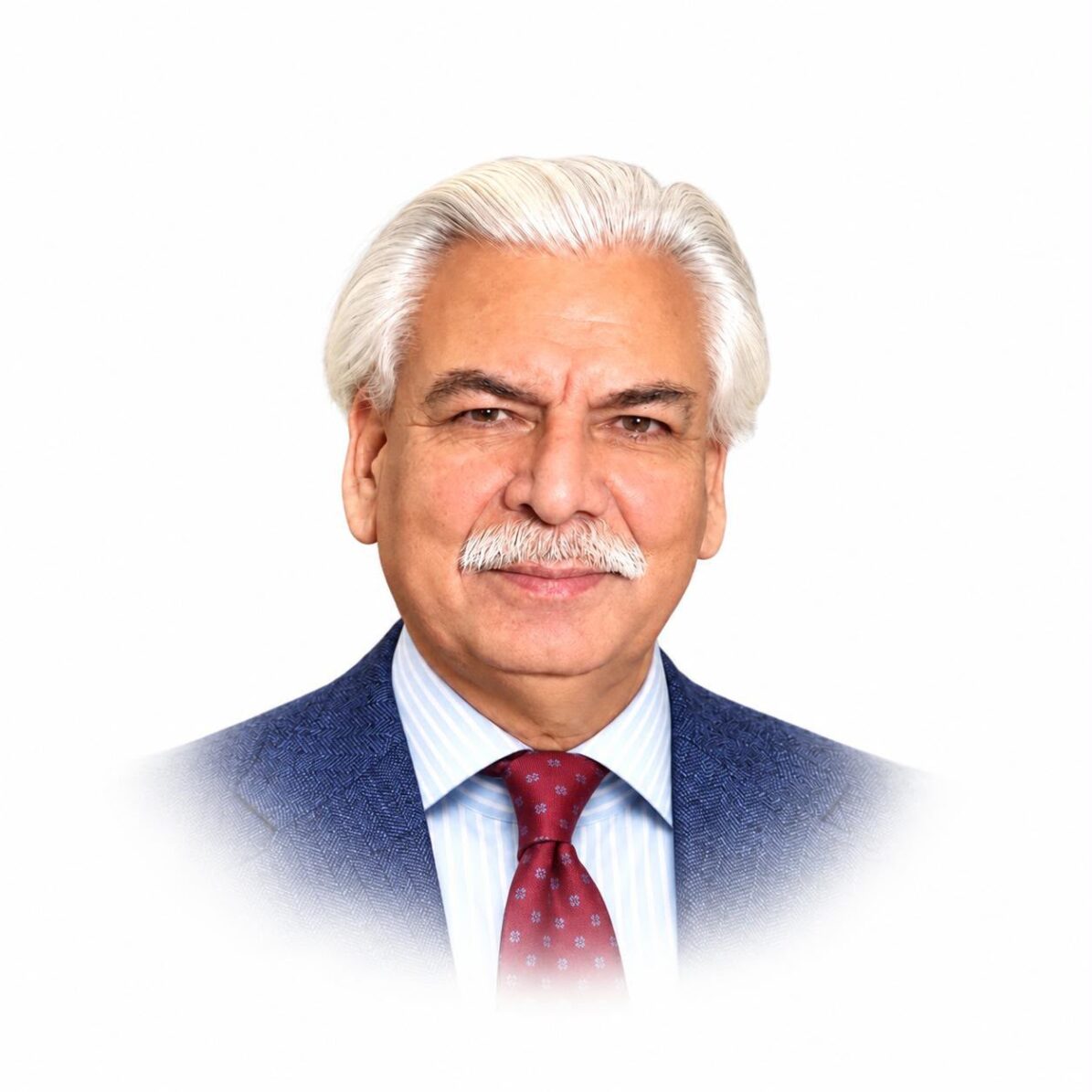
Barrister Usman Ali, Ph.D.
The US midterm elections of November 3, 2026, have reaffirmed a fundamental democratic principle: ultimate power rests with the people, not those occupying the highest offices. They also remind us that when leadership gives way to arrogance, confrontation and poor judgment, democracy becomes the most effective and peaceful instrument of accountability.
The results reflect public dissatisfaction with President Donald Trump’s economic policies, confrontational politics and controversial foreign policy. Democrats have gained control of both chambers of Congress, shifting the balance of power in Washington.
More than a contest between two parties, these elections represent a public verdict on Trump’s leadership. Although governing parties traditionally struggle in midterms, Democrats made significant gains even in Republican strongholds. The outcome raises a broader question: Can promises of national greatness, aggressive rhetoric and displays of strength substitute for addressing ordinary people’s concerns?
Democrats captured Senate seats in several traditionally Republican states. Kansas elected a Democratic senator for the first time in 94 years, while Texas did so after 38 years. Democrats also won the Texas governorship after 36 years and secured a majority in the House of Representatives. Beyond changing congressional numbers, these results suggest voters were prepared to reconsider longstanding political loyalties.
Exit polls revealed widespread economic anxiety and dissatisfaction. According to Reuters, nearly 90 percent of voters identified inflation and rising living costs as major concerns. Some 62 percent disapproved of Trump’s performance, roughly two-thirds blamed him for high prices, and 70 percent wanted stronger congressional oversight of presidential powers. Nearly three-quarters expressed dissatisfaction with the country’s overall direction.
These findings underline a simple truth: governments are judged less by political slogans or economic statistics than by the quality of everyday life. Jobs, affordable housing, healthcare and financial security matter most. When household incomes cannot keep pace with expenses, official claims of prosperity lose their appeal.
During his 2024 campaign, Trump promised lower inflation, a stronger economy and improved living standards. Two years later, economic hardship remained a major electoral concern. Tariffs, trade tensions and higher energy prices associated with the war with Iran added to public unease. Voters ultimately judge economic policies by their impact on household budgets, not government announcements.
The Iran war also featured prominently in the election debate. Following Republican setbacks, Vice President JD Vance identified the conflict as a major contributing factor. Trump acknowledged that rising gasoline prices had affected voters, while defending his decisions.
Military actions carry consequences far beyond the battlefield. Their economic, political and humanitarian costs eventually reach ordinary households. National security is a fundamental government responsibility, but decisions involving war must also consider their long-term consequences for the people they are intended to protect.
Trump’s foreign policy has attracted considerable criticism. At times, his approach resembles a bull in a china shop, charging ahead with little regard for delicate international relationships. Diplomacy cannot be reduced to threats, sanctions or displays of military strength. It demands patience, sound judgment, negotiation and mutual respect.
As a global power, the United States carries responsibilities beyond its borders. Washington’s decisions influence economies, international relations and global stability. Protecting national interests is every government’s duty, but lasting influence and respect depend on credibility, diplomacy and honouring international commitments as much as economic or military strength.
Another important dimension of these elections is public concern about institutional independence and constitutional checks. The American system rests on the separation of powers among the presidency, Congress and judiciary. However popular a president may be, that authority remains constitutionally limited. Concentrating power in one individual or repeatedly confronting independent institutions raises serious questions about democratic accountability.
Democratic control of Congress is particularly significant. When the new Congress takes office on January 3, 2027, the administration could face closer scrutiny of spending, executive decisions, appointments and legislation. The president, however, retains constitutional powers, including the legislative veto. The next two years will test whether Washington’s leaders can cooperate in the public interest or allow partisan conflict to produce political paralysis.
The elections also challenge Democrats. Opposition to Trump contributed to their success, but victory brings responsibility. Voters expect practical responses to inflation, healthcare costs and economic uncertainty. Investigations and political opposition alone cannot fulfil those expectations.
For Republicans, the results may prompt a reassessment of Trump’s strategy and future leadership. Democrats, however, must now prove they can deliver, not merely oppose Trump. Voters expect real solutions to economic hardships, not political rhetoric. The 2028 presidential election remains an open contest, as political circumstances and public priorities can change considerably.
Perhaps the most important lesson extends beyond America. Leaders in Pakistan and elsewhere should reflect on the dangers of mistaking electoral victory for an unrestricted mandate. Governments often become preoccupied with weakening opponents, consolidating authority and prolonging their hold on power, while citizens struggle with inflation, unemployment, corruption, injustice and inadequate services. As these priorities diverge, public trust erodes.
For Pakistan, the lesson is particularly relevant. Strengthening democratic institutions, upholding the Constitution, ensuring credible elections and establishing equality before the law remain pressing challenges. Political parties devote enormous energy to confrontation while citizens’ basic concerns remain unresolved. This is not merely about one government or party, but the broader political culture and priorities of those entrusted with public office.
American and Pakistani political systems undoubtedly differ. In the United States, elections have altered the balance of power through established constitutional mechanisms. Pakistan faces distinct challenges involving institutional independence and democratic continuity. Nevertheless, the underlying principle remains universal: democracy functions when strong institutions translate public will into meaningful accountability.
Leadership should not be measured by how effectively rulers silence opponents, confront foreign leaders or accumulate authority. Its true measure lies in whether ordinary lives improve, institutions become stronger, the rule of law advances and a nation’s international credibility grows.
Citizens elect leaders to improve living standards, create opportunities, strengthen institutions and protect national interests. They do not grant unlimited authority to pursue personal ambitions, settle political scores or turn foreign relations into contests of ego.
The central message of the American midterms is clear: electoral victory places no leader beyond accountability. Political power is a public trust, not the permanent property of an individual or party.
In a democracy, leaders are not the people’s masters but their elected representatives, answerable to those who put them in office. The ballot box reminds those who forget this distinction that political authority is temporary, while the people’s right to demand accountability endures.
When rulers mistake public trust for personal power, the ballot becomes the most effective, dignified and peaceful means of holding them accountable. That is democracy’s ultimate answer to the arrogance of power.
