
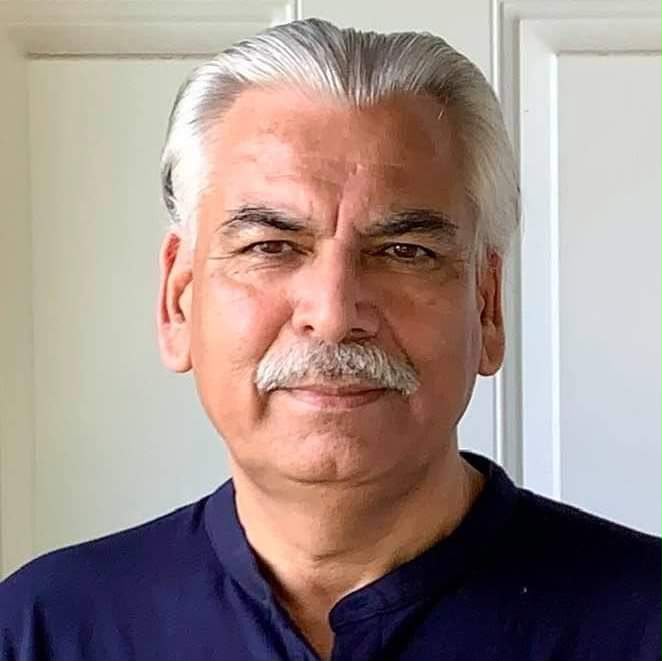
Barrister Usman Ali, Ph.D.
Federal Interior Minister Mohsin Naqvi’s statement that “whether anyone accepts it or not, our system has collapsed or failed” cannot be dismissed as routine political rhetoric. However one chooses to qualify, reinterpret or explain away his remarks, one fact remains unavoidable: a senior and powerful member of the government has publicly acknowledged the failure of the existing system.
That admission matters because it did not come from an opposition leader, an anti-government commentator or a frustrated citizen. It came from someone who is himself part of the governing structure and directly involved in exercising state authority and implementing public policy.
When someone at the centre of power concedes that the system is no longer delivering the results expected of it, the discussion should not end with the admission. That is precisely where the real discussion must begin.
Why has the system failed?
Who is responsible for that failure?
And, most importantly, what will be done to fix it?
No state system collapses overnight. Institutions do not suddenly become dysfunctional. The rule of law does not disappear in a single day. An economy does not fall into recurring crises because of one bad decision, nor is public confidence in the state destroyed by one isolated event. Systemic failure is usually the cumulative result of years—often decades—of misplaced priorities, weak institutions, flawed decision-making and an unwillingness to accept accountability.
Pakistan’s predicament cannot be attributed exclusively to one government, one political party or one institution. Its history demonstrates what happens when constitutional boundaries become blurred, institutions move beyond their prescribed roles, the law is applied differently to the powerful and the powerless, loyalty takes precedence over merit, and accountability becomes an instrument of political convenience rather than a consistent principle.
Over time, such practices do not merely produce poor governance. They weaken the foundations of the state itself.
One of Pakistan’s most persistent mistakes has been the tendency to place faith in individuals rather than institutions.
Every few years, the country is presented with a new leader, a new coalition, a new political arrangement or a new administrative experiment, accompanied by the promise that this time things will be different. Governments change and personalities come and go, yet many of the fundamental failures of governance remain remarkably unchanged.
The result is predictable: individuals become powerful while institutions remain weak.
The true measure of a functioning state is not the number of grand projects it announces, the scale of its publicity campaigns or the ambition of its political slogans. The real test comes when an ordinary citizen walks into a police station, approaches a court, seeks treatment at a public hospital, sends a child to a government school or visits a public office to obtain a service to which they are legally entitled.
If that citizen needs political influence to secure a basic right, must wait years for justice, is expected to pay a bribe for a routine service, or cannot trust the law to be applied equally, then the system is failing at its most fundamental level—regardless of what official statistics or government advertisements may claim.
The same structural weaknesses are visible in the economy.
No country can build sustainable prosperity on perpetual borrowing, a narrow tax base, unproductive expenditure and chronic policy uncertainty. When a disproportionate share of the tax burden falls on salaried workers and documented sectors of the economy while large segments of economic activity remain inadequately taxed, the problem is not merely one of revenue collection. It is also a question of economic fairness and the credibility of the state.
Education and healthcare are equally fundamental. They are not peripheral welfare concerns; they determine the future capacity of the state itself. When access to quality education and reliable healthcare depends primarily on a family’s ability to pay, society gradually divides into two parallel realities: one for those who can afford to escape the failures of the public system, and another for those who have no choice but to depend on it.
Yet perhaps the deepest problem is not simply a shortage of resources.
It is the persistent refusal to accept responsibility.
Politicians blame the establishment. State institutions point to political incompetence. Bureaucrats cite political interference. Incumbent governments blame their predecessors, while almost every new administration claims that the crisis it faces was inherited from the one before it.
There may be some truth in each of these arguments. But if responsibility always belongs to someone else, who exactly is responsible for reform?
There is a simple principle at the heart of public administration:
Authority and accountability must go together.
Those who exercise power must also accept responsibility for the consequences of how that power is used.
It is therefore not enough for those in government to diagnose the system as broken. They must explain what they are doing, within the authority already available to them, to repair it.
Ordinary Pakistanis have been saying for years that the system does not work. They do not need those in power merely to repeat the diagnosis. The difference between a citizen and a government official is that the latter has the authority, and therefore the responsibility, to do something about it.
If meaningful reform is genuinely the objective, the first requirement must be the equal and consistent application of the rule of law.
No system can remain stable when the powerful and the powerless effectively live under different legal standards. Accountability must apply to everyone. Justice must be accessible to everyone. Constitutional limits must bind everyone.
The second requirement is to free institutions from dependence on personalities and political expediency.
The police, civil service, accountability bodies, regulatory institutions and local administration should function according to law, merit and established procedure, not according to the preferences of whoever happens to hold office.
A strong state is not one in which the prime minister, chief minister or cabinet minister must personally “take notice” every time an ordinary citizen encounters an administrative failure.
A strong state is one in which the system works without requiring the personal intervention of the powerful.
The third essential reform is genuine devolution of power.
Every broken road, blocked sewer, neglected park, local transport problem or failure of municipal services should not become a matter for provincial or federal politics. In functioning democracies, much of the state’s day-to-day interaction with citizens takes place through empowered local governments.
Pakistan needs local institutions with genuine authority, reliable financial resources and clear democratic accountability.
Beyond this, judicial reform is unavoidable. Chronic delays in litigation must be reduced. Merit must become the foundation of recruitment and advancement in the police and civil service. The tax system must become broader, simpler and fairer. Public expenditure must be more transparent. Education and healthcare must be treated as long-term national investments rather than routine budgetary obligations.
Without reforms of this kind, talk of “systemic change” will remain little more than a slogan.
Above all, Pakistan must rebuild trust between the citizen and the state.
States are not held together merely by constitutions, government buildings, laws or official institutions. Their real strength lies in the confidence of their citizens: the belief that the law will protect them, the courts will give them a fair hearing, the police will treat them impartially, their taxes will be used responsibly and their voice will matter.
That trust cannot be manufactured through advertising campaigns, press conferences or speeches.
It has to be earned through the everyday conduct of the state.
Mohsin Naqvi’s remarks are important because they give official expression to something ordinary Pakistanis have felt for years. But the significance of that admission will depend entirely on what follows it.
If it becomes the starting point for serious institutional reform, it may eventually be remembered as a moment of necessary recognition. But if the same methods of governance continue, if institutions remain weak, standards remain unequal and those in authority continue to shift responsibility elsewhere, then this statement, too, will become little more than a headline that briefly dominates public debate before disappearing into the archives.
Pakistan does not need another set of slogans. It needs adherence to a different set of principles: the rule of law, institutional independence, merit, transparency, accountability and continuity of policy.
The central question is no longer whether the system has failed. If those exercising power are themselves acknowledging its failure, that debate has largely been settled.
The questions that matter now are harder:
Who allowed the system to fail?
Who will repair it?
How will it be repaired?
And when will that process begin?
Those who possess authority cannot merely diagnose failure; they bear the first responsibility for correcting it.
Pakistan does not need another admission of failure.
It needs action.
