
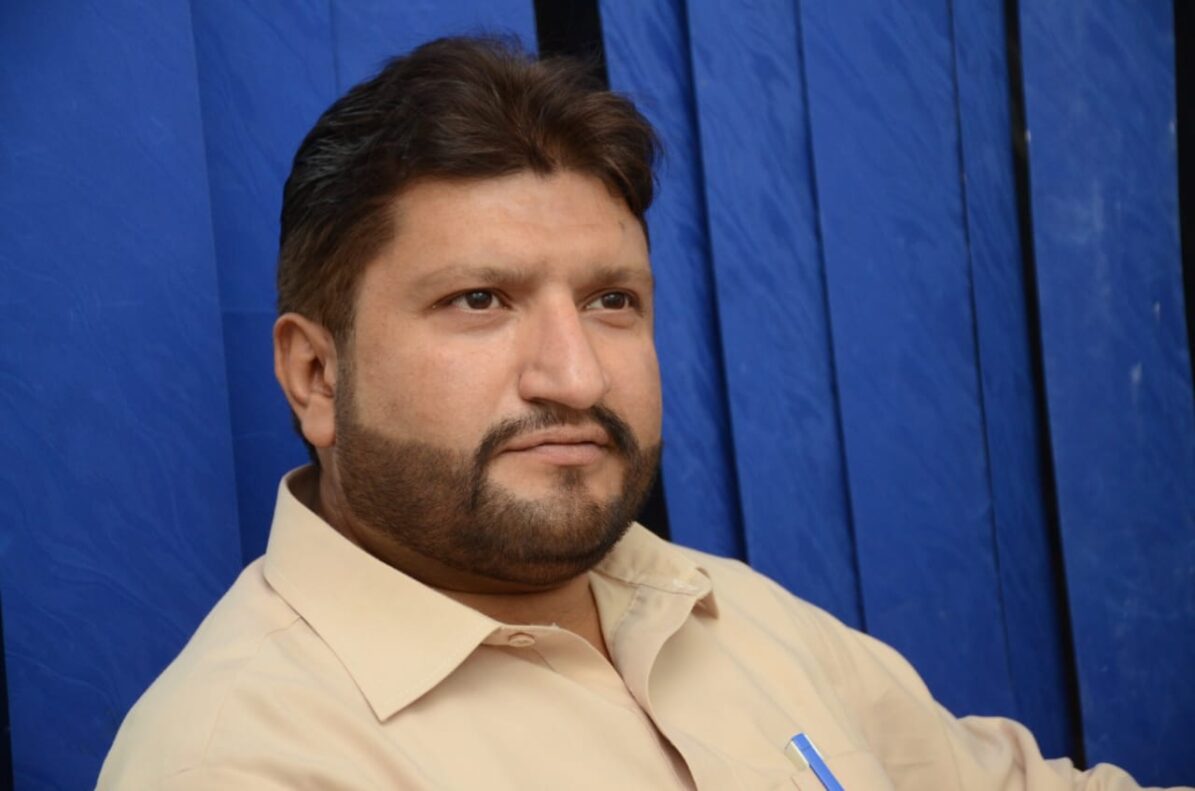
Amjad Hadi Yousafzai
Note: This column focuses on the Urdu letter ت, which symbolizes both تباہی (destruction) and تعمیر (construction).
Every letter has its own world, and sometimes a single letter can capture the mood of an entire era. Today, one letter resonates strongly in our surroundings, and that letter is ت. It reflects both the challenges we face and the potential solutions. The power of this letter depends entirely on our intention, character, and actions.
Education is often considered the highest priority, but the real emphasis should be on training and character development. A child starts school around the age of five, and the early years lay the foundation for their personality. If moral values, respect, honesty, and responsibility are not instilled at home, schools can provide knowledge but cannot build character. Elementary moral and religious education forms the basis of personality, while universities deepen knowledge, foster research, and cultivate critical thinking. This combination drives both individuals and society toward progress and constructive growth.
Without this balance, society faces the risk of collapse: an overflow of information but weak character, shallow understanding, and limited critical thinking. Strong training and quality education make a person virtuous and resilient, which is the true guarantee of societal development.
Previously, character was built in homes; now personalities are shaped on screens. Parents chase time while children grow up without attention. Lack of proper guidance affects not just individuals but entire generations. Even in commerce, honesty has been replaced by cleverness, quality by promotion, and trust—the foundation of business—is weakening. When trade loses ethics, the economy may function, but blessings vanish.
In law, technical skill sometimes outweighs justice. When legal practice focuses only on winning cases, courts deliver judgments, but the satisfaction of justice diminishes. Journalism too must seek truth rather than impressions. When news becomes sensation instead of research, society drifts from reality despite having information.
Medicine and healthcare carry the most sensitive responsibility. True practice is about service, compassion, and human-centered care. When profit replaces service, trust weakens, and the constructive growth of health suffers. Health is not only hospitals and medicine but clean environment, balanced diet, mental peace, and timely access to care.
Construction should signify progress. Tall buildings rise, but without planning, quality, and integrity, social problems emerge. True construction includes building human values, not just structures. Similarly, culture must reflect pride in language, tradition, and identity. Ignoring this leads to the decay of societal roots.
Politics and governance illustrate the importance of service over power. Speeches may be grand, promises lofty, but results often disappointing. Strong local governments serve citizens, build trust, and prevent chaos, while weak governance fosters uncertainty and frustration.
Elections demonstrate transparency and fairness. Fair elections strengthen public trust; flawed processes widen the gap between citizens and state, spreading unrest. Diplomacy maintains understanding, patience, and balance, reducing conflict and expanding the path to peace.
On an individual level, trust, respect, and empathy sustain human relationships. Self-interest dominates, distances grow. A true friend supports in difficult times, reflects honesty, and inspires personal growth. Strong friendships sustain hope and confidence in society.
Ultimately, society is a chain. Everyone desires change, yet few initiate it themselves. We speak of truth but prefer convenience. Small lapses accumulate to create paths of destruction. Yet, constructive paths remain possible. The difference lies in intention, character, and action.
If we lay the foundation of ethics and character in schools, promote knowledge and research in universities, refine education, restore honesty in commerce, uphold truth in journalism, justice in law, humanity in medicine, accessibility in health, quality in construction, pride in culture, wisdom in diplomacy, service in governance, transparency in elections, sincerity in relationships, and loyalty in friendship, then society will thrive. Nations are built or broken not by letters but by behavior.
Remember: within every destruction lies construction, in every crisis a lesson, and in every moment the power to revive society—what matters is intention, character, and action.
