
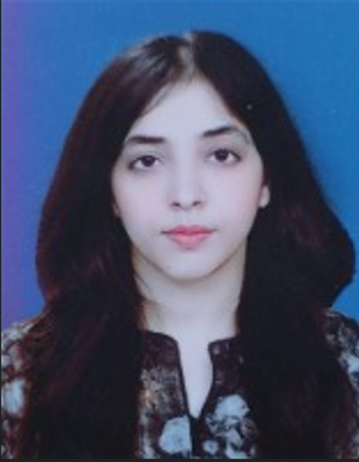
Ramisha Awan
“The advocacy efforts of the MHMWG and its partners have successfully permeated the highest levels of provincial governance. Provincial Minister for Education, Ms. Raheela Hameed Durrani, has taken up the agenda with remarkable clarity, stressing that dignity is a fundamental constitutional right and that ensuring affordability for essential women’s health products is an urgent educational imperative. “
When assessing the barriers to female education in Pakistan, public discourse frequently centers on physical infrastructure or teacher availability. Yet, in Balochistan, an equally formidable but historically silenced barrier is forcing countless female students out of the classroom: the unaffordability and inaccessibility of basic Menstrual Health and Hygiene (MHH) products. Recognizing that biology should never dictate a young woman’s educational trajectory, a diverse coalition of health advocates, development partners including UNICEF Pakistan, policymakers, and media professionals is now mobilizing to dismantle the financial hurdles surrounding women’s health through comprehensive tax reforms.
The statistics driving this collective push paint a sobering picture of the challenge. Currently, a staggering 89% of adolescent girls in the province lack adequate facilities to manage their monthly cycles. This massive affordability and accessibility gap has been identified as a primary, albeit silent, driver of widespread school absenteeism. When marginalized families face severe economic pressures, the choice between basic household sustenance and heavily taxed hygiene products inevitably sacrifices the educational continuity of young girls. Acknowledging the sweeping scale of this crisis, stakeholders across the spectrum have reframed the issue as a root cause of gender inequality in Balochistan’s educational landscape that requires immediate, systemic intervention.
Addressing an issue deeply embedded in both social taboo and rigid fiscal structures cannot be achieved in isolation. The current momentum in Balochistan is the result of a robust, multi-stakeholder collaborative effort. At the core of this movement is the Menstrual Health and Hygiene Working Group (MHMWG) Secretariat Balochistan, spearheaded by Chairperson Dr. Tahira Kamal Baloch, Co-Chair Zulaikha Karim Buledi, and Provincial Manager Shahana Tababsum with ardent support from the parliamentarians, civil society and media in the province.
This civil society leadership is heavily bolstered by development partners, notably UNICEF Pakistan, which has played a crucial role in providing strategic support and amplifying the campaign for meaningful tax reforms. Furthermore, the active involvement of institutional veterans like Abdullah Khan, former Secretary of Health and Population, brings vital administrative memory and cross-sector expertise to the table. The media has also stepped into a critical role, breaking the traditional silence around menstrual health and helping to build a public consensus that demands action.
The advocacy efforts of the MHMWG and its partners have successfully permeated the highest levels of provincial governance. Provincial Minister for Education, Ms. Raheela Hameed Durrani, has taken up the agenda with remarkable clarity, stressing that dignity is a fundamental constitutional right and that ensuring affordability for essential women’s health products is an urgent educational imperative. Operating as the Chairperson of the Provincial MHH Tax Reforms Committee, she has emphasized that these essential items must no longer be subjected to a “luxury tax”.
Crucially, this initiative is transcending traditional political divides. The pursuit of a dual-track strategy involves strict technical engagement operating seamlessly alongside bipartisan political lobbying. The active support of opposition figures, such as Mr. Rehmat Saleh and Phullain Baloch from the National Party, and Akhtar Bibi from PML-N, demonstrate a unified political understanding that the health and education of Balochistan’s girls represent a shared provincial priority, not a partisan talking point.
The experts from the MHMWG Secretariat have been actively informing the government on efforts to operationalize the Provincial MHH Strategy (2025–2030). Their strategic work includes a comprehensive analysis of the Balochistan Sales Tax Act, 2015, and federal GST structures, paired with ongoing technical consultations with the Finance Department and Assembly Secretariat.
The objective of this coordinated effort is to legally mandate product affordability and officially reclassify them as “essential goods” within provincial and federal tax jurisdictions. The next critical milestone in this advocacy journey is strategizing the tabling of a milestone resolution in the Balochistan Assembly. By securing a shared understanding and cross-party support, this diverse coalition hopes to ensure a swift legislative process. Ultimately, the collaborative push in Balochistan serves as a powerful blueprint: proving that when civil society, development partners, media, and a bipartisan government unite to untax dignity, they can secure the educational futures of an entire generation and a general wellbeing of women and girls.
About Author: Ramisha Awan is an Islamabad based passionate environmental, climate change and MHH advocate deeply concerned about Pakistan’s growing climate and gender justice related challenges.
