
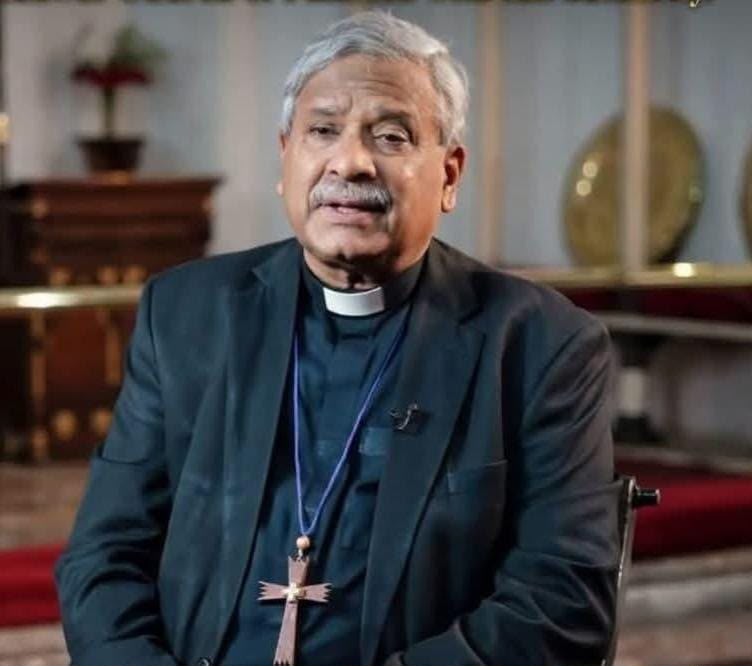
By: Bishop Humphrey Sarfaraz Peters
Why do some poor countries remain trapped in poverty, dependence and institutional weakness for decades, while others, despite having suffered far greater destruction, manage to turn the corner?
The difference is rarely due to natural resources alone. Nor is foreign aid the answer. Nations begin to move forward when they recognise their failures, strengthen their institutions, instil discipline in public life, invest in their people, and place national interest above personal or group advantage. Progress begins when a country stops merely explaining its problems and starts correcting them.
Let us take the example of Rwanda.
Before 1994, Rwanda was among Africa’s poorest countries. It was landlocked, heavily reliant on agriculture and foreign assistance, and deeply troubled by political instability, ethnic division, poverty and weak institutions. Its population stood at about 7.8 million in 1993.
Then came the catastrophe of 1994. Genocide and civil war tore the country apart. More than a million people were killed, around two million fled across the borders, families were uprooted, and much of the machinery of government ceased to function. Economic activity collapsed, and citizens’ trust was shattered. Rwanda’s population fell to about seven million.
What remained was not simply a poor country. It was a wounded nation facing the task of rebuilding almost everything.
Yet that devastation became a turning point.
The post-1994 leadership first focused on restoring security and rebuilding state authority. The government reorganised institutions, strengthened tax collection, and brought public finances under tighter control. Corruption was increasingly seen as an obstacle to national reconstruction. Officials and local administrations were expected to meet measurable targets.
The country invested steadily in education, healthcare, roads, communications, technology and private enterprise. Long-term development plans provided continuity. Foreign assistance was welcomed, but the government increasingly sought to ensure it served national priorities rather than allowing outside partners to determine the country’s direction.
Thirty years later, Rwanda is a very different country. Its population has more than doubled to about 14.6 million. GDP per capita, which had fallen to roughly US$150 in 1994, reached about US$1,124 in 2025. In purchasing-power terms, per-capita income is above US$4,000. The economy grew by approximately 9.4 per cent in 2025.Human development has also advanced. Adult literacy is around 79 per cent, with youth literacy considerably higher. Life expectancy has risen to about 68 years. Access to healthcare, education, electricity, communications and infrastructure has expanded significantly.
The lesson, however, extends beyond Rwanda itself.
Poor countries often blame a lack of resources. Developing countries blame international institutions. Governments blame their predecessors. Political parties blame one another. Citizens blame governments. Sometimes, every accusation contains an element of truth.
But nations begin to change when, in addition to asking who is responsible, they start asking a more difficult question:
What are we ourselves prepared to change?
Are we prepared to give up the small privileges that undermine the greater good? Are we willing to obey the same law we expect others to obey? Are we ready to choose merit over favour, honesty over convenience, duty over personal benefit, and our children’s future over the comfort of the present moment?
A country is not changed by governments alone. It changes when public servants treat office as a trust, when businesspeople refuse unfair advantage, when citizens stop accepting corruption as normal, and when those with influence use it to strengthen institutions rather than to bend them.
National decline is rarely the work of a single person, party or institution. Likewise, national recovery cannot rest on a single leader alone.
At some point in the life of every struggling nation, blaming others is no longer enough. A people must also look inward and ask whether they have grown accustomed to the very practices they condemn. That moment of self-examination may be painful, but it can also mark the beginning of renewal.
Rwanda’s journey reminds us that poverty need not be permanent, weakness need not become destiny, and even a wounded nation can rise when it decides the future must be different from the past.
The first step towards national progress is not wealth but the courage to change ourselves.
