
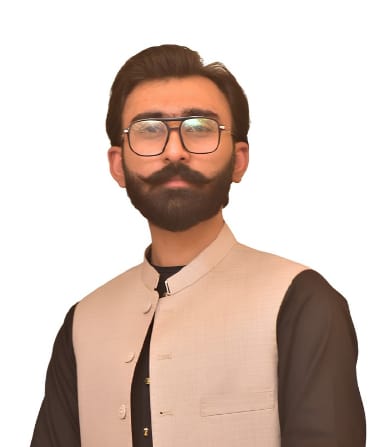
Syed Mubashir Shah
The political season in Pakistan never shifts, 365 days a year, the country remains trapped in a war of narratives, political crossfire, and an unyielding thirst for power. A nation whose bedrock was laid on dialogue, constitutional supremacy, and the power of the ballot now witnesses its rulers shutting the doors to conversation and flinging open the doors to prisons and lawsuits. Muzzling the constitution and suffocating democracy is hardly a new phenomenon in our history, but the true tragedy lies in the fact that no one has ever learned a lesson from it.
The moment politicians step into the corridors of power, they forget a simple truth governments propped up on crutches and batons wielded in intoxication are bound to break sooner or later. The citizen standing on the other side of the barricade is a child of this very soil. They possess emotions, they have families to feed, and under the constitution, they hold the exact same rights as the elites seated in government palaces.
As September draws to a close, the opposition’s call for a fresh “Azadi March” toward Islamabad on October 4 has once again sent shockwaves through the federal government. Article 16 of the Constitution of Pakistan guarantees every citizen the fundamental right to peaceful assembly and protest. Yet, the state’s knee-jerk reaction threatens to leave another dark stain on our democratic canvas. Defying judicial orders and constitutional boundaries, shipping containers are being stacked like mountains across major highways. It leaves us with a fundamental question: Can democracy ever be safeguarded by hiding behind a wall of steel containers?
Perhaps the most dangerous and heartbreaking dimension of this crisis is that it is no longer confined to political rivalries; it is actively sowing inter-provincial and social hatred. On one side, threats are issued that citizens and leadership from Khyber Pakhtunkhwa will not be allowed to cross into Punjab. On the other side, voices remind the nation that Pakistan is not the personal fiefdom of a select few, but a shared home for 240 million people. Caught squarely in the crossfire of this ego war is the ordinary citizen—struggling on the streets from dawn to dusk just to secure a basic meal.
At a time when fuel and electricity prices have spiraled out of reach for the average household, when the poor struggle to keep their stoves burning, and when the national economy sits paralyzed, our rulers remain comfortably insulated within royal protocols and political luxuries. What kind of governance locks down the entire province of Punjab under the pretext of halting a rally? What logic justifies impounding goods from poor truckers, leaving containers abandoned on highways, and destroying the daily wages of laborers? If the ruling elite truly cared about the national exchequer, why do they refuse to account for the billions in economic losses caused by these blockades or the fresh taxes forced onto the public to cover them?
Pakistan urgently needs to break free from this vicious cycle of political malice and vengeance. The hour demands that we rise above pettiness, personal attacks, and political hatred to lay the groundwork for a new sustainable “Charter of Democracy.” We need a system where national decisions are not dictated from covert control rooms, enforced behind container walls, or delivered through brute force, but forged entirely through the transparent votes of the public under an independent Election Commission.
Because history teaches us one undeniable truth: a democracy hiding behind shipping containers is built on sand, and the iron grip of history spares no one.
