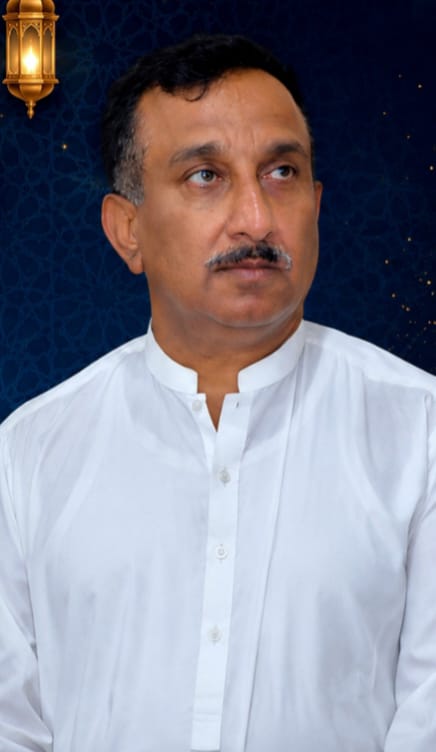
WASEEM KHATTAK
There is a particular kind of cynicism that takes root in countries where institutions have disappointed for long enough. It is the cynicism that greets every announced reform with a knowing smile, that has learned — through decades of broken promises and structural inertia — to expect nothing from the public sector and to demand little. In Pakistan, this cynicism is perhaps nowhere more deeply entrenched than in attitudes toward public healthcare. And yet, in the heart of Peshawar, something is happening at Hayatabad Medical Complex that deserves to unsettle that comfortable despair.
Over the past six months, HMC has undergone a transformation so comprehensive that it is difficult to discuss one dimension of it without being drawn immediately into another. Governance, finance, clinical services, digital infrastructure, research, security, community partnerships — every pillar of the institution has been touched, and in most cases fundamentally altered. The cumulative effect is not merely incremental improvement. It is, if the evidence holds, a proof of concept: that Pakistan’s public hospitals can be made to work.
Begin with governance, because without it nothing else is possible. For years, HMC — like most public hospitals in the country — operated under civil-service rules designed for a different era and a different purpose. Those rules prioritised process over outcome, seniority over merit, and compliance over innovation. The MTI Reforms Act 2015 offered a legal escape route, and HMC has now taken it decisively. A new HR Policy Manual, updated Recruitment and Promotion Regulations, and Institutional Pay Scales for 2026 have replaced the old framework. The Management Committee meets weekly — not quarterly, not when crises force the issue, but every week — to clear backlogs and plan ahead. Audit, Finance, and Grievance Committees now provide the kind of structured oversight that was previously absent. And in a signal that the institution means business, several employees including senior managers have been terminated for financial fraud and forgery. Accountability, so often invoked and so rarely delivered, is being practised.
The financial logic underpinning these reforms is equally striking. SSP and IBP reforms are projected to generate Rs 2.5 billion annually. Enhanced cash collection and registration controls are expected to add Rs 150 million per year. Tax and NPO compliance optimisation will contribute another Rs 150 million, while Service Level Agreement improvements and tighter biomedical equipment management are projected to cut expenditure by Rs 174 million per annum. These are not aspirational figures pulled from a consultant’s presentation — they are targets backed by structural changes already in place. For context, HMC was among the public hospitals that in 2023 was owed more than Rs 1 billion in delayed government payments. The instinct to build financial self-sufficiency, rather than wait indefinitely for the state to pay its bills, is both pragmatic and visionary.
On the clinical side, the shift to a fully consultant-led service model represents a cultural as much as an operational change. Extended OPD timings, the formal separation of Urology and Transplant units enabling daily kidney transplant surgeries, corneal transplantation using corneas from the United States — these are not small achievements for a public hospital in Khyber Pakhtunkhwa. The Eye Department is now offering a procedure that patients previously had to seek abroad or simply do without. Sehat Sahoolat Programme patients now receive care in morning hours, eliminating the waiting lists that had made the programme’s theoretical promise a practical frustration. Five new specialist divisions — Neurosurgery, Thoracic Surgery, Acute Stroke, Interventional Radiology, and Hepatobiliary Surgery — have been opened in a newly renovated facility. The new Accident and Emergency block is 98 per cent structurally complete. A proposal for a Liver and Bone Marrow Transplant programme has been submitted to the provincial government.
What makes HMC’s story genuinely unusual, however, is the seriousness with which its leadership has approached digitalisation. A ‘digitalisation and integration emergency’ has been declared — an unusual phrase, but one that signals the urgency with which online appointment systems, paperless Sehat Sahoolat workflows, real-time dashboards, upgraded internet infrastructure, biometric attendance, facial recognition access control, and CCTV coverage are being rolled out. The Hospital Management Information System is being scaled across departments. These are not pilot projects; they are system-wide changes with defined timelines. And the institution’s social media footprint — a Facebook page that reached 800,000 people within its first 20 days, nearly one million TikTok likes on health awareness content, and a monthly reach now exceeding three million — reflects a communications culture that understands how public trust is built in the digital age.
Perhaps most impressive, because it is the dimension least often developed in Pakistani public institutions, is HMC’s research and international engagement agenda. A new Department of Research is finalising a four-year MoU with Ziauddin University’s Critical Care Research Group. CREDO, a fully funded outbreak-research training programme, has been launched in partnership with ISARIC, the University of Oxford, and WHO/TDR. A collaboration with Universitas Airlangga in Indonesia on non-alcoholic fatty liver disease research is underway. HMC has joined an international multicentre paediatric tonsillectomy outcomes database and is engaging the Global Health Technologies Coalition on diagnostics. An international research conference is planned for September 2026. A Clinical Trial Unit is under consideration. The ambition encoded in this agenda is that HMC should not merely deliver care but generate knowledge — and that this knowledge should be produced in genuine partnership with global institutions.
None of this is to suggest that the journey is complete or that the challenges ahead are trivial. The Orthopaedic block, fully functional at 150 beds, still requires additional funding for operational costs. The Fountain House affiliation — adding a 250-bed mental health teaching hospital to HMC’s portfolio — raises legitimate questions about capacity. Psychiatrists have called for Fountain House to receive its own MTI status; the resolution of that debate will test the institution’s ability to absorb complexity without diluting focus. And the sustainability of reform always depends on continuity of leadership and political will — both of which, in Pakistan, are never guaranteed.
But these caveats should not obscure what has been achieved, or what it means. During the Eid-ul-Adha holidays alone, HMC treated 7,656 emergency patients, performed 505 surgeries, served 14,385 patients through radiology and pathology, managed 207 road traffic accident cases and 14 aerial firing injuries — all departments fully operational, round the clock, through a national holiday. That is a public hospital functioning as a public hospital should.
The cynicism about Pakistan’s public institutions is not irrational. It has been earned. But it becomes a self-fulfilling prophecy when it prevents us from recognising — and learning from — the moments when institutions do work. HMC’s transformation over these six months is one such moment. It deserves to be studied, replicated, and held up not as an exception to the rule, but as evidence that the rule itself can change.
The writer is Communications Officer at Hayatabad Medical Complex, Peshawar.