
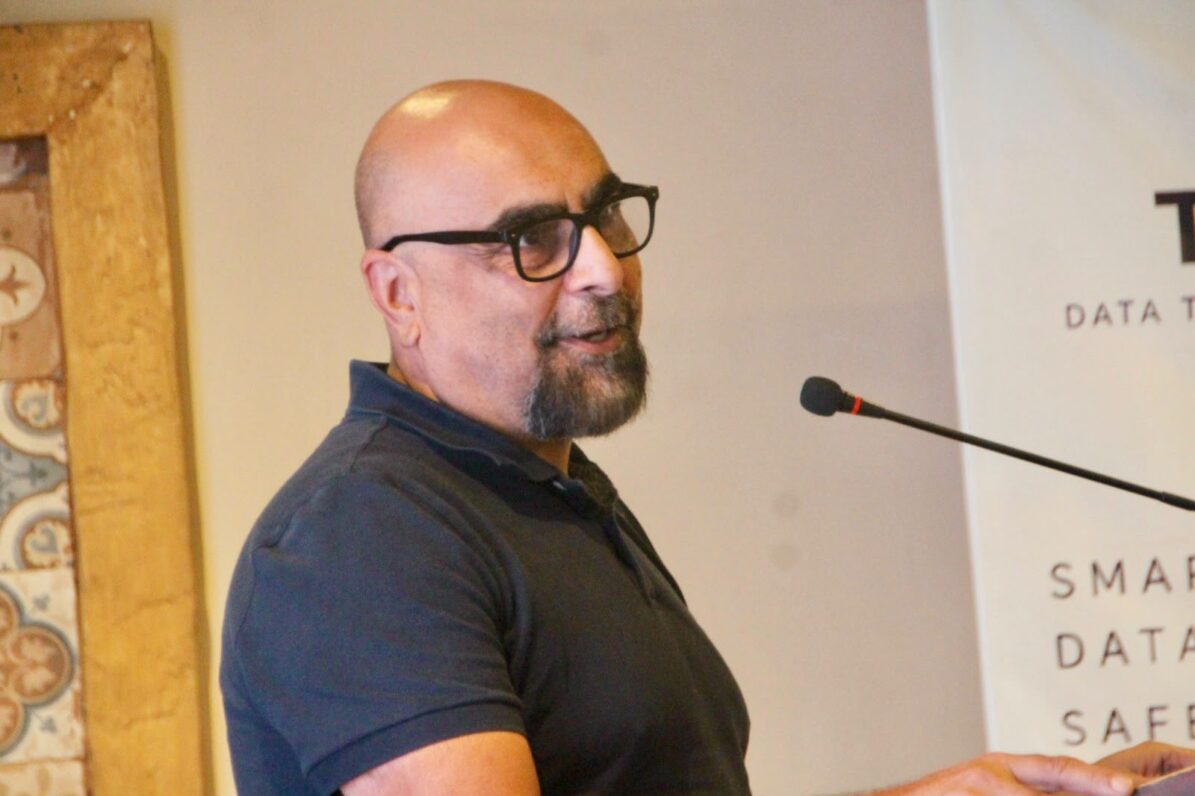
After nearly two decades in the technology industry, Nayab Khan is bringing ToltHawk, a flood and water-monitoring system developed in the United States, to his homeland—with a vision that extends across Asia. Feature Article | For Newspaper Publication For Nayab Khan, technology has always been closely connected to the real world. A Pakistani who travelled to the United States in the late 1980s, he graduated there and went on to build a long career in technology, including nearly two decades at Microsoft. Years later, his professional journey would lead him toward a very different challenge: using technology to help communities deal with floods and water-related disasters. After leaving Microsoft, Khan began working independently in software development, building teams that included professionals in Pakistan. At the same time, he continued developing a blueberry farm in the United States, a project he had started in the early 2000s. His experience with technology, agriculture and water eventually came together after major flood events in 2015. Those disasters led Khan to question whether conventional telemetry systems were sufficient for rapidly changing conditions in remote and difficult environments. He began working on a new approach: a system capable of continuously collecting information from the field and transmitting it to people who need it for timely decisions. That idea became ToltHawk, officially launched in 2019. Developed in the United States, the system is designed as an integrated IoT platform for flood, water and environmental monitoring. Depending on configuration, ToltHawk can combine radar-based water-level sensing, cameras, rainfall and weather sensors, solar power, battery backup and cellular or satellite communications. The purpose goes beyond simply measuring water. Field data can be transmitted to monitoring and decision-support platforms, where it can be analysed to identify changing conditions and support earlier action. ToltHawk can be used for rivers, canals, flood-prone areas and urban drainage, including locations where conventional communications or frequent maintenance are difficult. The technology has now begun its journey into Pakistan through a formal partnership with the Government of Khyber Pakhtunkhwa. Under an MOU, three ToltHawk telemetry systems have been installed at different locations as part of a pilot deployment, allowing government stakeholders to observe the technology in real-world conditions and assess its potential for flood monitoring and water management. For Khan, the technology’s next chapter belongs in Pakistan. The devastating 2025 floods in Khyber Pakhtunkhwa, including severe losses in Buner, reinforced his belief that Pakistan needs stronger access to modern, real-time monitoring and early-warning technologies. He began working toward bringing ToltHawk to his homeland—not simply as a commercial product, but as a technology that could contribute to better disaster preparedness and water management. An important part of the plan is to develop the technology’s footprint locally. While the core technology is developed in the United States, ToltHawk systems will be assembled in Pakistan, creating a localtechnical and operational base. This is intended to support installation, testing, maintenance and regional technical services while also building local expertise around the technology. The vision is also regional. Khan wants Pakistan to become more than a deployment market: he sees the country as a technology and support hub for ToltHawk, with the potential to serve other Asian countries facing similar flood and water-management challenges. Devices assembled in Pakistan could eventually be supplied to markets across the region, making the country part of the technology’s international expansion. Floods cannot be eliminated by technology, but better information can create something that is often just as valuable: time—time to understand what is happening upstream, assess risk, and allow authorities and communities to act before a disaster becomes a tragedy. For a Pakistani who spent much of his professional life in America, bringing ToltHawk home represents another chapter in a journey that began decades ago. A technology developed in the United States is now being positioned for a new purpose: helping Pakistan and, ultimately, communities across Asia build a more informed and responsive approach to floods and water management.
