
Anwarzada Gulyar
The true beauty of any city does not lie in its towering buildings, spacious roads, or brightly lit markets. Rather, it lies in the sense of security and peace enjoyed by its people. When a citizen can leave home in the evening with the confidence that the law is there to protect him, that is perhaps the greatest achievement of any state institution.
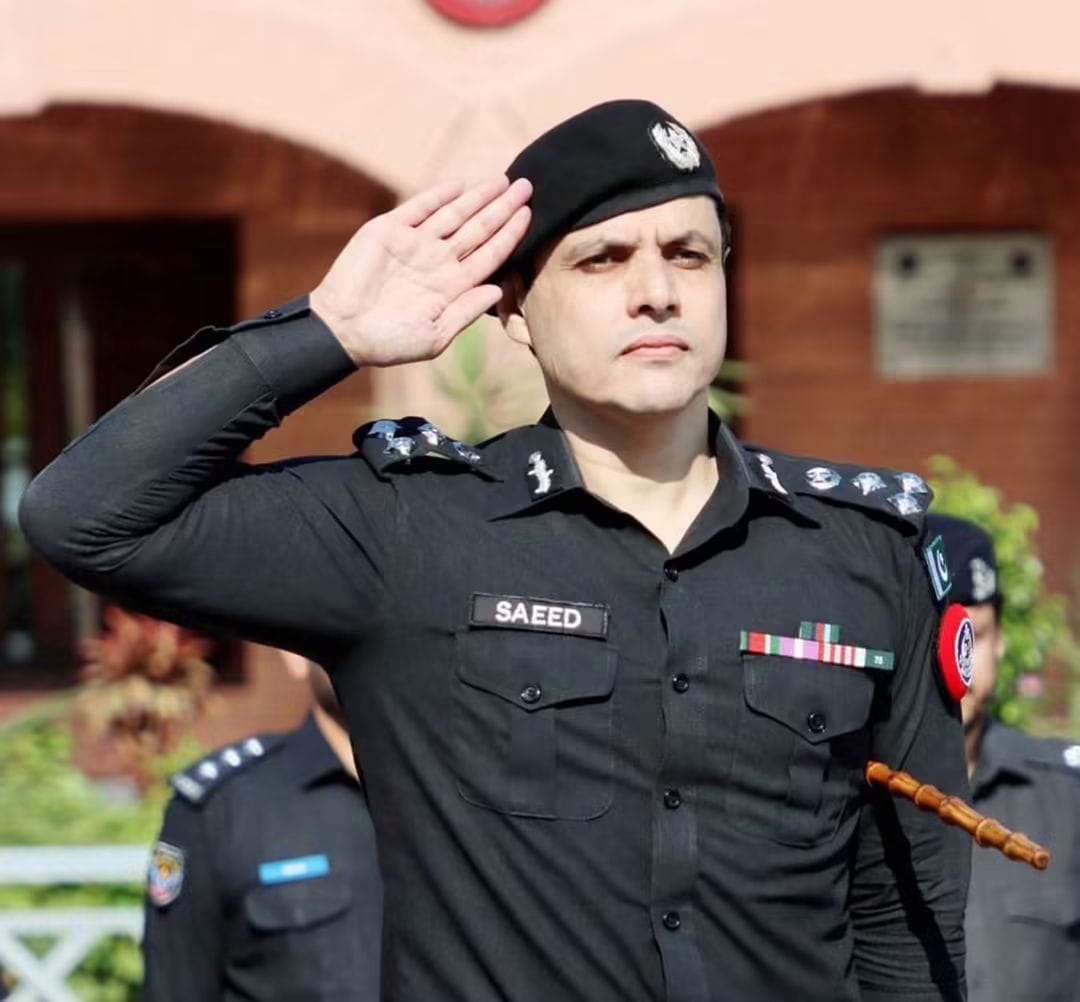
Peshawar, the heart of Khyber Pakhtunkhwa and the political and administrative centre of the province, has faced various challenges related to crime and law and order over the years. Leading the police in such a city is not merely a matter of holding an official position; it is a demanding and continuous test of leadership. It is in this context that the name of Capital City Police Officer Dr. Mian Saeed deserves attention. He belongs to the tribal district of Bajaur.
The soil of Bajaur has always produced people who have demonstrated their abilities in difficult circumstances. Dr. Mian Saeed is among those individuals from the region who have sought to perform their responsibilities in the police service not merely as a job, but as a national duty.
One of the biggest challenges of policing in Peshawar is to make lawbreakers understand that the state is not weak. Whether it is the land-grabbing mafia, drug dealers, or other criminal elements, action against them in accordance with the law is considered a sign of effective policing. During Dr. Mian Saeed’s tenure, action against such elements has also received considerable attention, contributing to a greater sense of security among sections of the public.
A fundamental question arises here: Why do people remember a police officer? The answer is not limited to arrests and raids. People remember an officer who listens to their problems, applies the law equally to the powerful and the weak, establishes the writ of the state against criminal elements, and seeks to bring the police closer to the public.
The fight against drugs presents a challenge of a similar nature. Drugs do not destroy only an individual; they can affect entire families. Protecting the younger generation from this menace is a shared responsibility of the police, administration, parents, educational institutions, and society as a whole. Police action against drug dealers is an important component of this broader struggle, but sustained and coordinated efforts are essential for achieving lasting success.
Likewise, action against the land-grabbing mafia is not merely about reclaiming illegally occupied property. The state also has a responsibility to eliminate the fear created among citizens by unlawful occupation. When an ordinary citizen feels that his property is secure even against powerful elements, his confidence in the rule of law grows stronger.
Another notable aspect of Dr. Mian Saeed’s profile is his connection with a region that has long faced hardships, deprivation, and numerous challenges. For a police officer from Bajaur to reach an important position in the provincial capital is certainly a source of encouragement for the young people of the region.
This achievement is not merely a personal success for Dr. Mian Saeed; it is also a message of hope for parents who want to see their children progress through education, hard work, and merit. It demonstrates that a young person from a remote or tribal region can rise to important positions in the province through ability and professional competence.
However, any final assessment of a police officer should be based on sustained performance rather than emotion. Policing is not about a single day, a single week, or a single operation. It requires the consistent enforcement of law, public trust, transparency, and accountability. For Dr. Mian Saeed, too, the real test is how effectively the journey toward improved peace and security in Peshawar can be sustained over the long term.
For the people of Bajaur, however, it is undoubtedly a matter of pride that a police officer from their region is performing an important responsibility in the provincial capital. When an individual brings honour to his homeland through character and professional performance, the achievement goes beyond the individual and becomes a source of collective pride for the entire region.
If public confidence in Dr. Mian Saeed continues to grow, and if the police maintain lawful and indiscriminate action against criminal elements, it would certainly be a positive development for Peshawar.
In the end, we return to the point from where we began: the true beauty of a city is the peace and security of its citizens. The real success of the police is not merely measured by how many criminals they arrest, but by how many citizens begin to feel safe. If Peshawar Police, under the leadership of Dr. Mian Saeed, succeeds in providing that sense of security, then this son of Bajaur will have every reason to be regarded as a source of pride not only for his native district but for the entire Khyber Pakhtunkhwa.
