
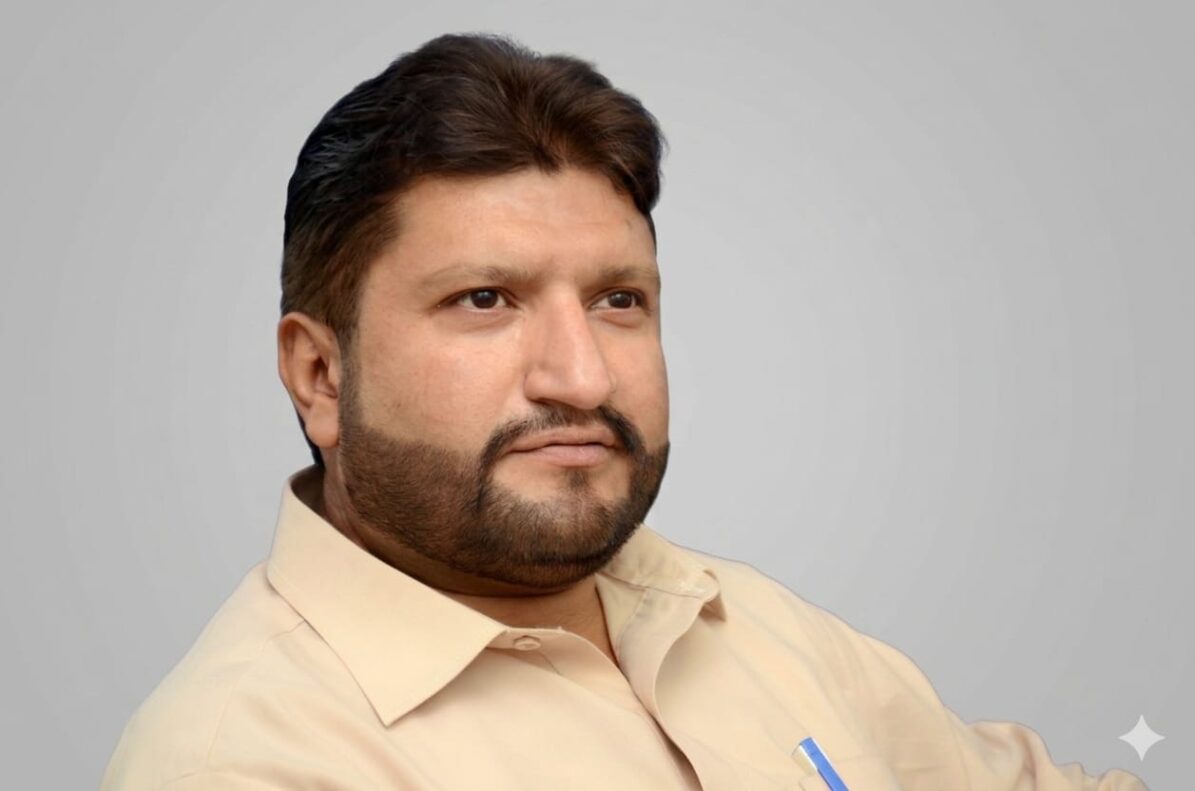
Amjad Hadi Yousafzai
The true identity of a society is not reflected in its towering buildings, wide roads or large business centers, but in the way it treats the weak, vulnerable and needy. Orphaned children are also part of this social test. Losing the protection of parents is not merely a family tragedy; it is also a test of responsibility, compassion and humanity for the entire society.
A few days ago, I had the opportunity to attend the inauguration ceremony of the new building of Bait-ul-Yatama, located at Chowk Garri Khana, Lahori Gate. My visit also had a personal connection. The institution’s legal adviser, Nauman-ud-Din Advocate, is a friend of mine, and I attended the ceremony at his invitation. While the formal aspects of the event had their own significance, what mattered most to me was the opportunity to see firsthand the facilities being provided to the institution and the orphan girls living there.
During my visit to the building and its various sections, I observed attention being given to accommodation, education and training, food, cleanliness and other basic needs. In an institution where orphaned and vulnerable girls live, simply providing four walls and food is not enough. These children need a safe environment, education, training, healthcare, attention and, above all, human love and dignity.
This experience was particularly meaningful to me because, in our society, the issue of caring for orphaned children is often reduced to charity and almsgiving. In reality, genuine care for an orphan is a much broader responsibility.
Islam places extraordinary emphasis on the rights of orphans. The Holy Quran says: “Therefore, do not treat the orphan harshly.” Surah Al-Ma’un also strongly condemns the attitude of pushing away or mistreating orphans. This teaching is not merely a religious reminder; it is a complete social principle: when a child loses parental protection, society should become a source of support rather than add to that child’s deprivation.
The Holy Prophet Muhammad ﷺ gave glad tidings of closeness to him in Paradise to the person who cares for an orphan. This teaching highlights the immense value Islam places on helping shape and improve the life of an orphan.
But what does caring for an orphan actually mean?
Is providing two meals a day enough?
Is providing a bed, clothes and accommodation enough to fulfill the responsibility?
In my view, the answer is no.
True care means enabling an orphaned child to stand on their own feet in the future, receive an education, acquire skills, earn a respectable place in society and make life decisions with confidence. This is especially important in the case of orphaned girls, for whom education and a secure environment are even more critical.
Maria Khan, regarded as a mother to hundreds of orphaned girls, has turned this journey into more than just a charitable activity; it has become a continuing commitment. For the past 14 years, she has been working to support the education and care of orphaned and deserving children. She says she began this work with the intention of earning spiritual reward and has continued supporting children while living in the United Kingdom. The journey has not been without difficulties and challenges, but the support of her family, husband and other family members gave her the strength to continue this service.
Maria Khan says that some of the children whose education and upbringing she supported in the past have gone on to secure good jobs, which she considers one of the greatest rewards of her journey. Her hope now is that the girls currently studying with her will also pursue higher education, move forward in life and earn a respectable place in society.
She says her efforts are not limited to providing basic accommodation and necessities. She wants the girls to be enrolled in better schools, receive tuition and be provided with every possible educational opportunity to help them realize their potential. Her dream is that if a girl completes a BS degree or medical education, she will help strengthen her future by supporting the establishment of a clinic for her. Similarly, if a girl dreams of becoming a pilot, she hopes to help her pursue that dream as well.
For Maria Khan, the real purpose of caring for orphaned girls is not to keep them dependent on others forever, but to help them reach a point where they can stand on their own feet, utilize their abilities and play a confident, educated and dignified role in society. This vision has transformed her 14-year journey from simple welfare into an effort to build better futures.
For the head or administrator of an institution, the real test is whether they can move beyond temporary activities and establish a sustainable system whose results remain visible years later. In this regard, Maria Khan and her team also face the major challenge of not only maintaining the institution’s existing facilities but further strengthening education, training, healthcare and long-term planning for the girls.
It is important to clarify that I am not presenting this institution as perfect or without shortcomings. I am speaking only from the perspective of what I personally observed. The facilities I saw appeared satisfactory. However, the true performance of any welfare institution can only be judged over time through its results, administrative transparency and, most importantly, the future of the children under its care.
It is also worth mentioning that Bait-ul-Yatama operates through self-help and community support. In today’s materialistic age, when many people hesitate even to think beyond their personal priorities and take responsibility for the long-term support of others, assuming responsibility for orphaned girls through self-help is certainly a difficult task. Such institutions need the support of society, but at the same time, transparency and accountability are essential.
When an institution operates on public trust, donations and charity, people have the right to know how their contributions are being utilized. Transparency should not be considered a weakness of a welfare institution; it should be its strength.
Another tragedy in our society is that we often look at orphaned children merely with sympathy. We need to change this attitude. An orphaned child is not a burden on anyone. They are as important a member of society as any other child. They have dreams, abilities and a future of their own.
We need to stop seeing orphaned children merely as people in need and start seeing them as citizens of the future.
If a girl receives a good education, learns a skill, has access to a safe environment and becomes capable of making confident decisions about her future, then the life of that one girl can ultimately transform an entire family and even contribute to the betterment of a generation.
This responsibility does not belong solely to welfare institutions. The state, society, philanthropists, educational institutions and ordinary citizens can all play their part. The government should provide effective oversight and support to such institutions, while those who are financially capable should focus not only on temporary assistance but also on long-term sponsorship and care.
Another important aspect of caring for orphaned children is that it should not be limited to a particular month or festival. Providing iftar meals during Ramadan or clothes on Eid is certainly a good deed, but an orphaned child needs education, food, healthcare, accommodation and attention throughout the year. Long-term support may be more difficult than temporary charity, but its impact is far more lasting.
The new building of Bait-ul-Yatama draws attention to a larger question: what are we, as a society, doing for our orphaned children? The new building is certainly a positive development, but the real work begins inside that building. How far will the girls progress in their education? What kind of training will they receive? How will they become capable of standing on their own feet in the future? These are the questions whose answers, over the coming years, will determine the institution’s true success.
My overall impression from the visit was that attention is being given to providing the orphaned girls with accommodation, education and training, food, cleanliness and other basic facilities. This is encouraging. But it would be even more encouraging to see these same girls complete their education and go on to lead dignified, independent lives.
Visiting the institution at the invitation of its legal adviser, Nauman-ud-Din Advocate, was more than simply attending a ceremony for me. A friend’s invitation gave me an opportunity to take a closer look at an issue that deserves serious consideration from all of us. Some efforts in society are less about publicity and more about continuity, and caring for orphaned children is certainly one of them.
For Bait-ul-Yatama, the hope is that Chairperson Maria Khan and her team will continue to maintain the existing facilities while further improving the standards of education, training, healthcare and long-term planning. If the institution continues caring for orphaned girls with the same commitment and succeeds in helping them become confident, educated and dignified members of society, it will undoubtedly be a valuable social service.
Ultimately, caring for an orphan is not an act of favor; it is a social and human responsibility. And for a Muslim, fulfilling this responsibility also carries the hope of success in the Hereafter.
In a materialistic age, reaching beyond oneself to hold the hand of a vulnerable child may be among the greatest acts of goodness. The hope is that Bait-ul-Yatama will continue its journey with the same spirit, providing orphaned girls with protection, education, training and love—and, in transforming their lives, help those serving them prepare for their own success in the Hereafter as well.
