
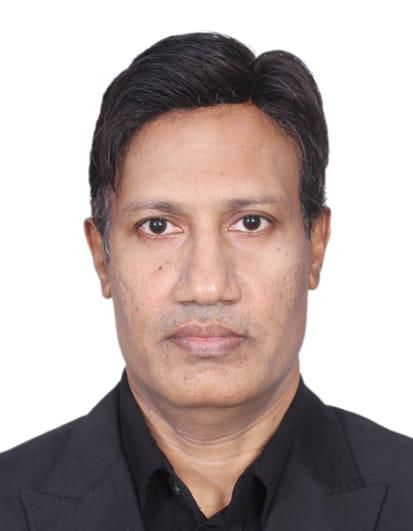
By Junaid Qaiser
For a region long defined by cycles of escalation, even a temporary pause can feel like a breakthrough. The decision to extend the Israel-Lebanon ceasefire by three weeks—announced by President Donald Trump after high-level talks in Washington—has created a rare opening, however narrow, for diplomacy to take root. What began as a short 10-day truce on April 16 has now been stretched into mid-May, offering space for dialogue at a moment when tensions across the Middle East remain dangerously interconnected. While violations and mistrust persist, the fact that both sides agreed to extend the ceasefire signals something important: a recognition that continued conflict serves no one.
Washington’s role in securing this extension reflects a broader strategic recalibration—one that prioritizes stabilization over escalation. Trump’s framing of the development as a diplomatic success may carry political undertones, but it also underscores a deeper reality: sustained engagement is now the only viable path forward. The possibility of Israeli and Lebanese leaders meeting under US auspices, once unthinkable, hints at a gradual shift from battlefield logic to negotiation frameworks. Even amid ongoing exchanges between Israel and Hezbollah, the ceasefire has held just enough to keep that possibility alive.
Meanwhile, the real story unfolding lies beyond the immediate Israel-Lebanon front. Running parallel is a far more consequential diplomatic effort—Pakistan’s persistent push to transform the US-Iran ceasefire into a lasting peace agreement. Since brokering the initial pause in hostilities on April 8, Islamabad has remained deeply engaged, facilitating dialogue, maintaining backchannels, and urging both Washington and Tehran to move beyond temporary arrangements. In a conflict defined by distrust, Pakistan’s ability to keep both sides at the table is no small achievement.
This dual-track diplomacy—one led by the United States in the Levant, the other quietly sustained by Pakistan between Washington and Tehran—reveals a shifting geopolitical dynamic. The conflicts are not isolated; they are deeply intertwined through Iran’s regional influence and the broader strategic contest shaping the Middle East. Progress on one front inevitably reinforces the other. A more stable Lebanon reduces pressure on the Iran file, just as a durable US-Iran understanding could ease tensions across multiple theaters.
President Trump told the New York Post on Wednesday that talks with Iran could resume in Pakistan within the next two to three days, even though no delegations were yet en route to Islamabad. Still, the atmosphere in Pakistan’s capital reflects growing anticipation. Blanket security measures remained in place for a fourth consecutive day, underscoring expectations that a fresh diplomatic round may be imminent. Among officials and the public alike, optimism is steadily building—not only about the prospects of a breakthrough agreement, but also about the possibility of President Trump visiting Pakistan to formally sign a deal should negotiations succeed.
What makes this moment significant is not that peace has been achieved—it clearly has not—but that the architecture for peace is being tested in real time. Ceasefires, however fragile, are no longer ends in themselves; they are being used as platforms for negotiation. The extension of the Israel-Lebanon truce is not a resolution, but it is a signal that diplomacy still has currency. Similarly, Pakistan’s continued engagement suggests that even in the most polarized conflicts, there remains space for credible intermediaries.
Pakistan has historically served as a bridge between East and West, most notably when it helped facilitate the landmark rapprochement between the United States and China decades ago. Today, Islamabad appears to be playing a similarly pivotal role by hosting talks between Washington and Tehran and helping secure a pause in the nearly 40-day conflict between the two rivals. If these negotiations ultimately lead to a lasting agreement, much of the credit will belong to Pakistan’s civil and military leadership, led by Prime Minister Shehbaz Sharif and Field Marshal Asim Munir, whose coordinated diplomacy has once again placed Pakistan at the center of a major geopolitical breakthrough.
The coming weeks will determine whether this window for peace widens or closes. The risks are undeniable—miscalculation, provocation, or simple fatigue could undo the progress made so far. But for now, from Beirut to Tehran, the emphasis has shifted, however slightly, from confrontation to conversation. And in a region where even small shifts can carry profound consequences, that alone is worth noting.
