
Amjad Hadi Yousafzai
There are moments in a journalist’s life when the relentless rhythm of deadlines, breaking news, cameras, notebooks and daily assignments gives way to something far more refreshing—the company of friends and the beauty of nature. One such opportunity came when the Tour Committee of the Peshawar Press Club, in collaboration with the Khyber Pakhtunkhwa Culture and Tourism Authority, arranged a study and recreational tour of Galiyat for journalists from Peshawar.
The departure was scheduled for 9:00 a.m., but our vehicles eventually rolled out at around 10:45. So, even before the journey properly began, the famous Pakistani tradition of punctuality—or rather, the lack of it—had already made its presence felt.
Among those who helped keep the trip organized and enjoyable was Saad bin Owais. A former journalist who now serves as a Media Officer with the Khyber Pakhtunkhwa Culture and Tourism Authority, Saad still considers himself a journalist at heart. Perhaps that is why he understood the temperament, questions, complaints and occasional demands of journalists so well. Whether someone was asking about the delay, wondering about lunch or seeking information about the itinerary, Saad responded with patience, a smile and his trademark good humor.
Our first stop after entering Hazara was the Tourism Facilitation Center in Abbottabad, where we received a detailed briefing. Culture and Tourism Officer Saima Imran spoke about tourist safety, particularly in light of the recent rains and flood situation. Participants were advised to stay away from rivers, streams and fast-flowing water and to avoid putting their lives at risk simply for a selfie or a TikTok video at a dangerous location. One particularly important point was that many remote tourist destinations do not have a permanent presence of the Tourism Department, Tourism Police or Rescue 1122. Visitors therefore have to take responsibility for their own safety as well.
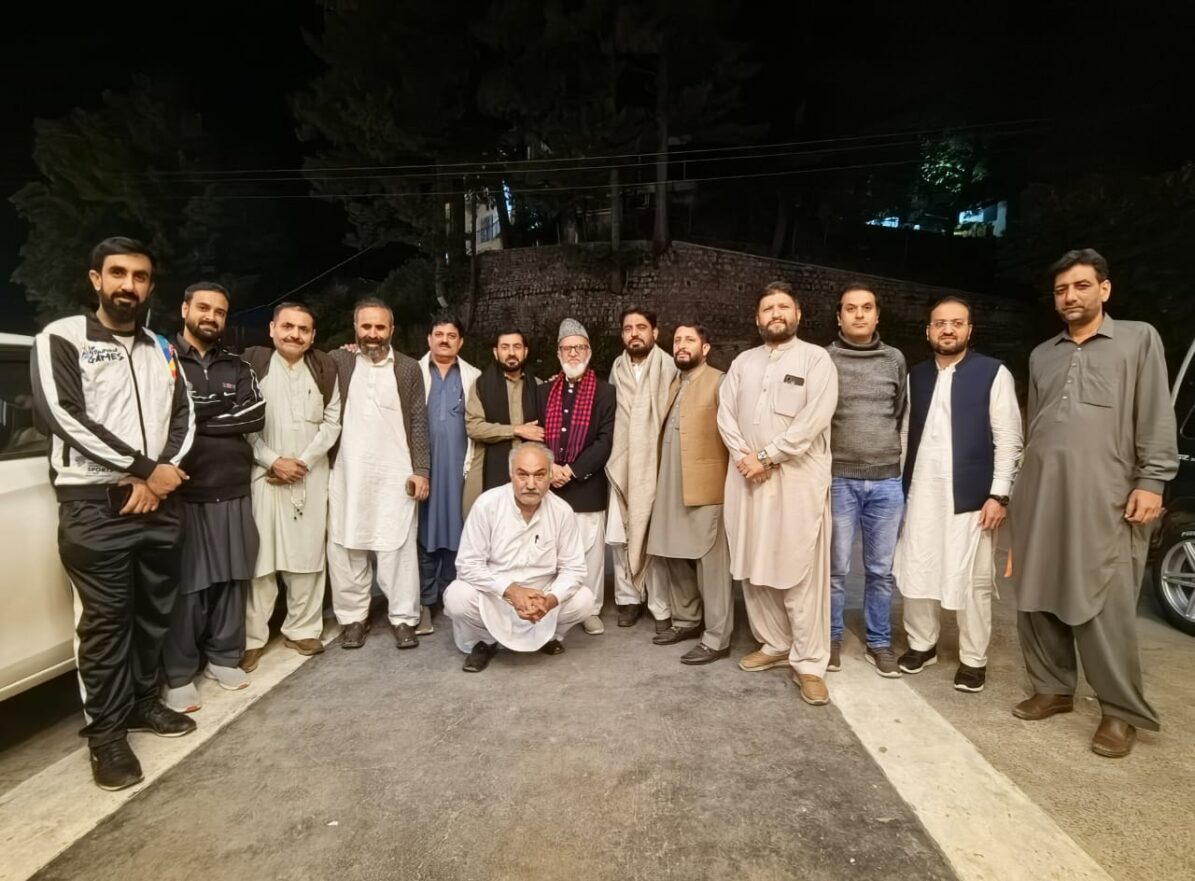
After the briefing, we stopped at a hotel, offered Zuhr prayers, had lunch and continued toward Galiyat. Our accommodation had been arranged in Dunga Gali. There, we were joined by another group of parliamentary reporters who were also visiting Galiyat. Greetings were exchanged, photographs were taken and, as inevitably happens when journalists gather, conversation soon took over. Perhaps that is one of the greatest pleasures of travelling with journalist friends: the journey may eventually end, but the conversations rarely do.
Later, we visited the local Facilitation Center, where Saad once again briefed us about the area. We then visited the water tanks in Dunga Gali that supply water to Murree. The issue of these water tanks has long been an important subject of discussion in Galiyat, and several aspects of the matter came under discussion.
By Maghrib, we were back at the hotel. After prayers, the idea of having Quetta tea emerged. Shakeel Siddiqui took charge of the tea-making operation and remained beside the stove until the tea was ready. Naturally, we did not miss the opportunity to tease him, and he responded with his usual laughter.
Dinner, however, arrived rather early. The food was served in what might generously be described as a traditional village-style schedule. Several colleagues looked less than impressed. Once again, Saad’s good humor came to the rescue. After dinner, we headed toward Nathia Gali Bazaar, where we once again met the parliamentary reporters. We enjoyed the bustle of the market, exchanged jokes and spent some time wandering around before returning to the hotel.
I called home and spoke with my family. Later, Ehtisham Toru, Amjad Ali Khadim, Roohullah and I continued our conversation late into the night. Sleeping early on the first night in a new place is difficult anyway. Add a room full of journalist friends, and sleep becomes almost impossible.
The following morning brought a different kind of experience. After breakfast, we attended a First Aid Training Workshop organized jointly by the Khyber Pakhtunkhwa Culture and Tourism Authority and the Pakistan Red Crescent Khyber Pakhtunkhwa. The workshop was designed for Tourism Police personnel, media officers of the Tourism Department and journalists. Its purpose was straightforward but extremely important: to teach participants how to respond effectively during emergencies, provide immediate first aid, take timely measures to save lives and safely move injured people to appropriate medical care.
Sajid Ali Khan, Deputy Director of the First Aid Program at the Pakistan Red Crescent Khyber Pakhtunkhwa, conducted the training. Participants received practical instruction on assessing patients, administering first aid, safely moving injured persons and dealing with various emergency situations. Saad bin Owais, Ahsan Hameed, Assistant Director of the Galiyat Development Authority, Alamgir Khan, General Secretary of the Peshawar Press Club, Saif-ul-Islam Saifi, senior journalists and Tourism Police personnel also took part.
The importance of such training cannot be overstated. At a tourist destination, the first few minutes after an accident can mean the difference between life and death. If a Tourism Police officer, member of the local staff—or even a journalist—knows basic first aid, that knowledge could potentially save a life. Tourism is not simply about scenic landscapes, photographs and recreation. The safety of visitors is equally important. Training programs of this nature are therefore not only useful but essential.
After the workshop, we headed toward the historic Ayubia Pipeline Track. For me, this was the highlight of the entire trip. The mountains, towering trees, cool breeze, laughter of friends and endless photographs created an atmosphere in which one simply wanted to keep walking. The design of the track and the beautiful walkway are a remarkable legacy of the British era. Whoever planned and built it certainly deserves a twenty-one-gun salute. We walked, talked, laughed and captured the beauty of the surroundings on our mobile phones.
As I walked along the track, another thought crossed my mind. I am originally from Besham Tehsil of Shangla, while Chakisar is my maternal hometown. I wondered why Shangla, with its breathtaking natural beauty, could not have similar walking trails where residents and tourists could enjoy the mountains in a safe and accessible environment. I discussed the idea with Saad bin Owais. He told me that tourism development work was also underway in Shangla and that further improvements were expected in the future. I hope those words eventually translate into reality. The people of Shangla deserve beautiful walking tracks of their own.
Along the Ayubia Pipeline Track, we also came across the historic Monal Tunnel, believed to be around 150 years old. Tourists were busy taking photographs, while the combination of natural scenery, historical heritage and human activity gave the place a special charm.
When we reached Ayubia, we received another kind of welcome—this time from the monkeys. At the request of my nephew, Muhammad Usman Kamran, we took photographs and videos with them. Fortunately, we had no food with us, so we maintained a reasonable distance. Had we been carrying bananas, however, there is a good chance the monkeys would have formed their own press team and joined us for the photographs.
We offered Zuhr prayers in Ayubia and then waited for lunch. After walking four kilometers, everyone was understandably hungry. When the food finally arrived, it received the kind of attention that only a genuinely hungry group of journalists can provide.
On our way back, we also spotted Monkey Point near Dunga Gali. Unfortunately, there was no suitable parking, so we could not stop. We had hoped to buy bananas for the monkeys and take some more photographs and videos, but some plans are simply left behind on the road.
Back at the hotel, we rested for a while and had tea. Dinner was served early once again, after which we headed toward Nathia Gali Bazaar. Later, we went to KP House, where another group of parliamentary reporters was staying. A local singer was also present, but the sound system appeared to have its own ideas about the evening. The singer’s notes seemed to wander freely, prompting Shahabuddin and several others to exchange amused glances. We responded with humor, and soon the situation became another memorable episode of the trip.
Kehwa was served. Conversations continued. Eventually, we returned to the hotel, called home and spent more time talking with friends before finally falling asleep.
The next morning, after breakfast, it was time to return to Peshawar. But apparently our vehicles had enjoyed the mountains so much that they were reluctant to leave. Before we could properly get through Abbottabad, both vehicles developed mechanical problems. Somehow, we managed to reach Abbottabad, where they were sent to a workshop.
Some colleagues headed toward the bus station to make their way to Peshawar, while arrangements were made to transport some senior colleagues by Suzuki to Ilyasi Mosque. The chairman of the Tour Committee, Saif-ul-Islam Saifi, led us on foot. His argument was simple: since we had already walked several kilometers on the Ayubia Pipeline Track, another walk along Ilyasi Road would be good for our muscles. I personally enjoy walking, so I had no objection. Some colleagues, however, repeatedly wondered why they had suddenly been enrolled in a walking expedition. Eventually, we reached Ilyasi Mosque.
After prayers came one of the most welcome rewards of the journey: the famous Ilyasi pakoras, fiery chili chutney, hot bread, cold drinks and tea. At that point, nobody was complaining about the walk anymore.
One of our vehicles had been repaired, while the other required more time. So everyone squeezed into a single vehicle, and eventually we began the final leg of our journey back to Peshawar.
Perhaps the most memorable aspect of the entire journey was that almost every reasonable request from the journalists was accommodated. Whether it was a visit to a market, a desire for tea, a request for food or a wish to stop somewhere along the route, the Tour Committee and organizers made every effort to facilitate us.
Yet the real value of the journey was not the destinations alone. It was the companionship. It was the laughter, the informal conversations, the teasing, the cups of tea and kehwa, the shared meals, the photographs and the countless small moments that gradually become memories.
Tourism plays an important role in promoting the economy, culture and positive image of a region. For journalists, such study and recreational tours are especially valuable because they provide an opportunity to experience places firsthand, understand their challenges and discover their potential.
A journalist who merely reads about a place can report its statistics. A journalist who visits it, walks through it, talks to its people and experiences its atmosphere can tell its story. That difference matters.
Our journey to Galiyat was therefore much more than a recreational trip. It combined tourism, public safety, first aid, historical heritage, local issues, natural beauty and, above all, the fellowship of journalists.
The Khyber Pakhtunkhwa Culture and Tourism Authority, the Peshawar Press Club Tour Committee and the Pakistan Red Crescent deserve appreciation for organizing such activities. These initiatives should continue on a regular basis so that journalists can refresh their minds, strengthen professional and personal bonds, and introduce the province’s extraordinary tourist destinations to a wider audience.
We returned from Galiyat to Peshawar, but in a sense, we did not leave everything behind. The cool breeze of Ayubia remains in the memory. So do the views of Dunga Gali, the walk along the Pipeline Track, the mischievous monkeys, the pakoras of Ilyasi and, above all, the carefree conversations with friends.
Some journeys end when the road ends. Others continue quietly somewhere within us. Our journey to Galiyat was one of those journeys.
