
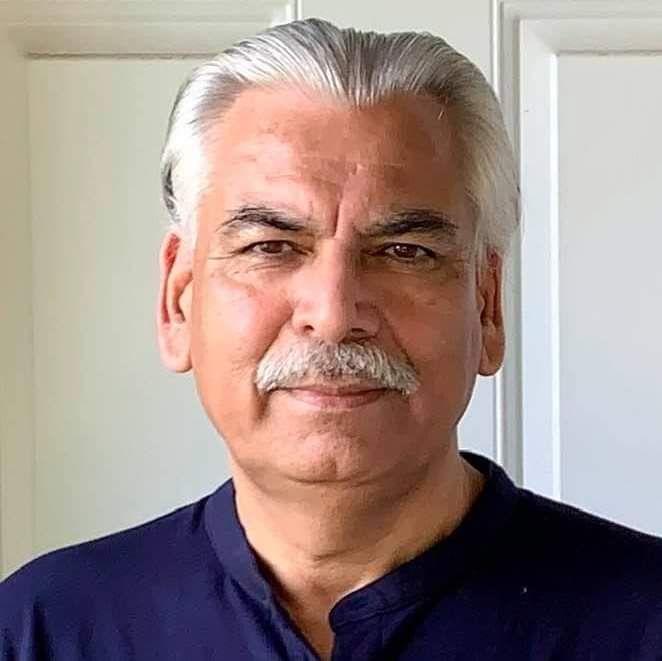
Barrister Usman Ali, Ph.D.
A nation is more than territory enclosed by borders on a map. It is history, memory, sacrifice, identity, and a shared moral inheritance. For that reason, patriotism in its mature form is neither blind approval nor reflexive denial. It does not require silence about national shortcomings, nor does it justify dismissing every constructive development simply because it is associated with an unfavored political actor. Serious nations do both: they criticize where criticism is warranted, and they recognize what advances the national interest. For Pakistan, that balance is especially important at this moment.
Pakistan’s national journey has never been easy. Since its creation in 1947, the country has passed through political instability, constitutional crises, military rule, democratic transitions, economic strain, terrorism, protest movements, and painful national tragedies. Much of its history has unfolded under the pressure of political and institutional contestation. Yet despite these repeated shocks, Pakistan has endured. It has regained its footing after crisis after crisis and preserved continuity where others might have fractured. That resilience remains one of the defining strengths of the Pakistani state: the capacity to hold together under stress and to recover when the costs of disruption are severe.
That same resilience helps explain Pakistan’s contemporary diplomatic importance. By virtue of its geography, population, strategic location, military capacity, and regional reach, Pakistan is not a peripheral state. It sits at the intersection of South Asia, Central Asia, the Gulf, and the wider Middle East. In such a position, its choices rarely remain purely domestic. They affect regional calculations and, in moments of major instability, can carry wider international significance.
This became especially clear during the crisis that followed the military action undertaken by the United States and Israel against Iran on 28 February 2026. The confrontation plunged the region into nearly forty days of intense uncertainty before the ceasefire announced on 7 April. The consequences were grave: loss of life across the region, heightened strategic tension, disruption linked to the Strait of Hormuz, pressure on energy flows, and renewed anxiety in global markets. Once again, the crisis showed that conflict in the Middle East does not remain confined to one theatre. Its effects radiate outward, shaping trade, diplomacy, markets, and the calculations of states far beyond the immediate battlefield.
It was in this unsettled environment that Pakistan emerged as an important diplomatic facilitator. At a time when pessimism was widespread and the danger of wider escalation appeared real, Islamabad positioned itself not as a rhetorical observer but as a practical channel for engagement. That distinction matters. In periods of crisis, many states issue statements; far fewer are trusted to host contact, preserve communication, and create political space for de-escalation. Pakistan’s willingness to assume that role marked a significant development in its regional diplomacy.
That role soon became more visible. High-level contacts in Islamabad signaled that Pakistan had become a credible venue for engagement rather than confrontation. The arrival of senior American representatives, the parallel presence of Iranian officials, and the continuation of both direct and indirect channels of communication reinforced the impression that Pakistan could serve as a serious intermediary. Although these exchanges did not produce a final agreement, they preserved the possibility of progress. In diplomacy, especially in the aftermath of war, that is no small achievement. Preventing a complete collapse of communication is often the first condition for any durable settlement.
The significance of this effort was further underscored by subsequent developments. Statements from Washington indicated that discussions with Iran remained active and constructive, and that a future round of in-person talks could again take place in Pakistan. The broader international response also suggested that Pakistan’s contribution was being taken seriously. In a crisis marked by mutual suspicion, military escalation, and narrow political space, credibility itself becomes a diplomatic asset. Pakistan demonstrated that it possessed enough trust, access, and restraint to help keep the path to dialogue open.
Nor was Pakistan’s role limited to hosting contacts. It also worked to sustain a wider pattern of regional consultation. Engagement with Saudi Arabia, Türkiye, Qatar, Egypt, and Iran reflected an understanding that no ceasefire can remain meaningful without parallel political management. The meetings held in Islamabad, the regional consultations pursued by Prime Minister Shehbaz Sharif, and Field Marshal Syed Asim Munir’s engagement in Tehran all pointed to the same objective: reducing the remaining gaps, preserving the ceasefire, and preventing a return to uncontrolled escalation. These parallel efforts underscored a central fact: Pakistan was not standing at the margins of the crisis. It was participating in the difficult work of stabilisation.
This is the context in which the role of Pakistan’s present civilian and military leadership should be assessed. If the current government and the leadership of the armed forces, particularly Prime Minister Shehbaz Sharif and Field Marshal Syed Asim Munir, are contributing constructively to national interest, regional stability, and the cause of peace, then that contribution deserves recognition without personal, ideological, or partisan prejudice. Such recognition is not a surrender of political judgment. Nor is it equivalent to endorsing a party or suspending accountability. It is, rather, an acknowledgment that responsible statecraft in a moment of danger serves the country as a whole.
That distinction is important because one of the chronic weaknesses of polarized political cultures is the tendency to judge actions not by their merit or effect, but by their source. If a constructive step is taken by a favored actor, it is praised as national service; if the same step is taken by a rival, it is diminished or denied. That reflex weakens national seriousness. Mature states and societies are capable of both accountability and recognition. They do not abandon criticism where criticism is justified, but neither do they refuse acknowledgment when the state acts responsibly in the national interest. That balance is not a sign of weakness. It is a sign of civic confidence.
Pakistan’s recent conduct also reflects a deeper lesson drawn from its own difficult history. A country that has lived through instability, terrorism, and strategic pressure understands the cost of war in ways that are not merely theoretical. For that reason, Pakistan’s preference for dialogue in a moment of regional fire carries particular weight. No final settlement has yet emerged. Core differences remain unresolved, and the success of future negotiations cannot be guaranteed. But diplomacy is not judged only by signed documents. It is also judged by whether channels remain open, whether escalation is contained, and whether political space for compromise survives. By those measures, Pakistan has played a meaningful role.
In the end, nations outlast governments, parties, and political narratives. A true patriot is one who can see his country clearly: honest about its weaknesses, yet confident enough to recognize its achievements. If Pakistan is now being regarded as a credible center for peace in a time of regional crisis, that is not merely a matter of sentiment. It is a reflection of diplomatic relevance, regional responsibility, and national poise. And if the present government and military leadership have helped make that possible, then acknowledging that fact is not partisanship. It is national seriousness.
Pakistan Zindabad, Pakistan Paindabad
