
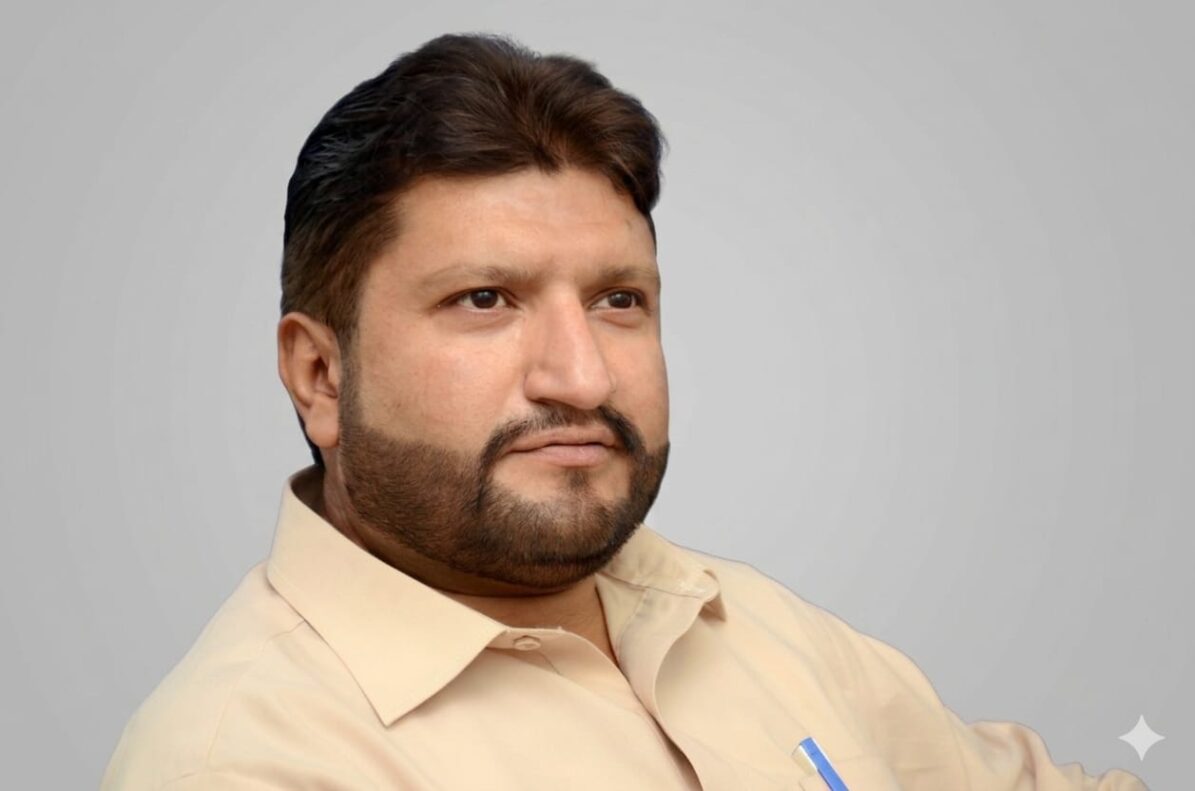
Amjad Hadi Yousafzai
Yesterday, Pakistan is celebrating the 79th anniversary of its independence. Flags are being raised across the country, national songs are being played, ceremonies are being held, and the pledge is being renewed to put Pakistan on the path of progress, prosperity, and stability. But perhaps the real demand of Independence Day is that, alongside celebration, we should also engage in self-accountability and ask why, after 79 years, we have still not been able to overcome the fundamental problems that an ordinary citizen continues to face today.
No single individual, institution, or class is responsible for Pakistan’s present condition. The truth is that every character in this national story has played a part. Politics turned power into an end in itself; state institutions built walls around their respective domains; the elite came to regard privileges as their rightful entitlement; journalism, at times, blurred the distinction between news and noise; the judiciary failed to meet public expectations in terms of the speed of justice; the bureaucracy remained buried under mountains of paperwork; and the public, too, continued to give preference to lawbreaking, favoritism, and personal interests over the national interest.
Education is a fundamental pillar in the building of nations, yet in our country it has often become a laboratory for experimentation. Curricula changed, policies changed, governments changed, but the children remained the same—children who are still deprived of equal educational opportunities. On one side are expensive educational institutions equipped with facilities of international standards; on the other are schools where even roofs, clean water, and teachers are unavailable. Instead of uniting the nation, education has deepened class divisions.
The health sector tells an equally troubling story. Despite grand projects and announcements, an ordinary citizen can still be seen standing in long queues at government hospitals for treatment. For the poor, illness is not merely a physical hardship; it can also become an economic catastrophe. Medicines are expensive, facilities are limited, and the healthcare system often resembles a patient who itself is in need of treatment.
The crisis of training and character-building may be even more serious than the crises in education and health. We have given the younger generation degrees, but have failed to adequately impart character, tolerance, honesty, respect for the law, and a sense of collective responsibility. The result is that even an educated person may see nothing wrong with violating traffic laws, seeking personal connections and favoritism, or placing personal benefit above the national interest. Nations are not built through curricula alone; they are built through training, values, and collective consciousness.
The establishment and centers of power are also an important part of this national landscape. In Pakistan, the centers of power and authority have repeatedly crossed into one another’s spheres of influence. At times, politics dominates state affairs; at other times, institutions become involved in political matters; and sometimes this struggle over authority pushes the national interest into the background. A strong state is built on clearly defined constitutional boundaries, institutional balance, and mutual respect—not on a perpetual struggle for power.
If all departments and institutions are examined, the picture becomes even clearer. Local governments suffer from a lack of resources; Pakistan Railways continues to search for a path toward development; WAPDA and the energy sector continue to surprise citizens in the form of utility bills; local government systems often remain waiting for authority and resources; debate over police reforms has continued for decades; the revenue system remains entangled in complexities; and in government offices, people still have to knock on several doors for a single signature. It appears that every department has problems of its own, while every institution seems occupied with shifting the burden of its performance onto someone else’s shoulders.
Journalism, which is often described as society’s eyes and ears, sometimes becomes a voice for truth and at other times gets lost in a crowd of noise. The judiciary is a symbol of justice, yet delays and complexities disappoint the public. Politics is supposed to mean public service, but it often becomes entangled in battles for power. The elite preach sacrifice but remain unwilling to surrender their privileges. Workers, farmers, and the laboring classes carry the burden of the country’s economy, yet they continue to receive more difficulties and fewer facilities in return.
And what about the public? The public cannot be considered completely free of responsibility either. We break the law and then demand the rule of law. We offer bribes and then chant slogans against corruption. We seek favoritism while also speaking about merit. We want the entire system to change, but with one condition: the change must not begin with us.
Pakistan’s story is not the story of a single culprit; it is the story of collective attitudes and behaviors. Some have caused greater damage, others less, but almost everyone has played a part in this national loss.
The question now is not who is guilty. The question is: What is the way forward?
Education must be made a national priority; healthcare must be recognized as a fundamental right; character-building must become an essential part of education; the powers of institutions must be defined in accordance with the Constitution; justice and the law must be equal for everyone; politics must be connected with public service; journalism must be grounded in principles of responsibility; the elite must set an example rather than merely enjoying privileges; and the public must also accept its responsibilities.
Pakistan cannot be strengthened through slogans; it can be strengthened through systems. And the system will become stronger only when every individual, every institution, and every class accepts that reform must begin not with others, but with oneself.
After 79 years, perhaps the most important question is this:
It is too early to ask what we have taken from Pakistan; first, we must decide what we have given to Pakistan.
If every segment of society were to fall silent for a few moments and reflect on this question, perhaps that very silence could become the first voice of national consciousness.
“Pakistan Zindabad”
Not merely in speeches, but also in character, systems, and action.
