
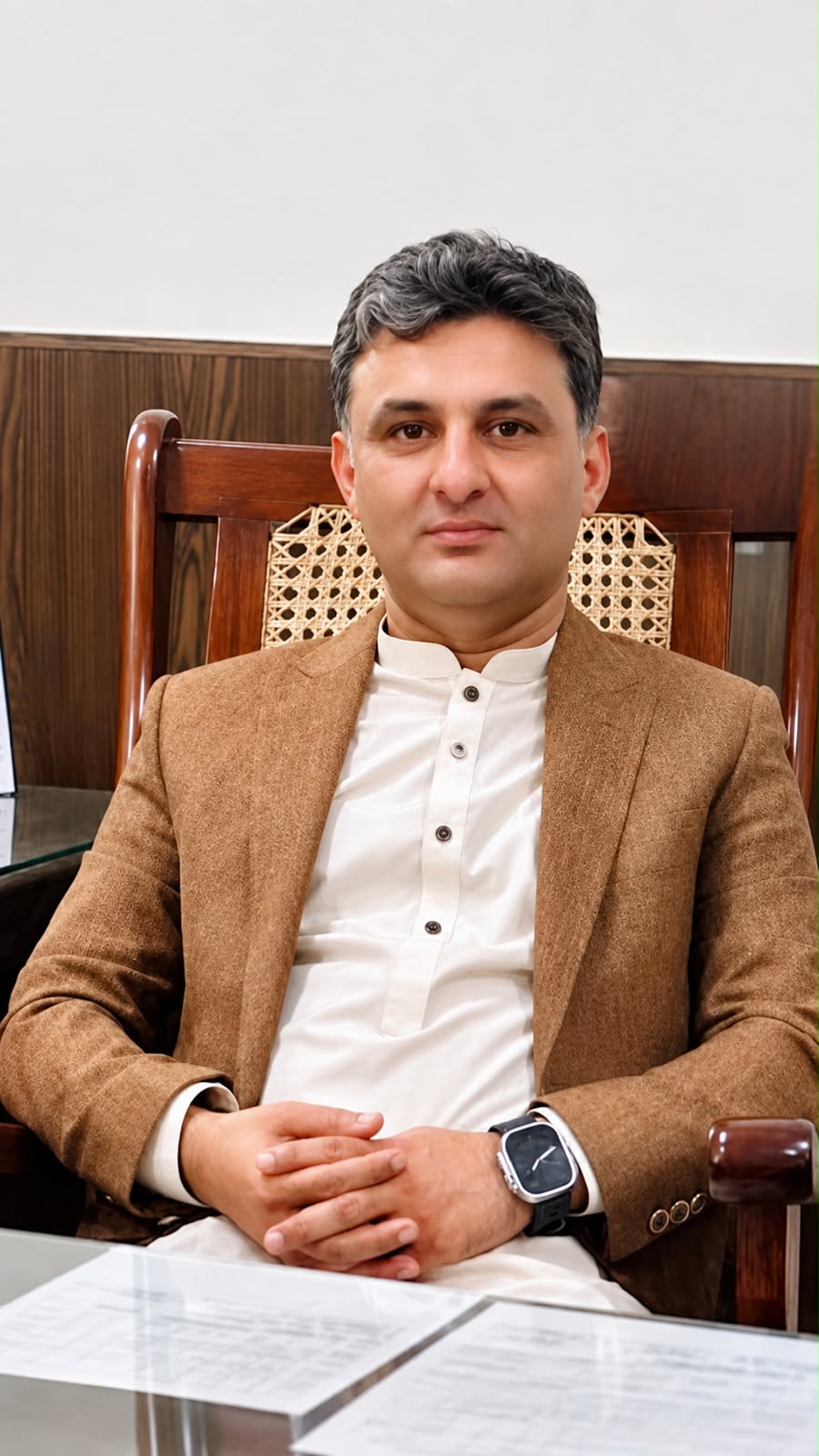
By: Dr. Zeeshan Qasim
Close your eyes and the sound arrives before the picture. “Do ekam do, do dooni chaar, do tiya chhe, do chauka aath.” It rolls out from under a shisham tree at a village school with no walls to speak of, where twenty to thirty children sit cross legged on jute mats, swaying forward and back like reeds in a canal breeze, each with a wooden takhti propped on one knee. Master sahib occupies the only chair, the cane across his lap, more a conductor’s baton than a threat, and when a boy in the third row loses his place, the whole class hauls him back by sheer volume. A stray dog wanders past the gate and is declared irrelevant. Nobody asks why two twos are four, because the question would only slow the chorus. The tables are being poured into young heads like water into a pitcher, and everyone present, the dog included, knows the pitcher will be inspected on Thursday. We have seen this scene in a hundred Pakistani dramas and films, usually just before somebody’s son leaves for the city to become a doctor, engineer or a wealthy man, and we watch it with a lump in the throat we cannot quite explain.
That chorus is ratta in its purest form, and it did not stop at the multiplication table. English was the language of instruction in Pakistan and a foreign language in every other respect. So, we did what any sensible person does when handed a language he cannot yet think in. We memorized it. Whole essays on “A Visit to a Hill Station” were swallowed by boys who had never seen a hill station, then poured back onto answer sheets with the solemn expression of a man reciting a legal document he has never read. It carried generations of us through our degrees.
Understanding, when it came, arrived late and by the back door. Somewhere in a first job the graduate finally met the thing he had memorized. The marketing mix turned out to be about selling something to somebody who did not want it. Supply and demand turned out to involve actual onions. The degree was the ticket and the career was the school, with the fees paid in embarrassment.
Now fast forward to the modern lecture hall, where every lecturer owns a story like this one. An assignment arrives, immaculately formatted, footnotes in place, and begins with the words “Certainly! Here is a comprehensive case study.” The student has not read it. The student, quite possibly, has not read the question. He has merely discovered that a modern degree can be assembled in the time it takes to boil an egg, and he is entitled to wonder why anybody ever bothered with the seminar or university’s library.
Then the machine arrived and changed the rules, though not quite the way the optimists promised. Today anyone from a college fresh BS student to a doctoral scholar can feed fifty pages suggested by the professor for reading and discussion into ChatGPT or Claude and receive a neat summary, a discussion and an observational case study before the second sip of tea from the cup. Something has been lost all the same. Ratta at least left something in the head, however untidily arranged. The new method leaves nothing in the head and a tidy file in the downloads folder. We used to memorize without understanding. Now we are managing to do neither.
Universities Faculty rooms have responded with the energy of a nation discovering a new tax. Detection software is bought, submissions are scanned, and a percentage appears beside each name with the authority of a medical report. The trouble is that in 2023 Stanford researchers tested seven popular detectors on essays written by nonnative English speakers for the TOEFL exam, and the programs wrongly flagged more than 61% of them as machine written on average. Essays by American eighth graders, meanwhile, sailed through almost perfectly. The researchers’ explanation is the cruelest part. Detectors look for plain, predictable language, which is exactly what an honest student writing in a second language tends to produce. When the same team asked ChatGPT to dress those essays in fancier vocabulary, only one in 91 was unanimously caught. So, the detector punishes the student who writes plain English himself and waves through the student who asked a machine to make his English sound grander. A make shift Chowkidar who turns away the guests and admits the gatecrashers would not last long at any wedding in Pakistan.
Instead of academic policing, teachers could try designing. My own easy suggestion is a two-stage method, and the first stage will make some colleagues clutch their pearls. Bring back the ratta. Give the class the reading and tell them to cram it, properly, as we once did, then test them in a room with no phones, on paper, with a pen and a nervous stomach. Psychologists call this retrieval practice. Our parents called it the night before the exam. Either way, you cannot apply what you do not carry, and a machine cannot sit the paper on the student’s behalf.
Then comes the second stage, and this is where the machine gets left behind in the car park. Send the students out. A case study of a real mandi, a tehsil council office, a district hospital, a university tea stall that has somehow survived three floods. A small social experiment, such as how long it takes a stranger to get a form stamped. Ask them to bring back what they saw, and to explain, standing up and in person, where the theory they memorized fits and where it fails. ChatGPT cannot stand in the queue, nor smell the drain behind the vegetable market, nor be told by a shopkeeper to mind his own business. It can polish the report afterwards, but the finding itself has to be fetched by a human being on two legs.
This is, I admit, ratta with a conscience. The first stage supplies what generations of Pakistani graduates had to learn late, on the job, at their own expense. The second makes sure the learning arrives before the first salary slip. Our system always had the memorizing, and the machine, by taking over the tedious half, has cleared the desk for the half that matters.
The real problem was never ratta itself, only our habit of stopping there. If we are wise, the age of ChatGPT and Claude will be remembered as the moment teachers stopped chasing machines for percentages and started sending students out to meet the world. If we are not, we shall go on buying detection software, the students will go on buying better prompts, and everyone will go home with a certificate and an excellent summary of a book nobody has read.
