

By Dr. Shahbaz Tariq
A vehicle stuck at a port is more than an entry in a customs register. It may represent a family’s savings, a dealer’s working capital, or a loan on which interest continues to accrue. Yet importers and buyers of Japanese Nissan e-POWER vehicles are reportedly facing precisely this predicament as uncertainty over tariff classification and tax treatment delays clearances.
The problem affects models such as the Nissan Kicks, Serena and Note e-POWER, alongside other vehicles using electric-drive technology. For buyers who have already paid advances or committed funds, the absence of a clear official decision creates an unacceptable uncertainty: neither a reliable delivery date nor a final landed cost.
At the heart of the dispute is a technical distinction that should not be beyond the government’s capacity to resolve. Nissan’s e-POWER system uses a petrol engine to generate electricity, while electric motors propel the wheels. Unlike a battery electric vehicle, it does not need to be plugged in. It is generally described as a series hybrid and should not automatically be treated as identical to every range-extended electric vehicle (REEV).
In February 2026, Pakistan Customs issued Public Notice No. 02/2026, classifying specified Deepal S05 and Forthing Friday REEV variants under tariff heading 8703.8090 on the basis of their electric propulsion. The notice also referred to an overseas ruling concerning the Nissan Kicks e-POWER. However, the decision was vehicle-specific and did not establish a blanket classification or fiscal concession for all Nissan e-POWER models.
That limitation should have prompted swift, model-specific guidance. Instead, importers are left seeking clarity on two related but distinct questions: which tariff code applies, and what duties, taxes and concessions follow from it? The Federal Board of Revenue (FBR), Pakistan Customs and the Revenue Division should be capable of answering both publicly and consistently.
The financial consequences of delay are neither abstract nor evenly distributed. At the port, storage, demurrage and other charges may accumulate. An importer may have paid overseas suppliers and freight providers but be unable to release stock or recover capital through sales. A small dealer may struggle to meet obligations to customers and lenders. Families waiting for their vehicles may have to pay for alternative transport while their savings remain locked into a purchase they cannot use.
Ultimately, costs incurred by importers are likely to be passed on to consumers through higher prices, disputed delivery charges, or canceled transactions. A buyer who budgeted for a particular vehicle may find that bureaucratic indecision has made it unaffordable.
Pakistan is also considering reforms under its proposed Auto Policy 2026–31, including differentiated tax treatment for vehicle technologies. Those proposals, however, must not be mistaken for legally operative rates. Nor should discussions about future incentives become an excuse for leaving existing shipments in limbo. Import regulations are meaningful only when the people expected to follow them can determine, in advance, the charges they must pay.
The government has every right to collect lawful revenue and prevent improper concessions. But fair collection requires clear rules, timely assessments and equal treatment. A system that leaves comparable vehicles subject to varying interpretations risks eroding confidence not only in the automobile market but in public administration itself.
The immediate response need not await an entirely new automotive policy. The FBR should publish authoritative, model-specific classification and tax guidance for relevant Nissan Kicks, Serena and Note e-POWER variants and other affected vehicles, explaining the technical basis and any eligibility for concessions. Customs authorities should apply that guidance uniformly across ports and establish a time-bound process for disputed cases.
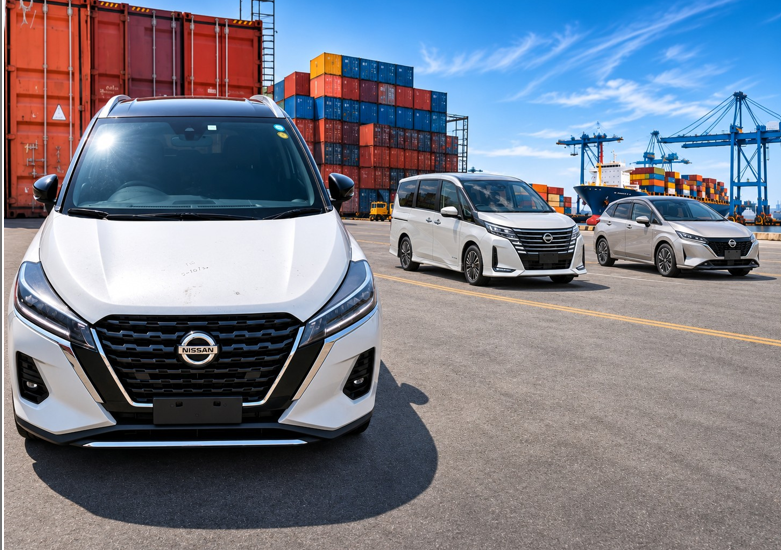
For vehicles already awaiting clearance, the government should examine lawful options for provisional assessment or release against appropriate security. Where delays are attributable to administrative uncertainty rather than importer non-compliance, authorities should coordinate with port operators to consider relief from avoidable charges and a mechanism for reviewing documented losses.
The federal government, especially the Ministry of Finance, Revenue Division, FBR and the ministries responsible for commerce and industry, must now take ownership of this problem. Reports of individual clearances, even if confirmed, are no substitute for a transparent national rule.
Importers and consumers are not asking to escape taxation. They are asking to know what the law requires and to receive decisions before their money is exhausted by delay.
Citizens should pay the taxes prescribed by law, not the price of the government’s failure to explain them. Every additional day of uncertainty adds to that price. The government must settle the classification dispute, clarify the applicable duty structure and facilitate lawful clearance without further delay.
