
Amjad Hadi Yousafzai
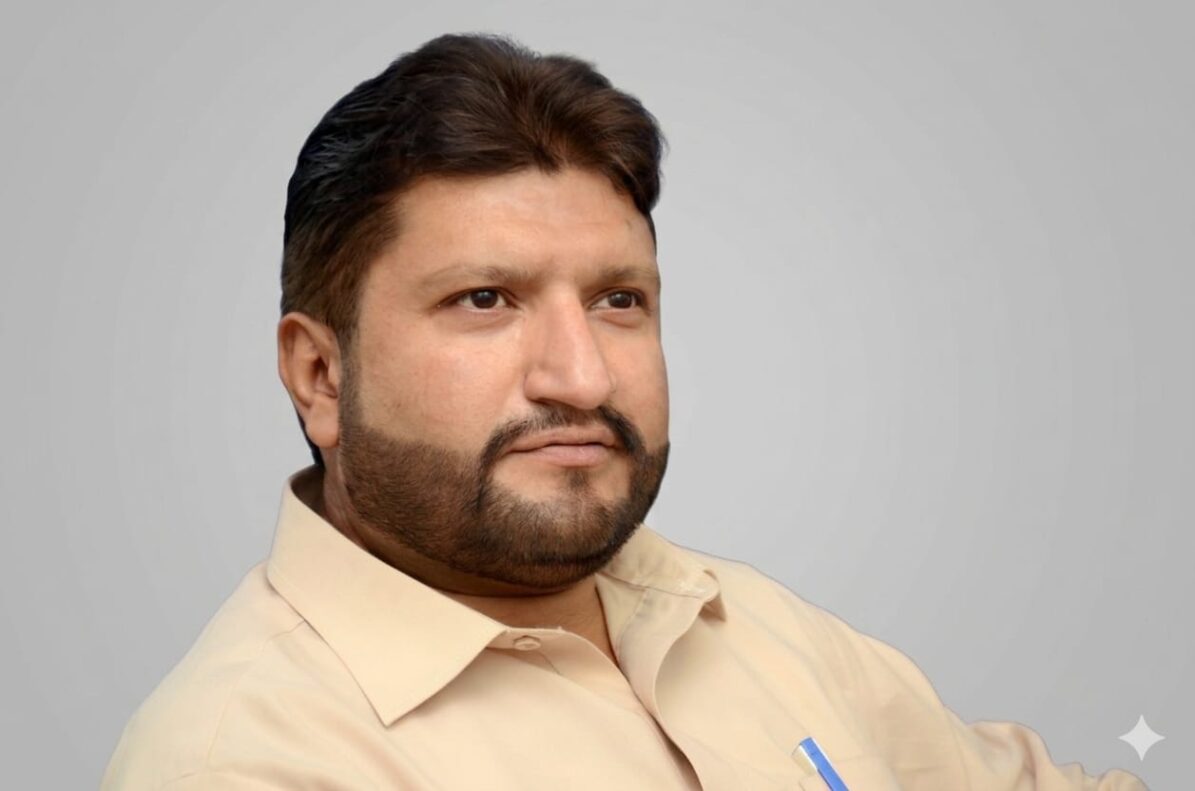
In the cultural and artistic history of Khyber Pakhtunkhwa, there are certain personalities whose talent, character, and contributions have not only influenced their own era but have also set a shining example for future generations. Syed Sardar Badshah is one such extraordinary figure. A successful actor, broadcaster, cultural ambassador, social worker, and mentor to young people, he has spent more than five decades connecting art with social awareness, cultural identity, and service to humanity.
Born in the village of Dhaki in Charsadda District, into a family known for its religious, scholarly, and Sufi traditions, Syed Sardar Badshah grew up in an environment rich in moral values, spiritual thought, and a love for learning. His father, a renowned Sufi scholar of his time, taught him that God-given talents should be used not for personal gain but for the service of humanity. This principle later became the foundation of his personality and artistic philosophy.
He earned a Master’s degree in Pashto Literature from the University of Peshawar. Although he initially dreamed of joining the military, he respected his mother’s wishes and instead joined the Audit and Accounts Department, from which he retired in 2005. However, his true identity lies not in his government service but in his lifelong dedication to the promotion of arts and culture.
His artistic journey began in 1968 with Radio Pakistan Peshawar, where he started as an actor. His first Pashto radio drama, Kojdan (Engagement), gave him the opportunity to play the lead role. For this performance, he received a payment of ten rupees—a modest sum that marked the beginning of a remarkable artistic career. His voice, acting skills, and character portrayals soon won the admiration of listeners, making him one of the most popular artists in Pashto radio drama.
That era was considered the golden age of radio drama, when it served as an effective medium for public education, literary development, and social awareness. Syed Sardar Badshah emerged from this rich tradition. His success reflects the truth that the real strength of art lies not in artificial publicity or fleeting fame but in artistic integrity, hard work, and public trust.
His talent has been recognized far beyond Pakistan’s borders. Representing Pakistan in 23 countries, he introduced the nation’s culture, language, and artistic heritage to international audiences. His programs Sher Alam Maimonai, Hujra, and Da Wada Shpa achieved remarkable success in 11 countries, winning first positions and enhancing the prestige of Pakistani culture abroad. These achievements demonstrate that local culture, when presented with sincerity and quality, can earn recognition on the global stage.
In recognition of his services, he has received nearly 200 awards, including the prestigious Tamgha-e-Imtiaz. Various literary, social, and cultural organizations have also honored him with 60 gold medals. Yet, his greatest achievement remains the love and trust of the people, which has endured for decades.
One of the most significant aspects of his artistic career is his consistent preference for positive and constructive roles. According to him, although he has portrayed numerous characters, his greatest strength has always been roles that convey messages of hope, morality, and social reform. He believes that an artist is not merely an entertainer but also a social educator who can influence people’s thoughts and behavior through performance.
His views on the quality of contemporary drama and stage productions deserve special attention. He believes that while teamwork exists today, the passion, dedication, and commitment that characterized artists of the past have diminished. In his opinion, the problem is not merely commercialism but also a weakening emotional and intellectual connection to art. Modern resources and technology are undoubtedly valuable, but when profit becomes more important than artistic purpose, the creative spirit suffers. This is why many productions today, despite their technical sophistication, fail to leave a lasting impact.
His observations regarding Nishtar Hall highlight a major weakness in the cultural infrastructure of the region. Nishtar Hall was established to promote fine arts, music, theatre, literature, and cultural activities, serving as a central platform for artists and writers in Khyber Pakhtunkhwa. However, its prolonged closure during various periods severely damaged cultural activities. According to him, shutting down Nishtar Hall was equivalent to strangling the arts.
Although Nishtar Hall has now reopened, Syed Sardar Badshah believes that the real issue is not merely whether the building is operational but whether it fulfills its cultural mission. He notes that while various events and activities are now being held there, serious and coordinated efforts to promote culture, support local arts, train young artists, and preserve cultural heritage remain insufficient. In his view, the success of a cultural institution should be measured not by the number of events it hosts but by its intellectual and cultural impact.
His experience with the Pashto film industry also reflects his principled character. He acted in several Pashto films, including Okhke Lmoon, and signed contracts for nearly twenty additional productions. However, when he realized that some producers were distorting Pashtun culture and social values, he canceled all those contracts. This decision demonstrates his belief that artistic success is not measured solely by financial gain but also by cultural responsibility and social dignity.
In the field of acting, he regards Lala Sudhir as a versatile and accomplished artist. He also pays tribute to the talents of Asif Khan, Badar Munir, Mohammad Ali, Nargis, Sabiha Khanum, Yasmin Khan, Madhubala, Nadeem, and Dilip Kumar. Among television actors, his favorites include Shakeel Ahmed, Talat Hussain, Shafi Muhammad, Roohi Bano, Khalida Riyasat, and Uzma Gillani. During General Zia-ul-Haq’s era, when Dilip Kumar visited Peshawar, he met Syed Sardar Badshah and praised his artistic contributions—an acknowledgment of his talent from an internationally respected figure.
Alongside his artistic pursuits, social service has remained a defining feature of his personality. He serves as President of the Pakistan Youth Organization, which works for the welfare of young people across the country, particularly in the former FATA regions and Azad Jammu and Kashmir. He also founded the Khyber Art Academy, which plays an important role in training young artists and promoting the fine arts. He firmly believes that Pakistan’s youth are physically, mentally, and morally strong and that, if provided with proper guidance and opportunities, they can transform the future of the nation.
His views on reading reflect his intellectual depth. Ibn-e-Safi and Naseem Hijazi are among his favorite authors, while Sufi literature, religious texts, and quality poetry in Urdu, Pashto, and English form an important part of his reading interests. He believes that extensive reading broadens one’s vision and refines natural abilities. For him, reading is not merely a form of entertainment but a means of self-discovery and spiritual growth.
The life and achievements of Syed Sardar Badshah provide living proof that when art is guided by character, purpose, and compassion, it becomes much more than entertainment. It becomes a powerful instrument for intellectual development, cultural preservation, and moral education. In an age when cultural identity, social values, and intellectual standards face numerous challenges, figures like Syed Sardar Badshah remind us that the true strength of nations lies in their cultural consciousness, moral values, and creative heritage. His life stands as a shining example and a living institution for future generations.
