
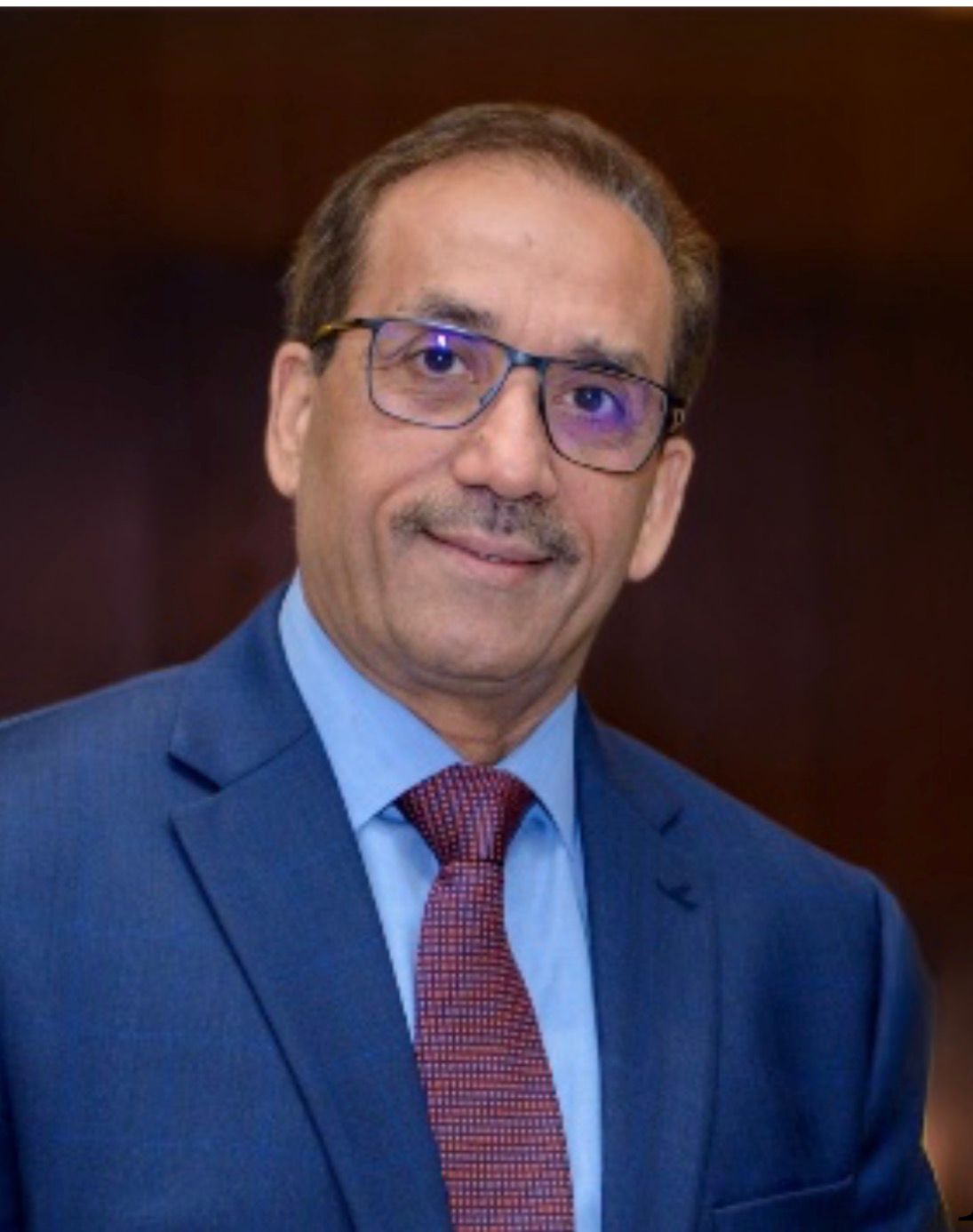
By Muhammad Anwar
The world is currently witnessing a historic shift in the centers of global power and capital. As the conflict between Iran and the United States intensifies this April 2026, the tremors are being felt far beyond the immediate geography of the Middle East. For decades, the Gulf Cooperation Council (GCC) nations, led by the economic engines of Dubai, Riyadh, and Doha, have been the undisputed magnets for global investment. They were seen as the invincible vaults of the world’s wealth, protected by modern infrastructure and seemingly unshakable stability. But today, as missiles impact critical infrastructure and the security of the Strait of Hormuz remains under constant threat, that ironclad investor trust is beginning to crack.
Capital is notoriously cowardly; it flees at the first sign of prolonged risk. When investors see the “safe havens” of the last thirty years becoming theaters of kinetic warfare, they don’t just pause, they look for an exit. History teaches us that during every great disruption, there is a period of construction. While the geopolitical situation is deeply concerning from a humanitarian and regional perspective, it provides Pakistan with a rare, “out-of-the-box” opening. We have spent seventy years talking about our “strategic location” on maps and in academic papers. It is finally time to stop talking about geography and start building an economy that lives up to it. If we want to attract the billions of dollars currently looking for a way out of the volatile Gulf, we have to stop acting like a struggling neighbor and start acting like a world-class, resilient alternative.
The most immediate opportunity lies in moving from being a mere “transit state” to becoming a “global terminal.” For years, the world has used Gulf airports as their primary lounges and logistics hubs, connecting the East to the West. If their airspace becomes too risky or their insurance premiums too high, the global aviation industry will desperately need a “Plan B.” Pakistan is the logical successor. However, becoming a global hub is about much more than just having long runways. It is about the entire ecosystem of hospitality and logistics that surrounds the tarmac.
Right now, several high-end, international-standard hotel projects are under construction near Islamabad International Airport and Lahore’s Allama Iqbal International. In the past, such projects might have been bogged down by slow approvals or utility delays. In this current crisis, the government must treat these constructions as “National Priority Projects.” They must be completed immediately. We need these rooms ready today, not two years from now, so that international airline crews, cargo managers, and high-profile investors can find luxury, security, and world-class service the moment they land. We need to build “Aero-Cities”, zones where the world can conduct high-stakes business in a secure environment without ever feeling the friction of a slow-moving border. If a CEO can land in Islamabad, hold a board meeting in a five-star facility at the airport, and fly out with a deal signed, we have won.
But luxury hotels and shiny terminals are only the hardware. The “software” of our economy, our bureaucracy and regulatory framework, is where the real battle for investment will be won or lost. In the Gulf, they don’t just welcome investors; they are obsessed with the speed of service. If Pakistan wants to capture the capital fleeing the current instability, we need to implement a radical “One-Hour Gateway.”
Imagine a scenario where a foreign investor lands at our airport, tired of the uncertainty in the Middle East. Within sixty minutes, using a streamlined Digital Compliance Gateway, they should be able to verify their identity via biometrics and walk out with a registered company, a local tax ID (NTN), and a functioning corporate bank account. This isn’t science fiction; it is the standard we must meet to compete. We have to move away from the old-fashioned “one-window” facilities that were often just physical buildings full of more desks and more red tape. We need a digital API-driven government where the SECP, the FBR, and the State Bank of Pakistan talk to each other in milliseconds. If an investor cannot start a business in the time it takes to have a cup of tea in a transit lounge, they will simply take their money to other emerging markets like Vietnam or India. Speed is the new currency of trust.
This digital transformation must extend to our national infrastructure. We cannot seriously claim to be a global hub if our internet is slow, censored, or unreliable. In 2026, high-standard, redundant, and secure connectivity, including 5G and satellite-link integrations, should be treated as a matter of national security and economic survival. If Pakistan can guarantee the most stable and fastest data corridors in South Asia, we become the natural home for the data centers, “back-office” operations, and tech startups that are currently worried about the physical safety of their servers in the Gulf. We should be inviting the world’s tech giants to build their regional clouds on Pakistani soil, protected by our geography and a new “Data Sanctuary” law.
While much of my professional focus remains on “Smart Farming”, using soil-restoration biotechnology to secure food chains, and the extraction of minerals in Balochistan, these are the long-term foundations of our physical economy. The immediate “construction” we need during this disruption must happen in our service and knowledge sectors. We should be marketing Pakistan as the “New Neutral Ground.” Just as Switzerland historically benefited from its neutrality and stability during European conflicts, Pakistan can offer a sanctuary for global trade. We have an English-speaking workforce, a massive youth bulge that is already digitally native, and a cost of living that is highly competitive.
To achieve this, the government must adopt a fundamental change in mindset: the “Right to Enterprise.” For too long, the state has acted as a gatekeeper, asking investors “Why are you here?” or “Do you have permission?” We must flip that script. The state’s only question should be: “How can we help you move faster?” We need to fix our “digital roads” and our “regulatory roads” with the same physical urgency we use to build motorways. We need to open our banking channels to the world, allowing for seamless cross-border FinTech solutions that don’t get trapped in decades-old manual verification processes.
The current smog of war hanging over the Gulf is a tragedy for the region, but for Pakistan, it is a clarion call. It is a moment where the world is looking for an alternative, and we are standing right there. But the window of opportunity in geopolitics is notoriously narrow. Eventually, the dust will settle in the Middle East, or other nations will move faster than us to seize the diverted trade routes and capital.
We need a “War Room” for Investment, not for kinetic conflict, but for the aggressive acquisition of global confidence. This room should be staffed by the brightest minds in finance, technology, and policy, working 24/7 to clear hurdles for anyone willing to bring a dollar into this country. We need to tell the world: “The ground is shaking everywhere else, but here, we are building.”
Let Karachi be the new port of preference for the world’s shipping lines. Let Islamabad be the new hub of global policy and digital innovation. Let the Pakistani worker be the backbone of a new era of Asian growth. Construction during disruption is not just a clever idea; it is our national imperative. We have the location, we have the people, and now, we have the opportunity. It is time to stop being a spectator to global events and start being the destination the world is looking for.
——–
Muhammad Anwar is the CEO and Founder of Freedom Gate Prosperity (FGP), a leading advocate for data-driven policy reform, and a proponent of the Digital Compliance Gateway in Pakistan.
