

By:Syed Ali Wasif Naqvi & Qamar Naseem
Just when the world has begun to make hard-won progress against cigarette smoking, the tobacco industry has unveiled another product designed to keep nicotine addiction alive. Nicotine pouches, small white sachets placed between the gum and lip, are marketed as modern, discreet, smoke-free, and cleaner alternatives to cigarettes. Their sleek packaging, fruity flavors and social media appeal create an illusion of safety. Yet beneath this polished image lies an uncomfortable truth: these products are delivering unprecedented doses of nicotine, exposing users to harmful chemicals, and opening a new front in the global tobacco epidemic.
The industry’s sales pitch deliberately focuses on absence of smoke in nicotine pouches instead of confessing what they do contain: nicotine, one of the most addictive substances known. The nicotine content alone should raise alarm bells. A conventional cigarette typically contains around 10–12 milligrams of nicotine, of which only about 1–2 milligrams are absorbed by the smoker. In contrast, nicotine pouches are sold in strengths ranging from less than 2 milligrams to nearly 50 milligrams per pouch. Independent pharmacokinetic studies have shown that a 4 mg pouch can deliver nicotine comparable to a cigarette, while 8 mg pouches and especially higher-strength products can expose users to substantially greater amounts of nicotine than smoking a cigarette. Users who place multiple pouches simultaneously, a practice increasingly reported among young consumers, can receive even higher doses.
This is not simply a matter of stronger nicotine. Higher nicotine exposure translates into stronger dependence, making quitting even more difficult. Nicotine alters brain development in adolescents, impairs learning and memory, and reinforces addiction pathways that can last a lifetime. The product may be smokeless, but the addiction it creates is anything but harmless. The industry’s marketing carefully avoids discussing another disturbing reality. Independent researchers have detected tobacco-specific nitrosamines, among the most potent carcinogens associated with tobacco, as well as toxic metals such as chromium and chemicals including formaldehyde in certain nicotine pouch products. These substances have well-established links to cancer and other serious diseases. Early clinical studies have also reported gum lesions, periodontal disease, and inflammatory changes among regular users. Although long-term cancer risks remain under investigation because nicotine pouches are relatively new products, the absence of decades-long evidence should never be mistaken for evidence of safety. In fact, researchers repeatedly warn that independent, long-term studies are urgently needed, as much of the existing evidence has been generated or funded by industry itself.
History teaches us why such caution matters. Tobacco companies once assured the public that filtered cigarettes, “light” cigarettes and low-tar brands were healthier choices. Those claims eventually collapsed under overwhelming scientific evidence. Today, nicotine pouches are being marketed using remarkably similar narratives promising convenience, discretion, and reduced harm while simultaneously expanding nicotine consumption into places where smoking was previously impossible. Rather than replacing addiction, these products risk making nicotine use an all-day habit.
Pakistan is rapidly becoming a key battleground in this strategy. According to recent global market analyses, Pakistan is already among the world’s largest nicotine pouch markets. British American Tobacco’s VELO currently dominates the domestic market, supported by substantial investment in local manufacturing and aggressive retail expansion. More recently, Philip Morris International has introduced ZYN into Pakistan and localized its production through its Sahiwal facility, signaling that competition between multinational tobacco companies is shifting from cigarettes to nicotine pouches.
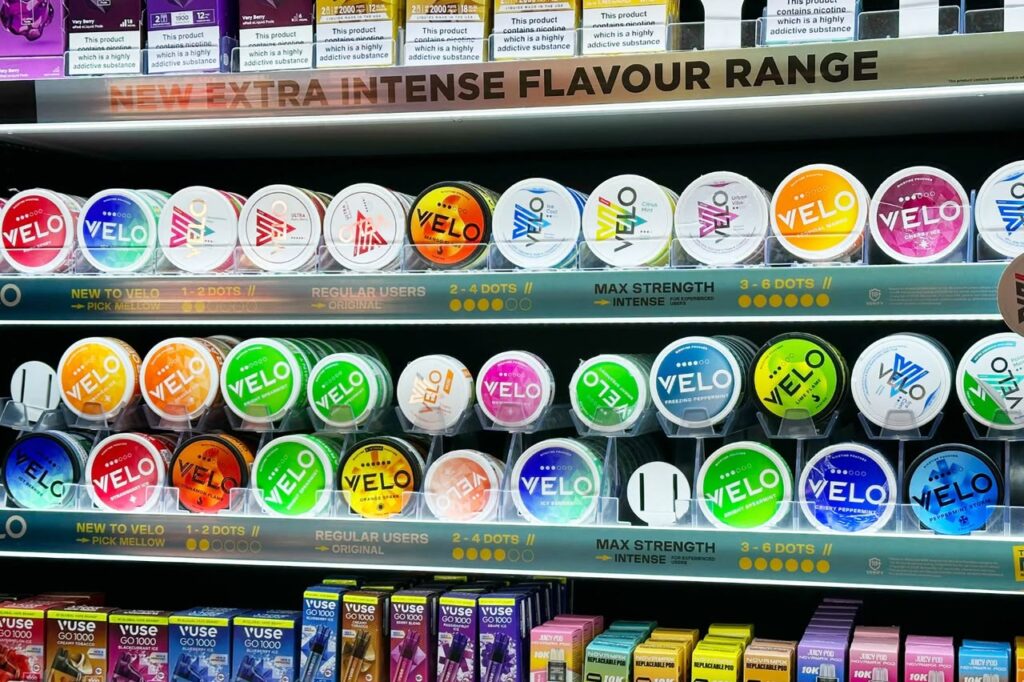
Unfortunately, the products are already appearing where they should never be. Research from Pakistan has documented nicotine pouch displays near schools, positioned next to confectionery, and even placed at children’s eye level inside retail shops. Studies involving Pakistani adolescents reveal that many perceive VELO as a fashionable, premium lifestyle product rather than an addictive nicotine delivery device. This is hardly accidental. The same companies that spent decades glamorizing cigarettes are now using social media influencers, colorful flavors, and youth-oriented branding to recruit the next generation of nicotine users.
The tobacco industry frequently argues that nicotine pouches represent “harm reduction.” There is an important distinction that should not be ignored. For an adult smoker who completely switches from cigarettes, some toxic exposures may indeed be reduced compared with continued smoking. This is precisely why regulators in some jurisdictions have permitted carefully worded reduced-risk claims for specific products under tightly controlled conditions, not because these products are safe, nor because they are approved smoking-cessation medicines. Public health gains disappear if nicotine pouches simultaneously recruit adolescents, non-smokers, and former nicotine users into lifelong addiction.
Pakistan must not allow history to repeat itself. Existing tobacco control laws were designed primarily for combustible tobacco products, while nicotine pouches continue to exploit regulatory gaps. Strong and immediate action is needed. Comprehensive regulation should include standardized nicotine limits, plain packaging, prominent health warnings, a complete ban on flavor-driven youth marketing, restrictions on advertising and sponsorship, strict age verification, taxation sufficient to discourage youth uptake, and vigilant enforcement against sales near educational institutions. Policymakers must also remain alert to industry lobbying that frames commercial expansion as public health progress.
The battle against tobacco has always been about addiction, disease, and corporate strategies that prioritize profits over people. Nicotine pouches may look cleaner than cigarettes, but they are built upon the same business model: creating and sustaining nicotine dependence. Pakistan has an opportunity to act before this new epidemic becomes entrenched. The lesson from cigarettes is painfully clear. Waiting for decades of disease before responding is not prudent regulation; it is a preventable public health failure.
Syed Ali Wasif Naqvi is a tobacco control advocate and works at Sustainable Development Policy Institute (SDPI), Islamabad
Qamar Naseem is a civil society activist and works at Blue Veins, Peshawar
