
On 26 August, Pakistan awoke to a tragedy that should trouble us long after the headlines have faded. Fourteen newborns lost their lives in a fire at the Pakistan Institute of Medical Sciences in Islamabad.
The causes and responsibility must, of course, be established through a fair and credible inquiry. It would be wrong to draw conclusions before that process is complete. Yet the tragedy raises a question beyond one hospital: how safe can any institution remain when people fear reporting what their superiors do not wish to hear.
This question reaches far beyond hospitals.
In many parts of our national life, success is still too often equated with pleasing those above us. A bureaucrat worries about his ACR. A businessman cultivates political connections. A politician seeks favour within the hierarchy that controls his future. Junior officials learn that disagreement may be construed as disloyalty, and that silence is often safer than speaking the truth.
This is not respect for authority. Respect is necessary for every functioning institution. It becomes something more dangerous when respect turns into servility when protecting one’s position takes precedence over fulfilling one’s duty.
The consequences are rarely confined to the person who stays silent. A compromised inspection, an ignored warning, a conveniently drafted report, an unsafe building declared satisfactory, an undeserving appointment, or a contract awarded through influence may eventually enter the home of an ordinary family as a tragedy.
History repeatedly shows the danger of institutions in which information moves upwards only after being made palatable to those at the top. The Soviet system became notorious for officials concealing failures and exaggerating achievements, as bad news could jeopardise careers. In far more terrible circumstances, Nazi Germany demonstrated the catastrophic consequences of bureaucratic obedience detached from conscience.
The lesson is not that Pakistan resembles those societies. Rather, it is that no society is safe when obedience takes precedence over moral judgement.
There are also encouraging lessons. Post-war Germany rebuilt its political order around constitutional constraints, human dignity and accountable institutions. Singapore invested heavily in a professional public service, in which merit and institutional integrity became central to governance. South Korea’s remarkable economic development was eventually accompanied by stronger democratic accountability and a more assertive civil society.None of these countries is without problems. Their experience, nevertheless, demonstrates something important: nations progress when their institutions become capable of telling powerful people uncomfortable truths.
For Pakistan, however, the challenge runs deeper than administrative reform. It is a spiritual one.
We are a people who overwhelmingly profess belief in the Creator of Heaven and Earth. Our Mosques and Churches teach that an earthly position is temporary, wealth is a trust, and every human being is ultimately accountable to God Almighty. Yet there is an uncomfortable contradiction in a person who fears God in worship yet is afraid to speak the truth before a powerful human being.
The Holy Quran calls believers to stand firmly for justice, even when doing so goes against their own interests, their parents’ or their relatives’ interests. The Holy Bible likewise teaches that obedience to God must take precedence over obedience to men whenever the two come into conflict.
What, then, becomes of faith when a promotion matters more than justice, a political ticket more than conscience, a business advantage more than fairness, or an ACR more than the safety of those in our care.
Perhaps one of Pakistan’s deepest problems is that we sometimes bow before God in worship, yet bow before power in public life.
This cannot be corrected by rebellion against authority. Pakistan needs authority, discipline and functioning hierarchies. It also needs leaders who are secure enough to tolerate disagreement and subordinates who are courageous enough to offer it.
A good secretary should seek an officer who can say, “Sir, the facts suggest otherwise.” A wise minister should value the adviser who brings bad news before it becomes a disaster. A responsible businessman should prefer lawful competition to influence bought with money. A political leader should fear the silence of flatterers more than the criticism of honest colleagues.
Every person entrusted with public responsibility should remember that a file is never merely a file. Behind it may be a patient, a worker, a widow, a student – or someone’s newborn child.
Pakistan achieved political independence decades ago. The unfinished struggle may be the independence of our conscience: freedom from patronage, fear and the constant need to please those above us.
For a nation cannot truly stand upright until its people learn to respect authority without surrendering their conscience to it.
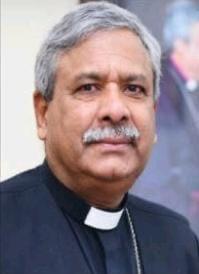
By:Bishop Humphrey Sarfaraz Peters Bishop, Diocese of Peshawar, Khyber Pakhtunkhwa
