
By Junaid Qaiser
In times of regional upheaval, a state’s power isn’t just about what it has in terms of resources; it’s really about how effectively it can come together. Today, Pakistan finds itself at a crucial juncture, dealing with the economic impacts of an expanding conflict in the Middle East while carefully stepping into a more prominent diplomatic role. What makes this moment different from many before is the clear alignment between the civilian leadership and military command—this partnership is influencing both domestic policy and international posture.
Prime Minister Shehbaz Sharif’s recent interactions with provincial leaders and senior officials highlight a government trying to impose some order in a fast-evolving environment. His focus on austerity, prioritization, and collaborative decision-making is driven by necessity rather than choice. With global oil prices spiking due to the US-Israeli tensions with Iran, Pakistan’s economic vulnerabilities are once again in the spotlight. The call to shift resources toward vital sectors like agriculture and public transport indicates a practical change—one that aims to protect the most vulnerable while ensuring macroeconomic stability.
However, the domestic response is just part of the picture. Equally crucial is Pakistan’s shifting external stance, where cooperation between civilian policymakers and military leaders seems to be yielding real results. The efforts of Deputy Prime Minister Ishaq Dar and Chief of Defence Forces Asim Munir in facilitating the safe passage of Pakistani vessels through the Strait of Hormuz illustrate more than just crisis management—it reflects a cohesive operational strategy backed by diplomatic influence. In a region where access is often determined by power, such outcomes are neither common nor trivial.
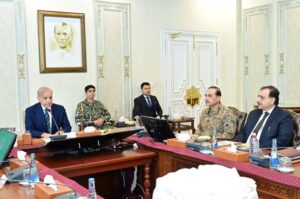
This coherence is increasingly visible in Pakistan’s broader diplomatic engagements. High-level interactions with global powers, including reported meetings between Field Marshal Munir and Donald Trump, point to a reactivation of strategic channels that had, until recently, remained constrained. At the same time, Pakistan’s cooperation on counterterrorism—demonstrated through decisive actions against transnational threats—has reinforced its standing as a responsible security partner.
What is emerging is a more synchronized approach to statecraft. The long-discussed need for civil-military harmony is, in this instance, translating into a shared strategic direction. Rather than working at cross purposes, both pillars of the state appear aligned in managing immediate economic pressures while leveraging diplomatic openings. This alignment has enabled Pakistan to cautiously position itself as a potential intermediary in a deeply polarized regional environment, particularly between Washington and Tehran.
Still, this moment should not be overstated. Pakistan’s history offers ample reminders that alignment, however promising, can be fragile. The economic challenges remain acute, with rising fuel costs and constrained fiscal space limiting the government’s room for maneuver. Measures such as subsidy allocations and development cuts may provide temporary relief, but they do not substitute for structural reform. Without sustained economic resilience, even the most well-coordinated foreign policy risks losing its footing.
There is also the complexity of the external environment itself. Balancing relations between major powers while maintaining credibility with regional actors requires consistency, restraint, and strategic clarity. Any misstep could quickly erode the trust that Pakistan is now working to rebuild.
Nevertheless, within these boundaries lies a rare chance. The engagement with political figures such as President Asif Ali Zardari and Chairman PPP Bilawal Bhutto Zardari indicates an understanding that internal unity is key to maintaining external significance. In times of uncertainty, unity is not just a symbol—it serves a practical purpose.
Pakistan is currently trying to shift from reactive policymaking to a more thoughtful and coordinated strategy. The coming together of civil and military leadership has created a structure that allows for both effective crisis management and clearer diplomatic engagement.
Whether this collaboration lasts will ultimately shape how much influence Pakistan wields in a region that is always in flux. For now, it offers a glimpse of what’s possible when alignment takes the place of fragmentation—and when a country chooses to act with intention rather than simply drifting along with circumstances.
