
PROVINCE REPORT
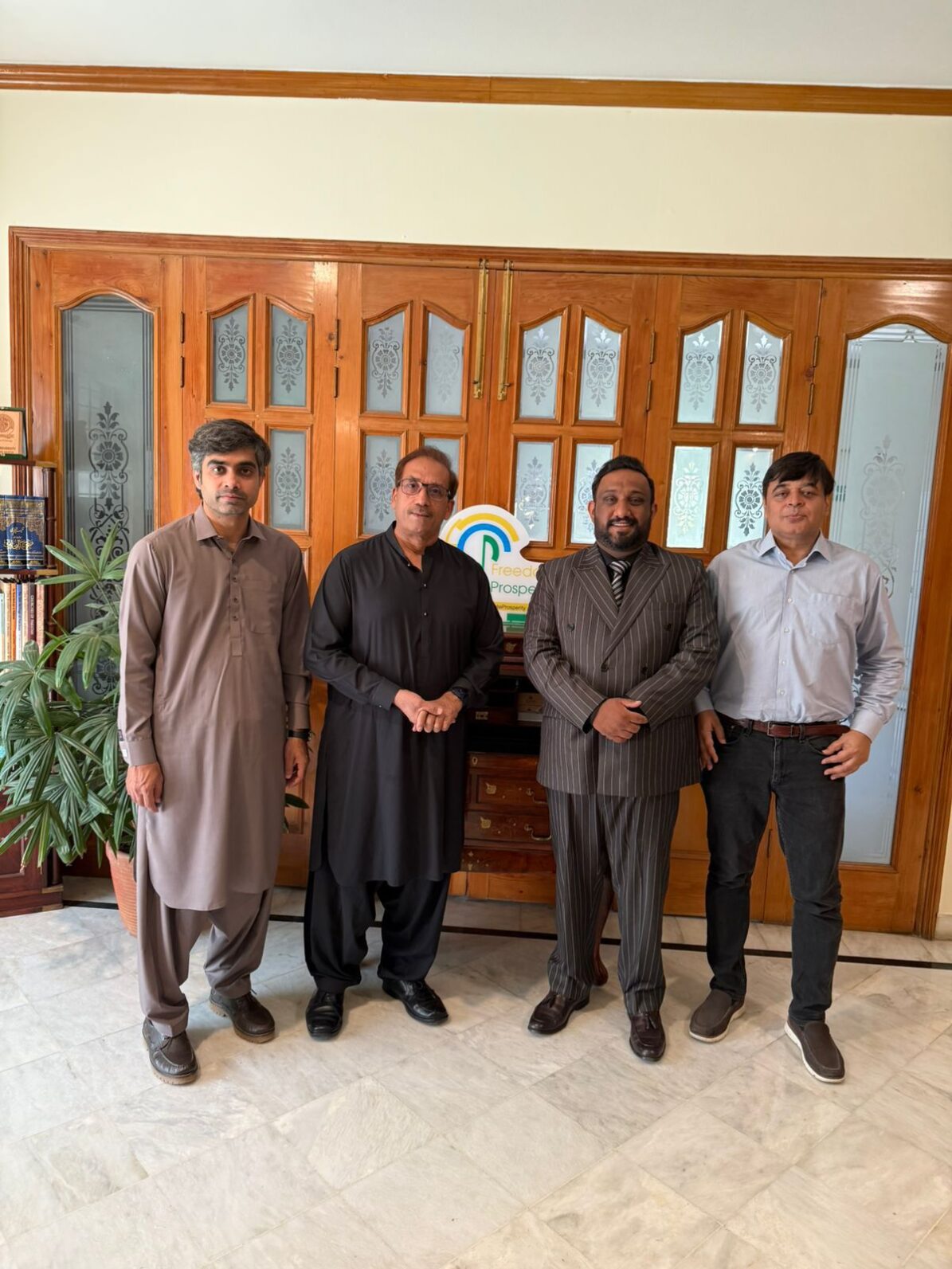
Islamabad: Freedom Gate Prosperity (FGP) and the Islamabad Chamber of Small Traders and Small Industries (ICSTSI) have emphasized the need for practical reforms to reduce regulatory hurdles, support small traders, and promote entrepreneurship in Pakistan. This agreed viewpoint emerged during the discussion was held between Mr. Awais Satti, President, Islamabad Chamber of ICSTSI, and Mr. Muhammad Anwar, CEO, Freedom Gate Prosperity, at the FGP Office in Islamabad. Mr. Shafqat Aziz, Strategic Policy Advisor at FGP, and Dr. Shahbaz Tariq, Head of Research, Economics and Governance at FGP, also participated in the meeting.
The meeting was focused on the daily challenges faced by small traders, micro-enterprises, startups, and young entrepreneurs, including taxation, documentation, licensing, digital compliance, market regulations, institutional coordination, and the need for a more enabling business environment.
Mr. Awais Satti said small traders and small industries are the backbone of Pakistan’s local economy, with thousands of families depending on them. He noted that traders are willing to comply with the law, but complicated tax procedures, overlapping regulations, sudden compliance notices, and excessive paperwork create fear and confusion instead of confidence.
The participants also discussed the difficulties faced by young people and women who want to start small businesses. It was observed that many potential entrepreneurs hesitate to enter the market because registration, taxation, and compliance procedures appear too complicated and costly, discouraging local enterprise and job creation.
Mr. Muhammad Anwar said Pakistan must move from a control-based regulatory culture to a facilitation-based economic model. He emphasized that small businesses create employment, circulate local wealth, and strengthen communities.
“Pakistan’s small traders and entrepreneurs need dignity, trust, and facilitation. If documentation is simplified, taxation is rationalized, and unnecessary barriers are removed, thousands of young people can become job creators instead of job seekers,” Mr. Anwar said.
The meeting also reviewed the implementation of Point of Sale systems for small retailers. Participants agreed that digitalization is important, but it must be introduced according to the size, turnover, capacity, and digital readiness of each business. Very small retailers should not be forced into costly systems beyond their operational capacity.
A major recommendation was to introduce a predictable, fixed tax regime for small traders, developed in consultation with chambers of commerce and market representatives. Participants said such a system could improve compliance, reduce discretionary enforcement, and build trust between traders and tax authorities.
They also discussed the burden of advance income tax collected through commercial electricity bills and called for a fair adjustment mechanism to be applied against final annual tax liabilities.
Mr. Shafqat Aziz highlighted the importance of public dialogue and clear communication to build trust among traders, policymakers, and citizens. Dr. Shahbaz Tariq emphasized that business reforms should be based on credible data, economic analysis, and direct feedback from traders.
The meeting concluded with a shared commitment to continue dialogue, develop practical policy recommendations, and promote a more transparent, predictable, and entrepreneur-friendly business environment in Pakistan.
