
Anwar Zada Gulyar
Bajaur: A heartbreaking incident in Bajaur District has raised serious questions about the performance of public institutions, public service delivery, and administrative indifference. The incident, which occurred following the martyrdom of social worker and humanitarian figure Malik Zia Salarzai, has sparked widespread anger and sorrow among local residents and social media users alike.
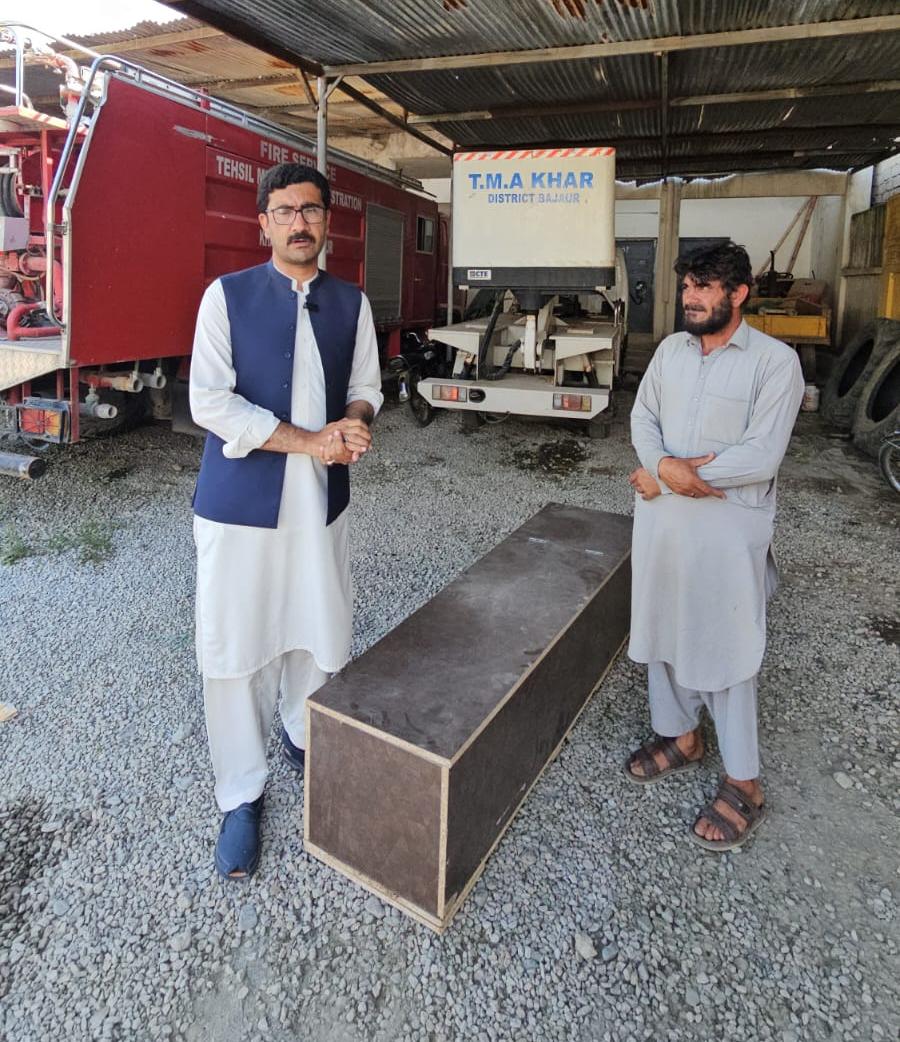
In a video that went viral on social media, journalist Zahid Jan was seen returning a coffin that had reportedly been provided only after great difficulty and repeated requests for the burial of the late Malik Zia Salarzai. The footage triggered strong public reactions, with many criticizing the insensitivity and poor conduct of the concerned authorities.
According to local sources, Malik Zia Salarzai was widely known in the area for his welfare work and humanitarian services, particularly his support for poor families, orphans, patients, and people in distress. Residents say he spent much of his life helping those in need. However, after his martyrdom, government institutions allegedly failed to provide even a coffin for his final journey in a timely and dignified manner.
Journalist Zahid Jan stated that when a coffin was requested at the hospital, a concerned official from the local administration allegedly responded that providing coffins was not the responsibility of the institution and that such facilities were meant only for unidentified or abandoned bodies. Public circles described these remarks as deeply unfortunate and contrary to basic human values and compassion, especially considering the social services rendered by the deceased.
Citizens argue that if institutions funded by public resources cannot provide basic assistance during times of grief and hardship, then their role and usefulness naturally come under question. According to public opinion, large sums of money are collected in the district through markets, transport stands, contracts, and various taxes, while government officials receive substantial benefits in the form of vehicles, fuel, travel allowances, and other privileges. Yet, when ordinary citizens face hardship, the same institutions appear disconnected from public responsibilities.
Following the incident, a large number of people on social media demanded accountability and transparent investigations into the use of public resources. Citizens questioned where public funds are being spent if they cannot be used to protect the dignity, basic needs, and respect of the people.
Local social and political circles say that this incident is not merely about the provision of a coffin; rather, it reflects the deeper flaws of a system in which people struggle for dignity both in life and after death. The public has urged the government and relevant authorities to conduct an impartial inquiry and take action against those responsible so that no family has to endure such pain, humiliation, and official indifference in the future.
