
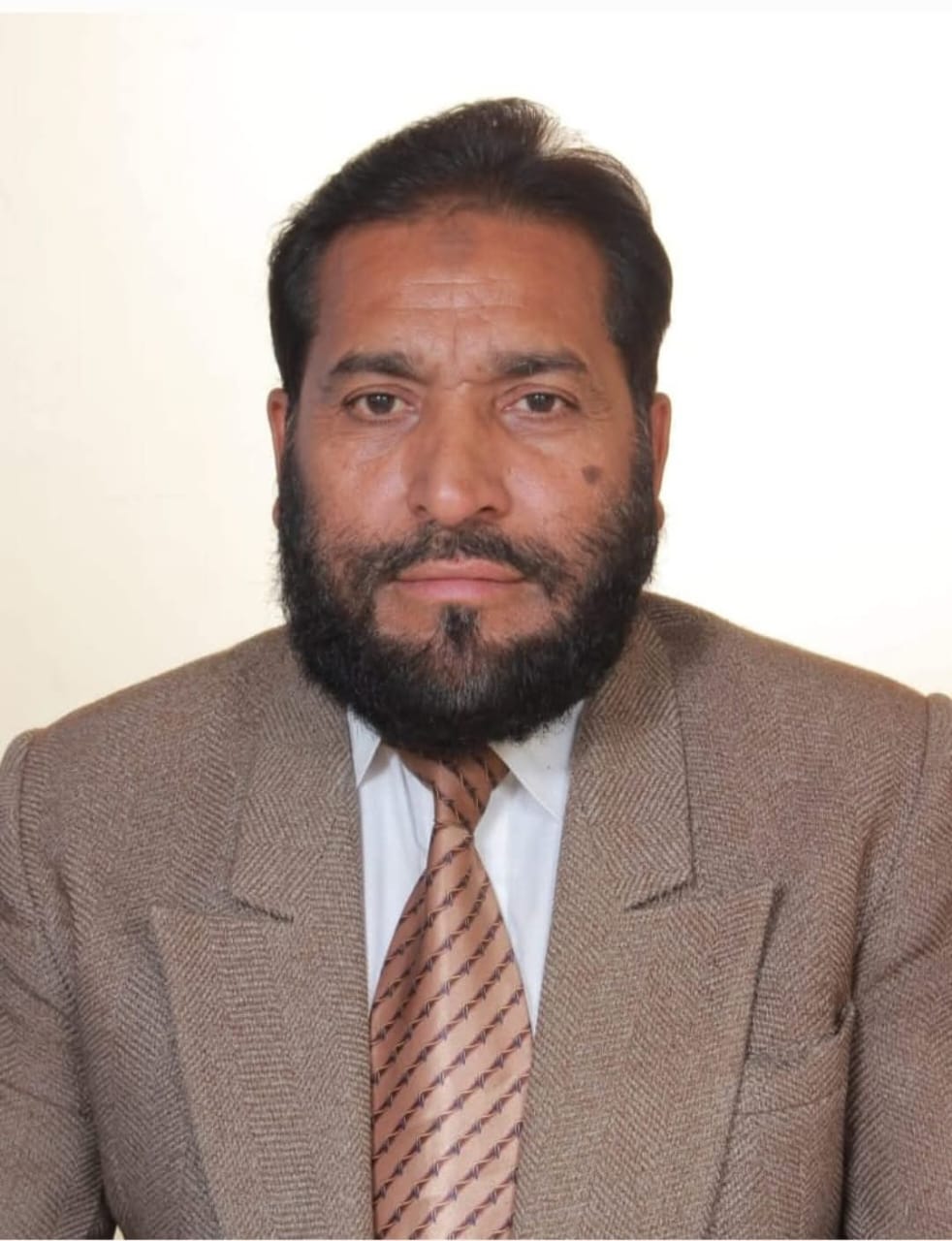
From Bare Floors to Building Champions — The Silent Struggle of a True Martial Arts Warrior
A Four-Decade Story of Dedication: The Man Who Started in an Open Hall and Still Trains the Next Generation There Today
By Ghani Rehman
In a modest building located in the historic Gulbahar area of Peshawar, young athletes continue to train barefoot on hard floors without mats. Old banners hang on the walls, and standing among them is a man whose entire life has revolved around one sport, one club, and one mission.
This is the story of Grand Master Shihan Sahibzada Alhadi — a renowned Full Contact Karate player, coach, organizer, and mentor who has devoted more than four decades to the sport with unwavering loyalty and commitment.
At a time when many athletes and officials frequently change associations, clubs, and disciplines in pursuit of fame, funding, or personal gain, Sahibzada Alhadi represents a rare example of steadfast dedication. He not only dedicated his life to one martial art but also continued serving the very same club where he first wore a karate uniform.
His journey is not merely about sports; it is a story of loyalty, perseverance, sincerity, and lifelong struggle.
Speaking to EMROZ TV, Sahibzada Alhadi recalled how his journey began in 1984 when, at the age of fifteen, he saw children training in karate at the Government Technical Vocational Center in Gulbahar, Peshawar.
“That scene is still fresh in my memory,” he said.
According to him, coach Muhammad Ahsan Rana was training young students at the time, and watching them ignited a passion within him to become a karate player himself. When he expressed his desire to join, his teacher warmly encouraged him to start training — a moment that marked the beginning of an extraordinary journey.
Smiling, he remarked:
“The day I wore a karate uniform for the first time, I have remained in it ever since. I never wore the uniform of any other martial art.”
That single sentence reflects the essence of his personality.
Throughout his life, Sahibzada Alhadi remained committed not only to Full Contact Karate but also to the mission of promoting and preserving the sport. He explained that just as a student progresses from primary school to university, he too advanced through different stages of learning under various respected teachers.
He initially trained under Muhammad Ahsan Rana, later learned from Muzammil Mehboob in Islamabad, and eventually received advanced training in Karachi from the late Grand Master Shihan Inamullah Khan.
“I completed what I call the university level of education in my sport,” he said, emphasizing that reaching such a level required years of relentless hard work, discipline, and sacrifice.
Paying tribute to the late Inamullah Khan, Sahibzada Alhadi prayed for his eternal peace and acknowledged his invaluable contributions to karate. Following that chapter of his career, he developed a long-standing association with Muhammad Arshad Jan in Lahore, whom he still regards as his senior and mentor.
One of the most remarkable aspects of Sahibzada Alhadi’s character is his loyalty to relationships.
“My nature is such that once I become associated with someone, I try to remain loyal for life,” he stated.
Perhaps that is why he still serves at the same karate club where he first began training decades ago. Today, he is not only managing the club but also transferring the same spirit and passion to a new generation of athletes.
He credited Muhammad Arshad Jan for playing a pivotal role in promoting Full Body Contact Karate across Pakistan and said he proudly stood beside him in that mission, especially in introducing the sport throughout Khyber Pakhtunkhwa.
According to Sahibzada Alhadi, the biggest challenge facing sports today is the severe lack of sponsorship and financial support.
“Occasionally, the provincial sports department provides limited assistance, but it is merely a drop in the ocean,” he said.
He further noted that sports associations enjoyed comparatively better support during the tenures of former Director Generals of Sports, Junaid Khan and Asfandyar Khan. However, he lamented that the current situation leaves athletes and sports organizations feeling neglected and abandoned.
In an interesting revelation, Sahibzada Alhadi shared that former DG Sports Junaid Khan was once among his students.
He explained that Junaid Khan used to study the Holy Quran at Jamia Hadia in Gulbahar while simultaneously attending karate training sessions at the club.
“From the very beginning, he was hardworking, humble, and passionate about education,” he said. “Allah elevated him to a respected position, and Peshawar is proud of him.”
Speaking about Darul Uloom Jamia Hadia, Sahibzada Alhadi mentioned that the institution was run by his uncle, Molana Rehmat Hadi, who also gave him the title “Alhadi.”
Currently, Sahibzada Alhadi serves as the Branch Chief in Pakistan for the Japan-based World Karate Organization (ShinKyokushin). He has also served as President of the Khyber Pakhtunkhwa Full Contact Karate Association, Secretary General of the Pakistan Full Contact Karate Federation, and presently holds the position of Vice President of the federation.
He explained that Kyokushin Kai — the foundation of Full Contact Karate — was established by the legendary Mas Oyama, while its global headquarters is located in Tokyo, Japan. The current President of the worldwide ShinKyokushin organization is Kenji Midori, who oversees the international network of branch chiefs across different countries.
However, the most painful part of the conversation emerged when Sahibzada Alhadi spoke about the lack of basic training facilities.
Despite spending decades promoting martial arts, his players — including female athletes — are still forced to train on hard floors without mats.
“Sports officials sit in air-conditioned offices and travel in expensive vehicles, while the real heroes of sports remain deprived of basic facilities,” he said with visible disappointment.
His words reflected not merely a complaint but the deep pain of a coach who has dedicated his life to shaping young people into disciplined and responsible citizens through sports.
Sahibzada Alhadi’s life stands as powerful evidence that true success is not measured by fame or official titles, but by loyalty to one’s mission, sincerity of purpose, and unwavering commitment.
He never changed his sport, his teacher, or his club. Instead, he remained firmly devoted to a single path and, in doing so, guided thousands of young athletes toward a better future.
Today, there is an urgent need to support sincere coaches and organizers like him, as they play a vital role in protecting young people from drugs, crime, and negative social influences by engaging them in healthy sporting activities.
With proper facilities, funding, and institutional support, Khyber Pakhtunkhwa has the potential not only to produce world-class martial artists but also to establish a new chapter in international martial arts history.
