
Muhammad Rehan
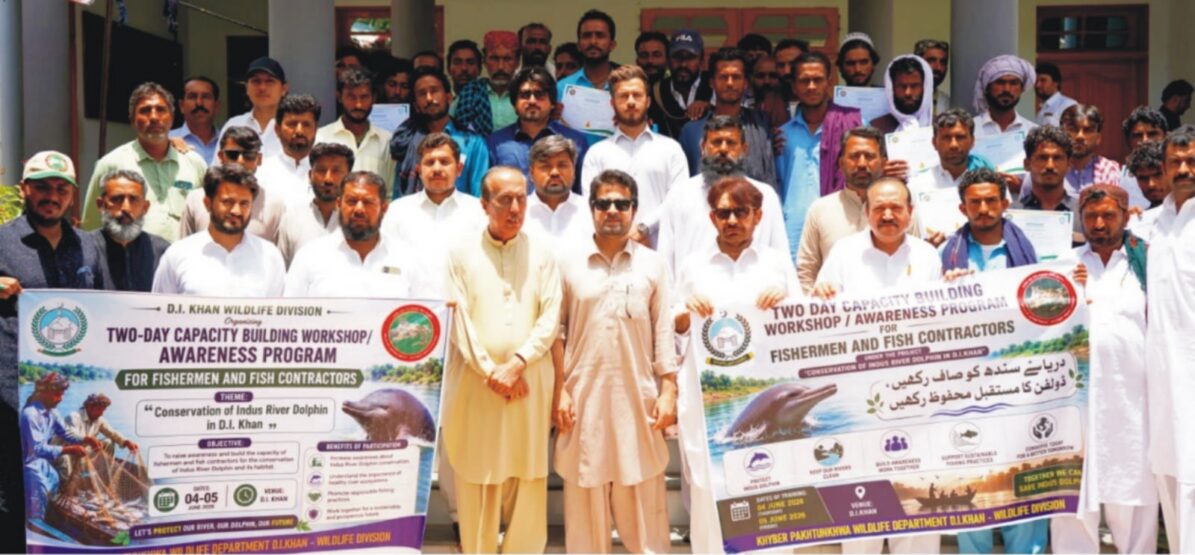
DERA ISMAIL KHAN: A two-day capacity-building training workshop and awareness program for fishermen and fish contractors was organized by the Dera Ismail Khan Wildlife Division under the project, “Conservation of Blind Dolphins of Indus River in Dera Ismail Khan,” at the Information Center of Wildlife Park, Dera Ismail Khan, on June 4-5, 2026.
A large number of fishermen and fish contractors from the project area participated in the workshop aimed at enhancing awareness about the ecological importance of the Indus River Blind Dolphin and promoting conservation-friendly fishing practices.
The event was attended by senior officials of the Khyber Pakhtunkhwa Wildlife Department, including Khan Malook Khan, Divisional Forest Officer, Dera Ismail Khan Wildlife Division; Abdul Halim Khan, Divisional Forest Officer, Wildlife Coordination, MAIP Forestry Sector Wildlife Component, Peshawar; and Ishtiaqullah, Divisional Forest Officer, Wildlife Headquarters, Peshawar.
Officials from the Fisheries Department, including Malak Hussain, Assistant Director Fisheries, Dera Ismail Khan, and other departmental representatives, also participated in the training sessions.
During the workshop, participants were informed about the major threats faced by the endangered Indus River Blind Dolphin, including accidental entanglement in fishing nets, habitat degradation, disturbance of river ecosystems, and unsustainable use of water resources.
Experts highlighted the critical role of fishermen and fish contractors as key stakeholders in protecting aquatic biodiversity and supporting sustainable fisheries management. The sessions emphasized the importance of community participation and cooperation among stakeholders to ensure the long-term conservation of the species.
Through visual presentations and interactive discussions, participants were educated on dolphin-friendly fishing practices, compliance with seasonal fishing restrictions, use of approved fishing gear, and timely reporting of injured, dead, or entangled dolphins to the relevant authorities.
The participants were encouraged to adopt responsible and sustainable fishing methods and actively contribute to the conservation of the Indus River Blind Dolphin and the overall health of the river ecosystem.
The workshop concluded with an interactive question-and-answer session, during which participants shared field experiences, discussed challenges, and gained a better understanding of their role in dolphin conservation and sustainable fisheries initiatives.
Certificates of completion were distributed among all participants at the end of the program in recognition of their successful participation.
