
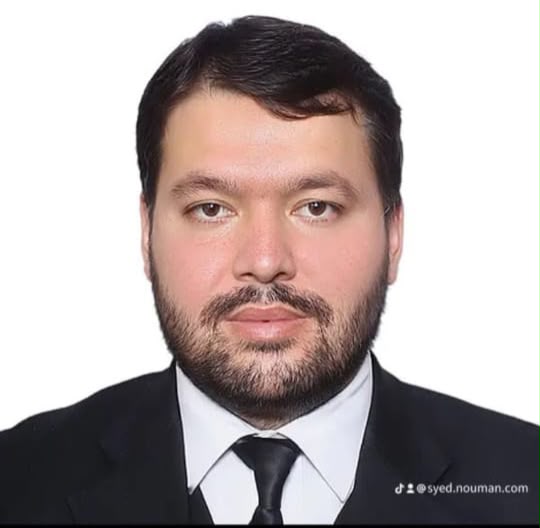
Syed Nouman Ud Din Advocate
It was an ordinary afternoon.
The stove was burning in the kitchen. The gentle sounds of cooking utensils echoed through the house. Faisalabad’s Iqra Parveen was preparing a meal for her family. Life was moving forward as usual. Her dreams were alive, her hopes were bright, and countless aspirations decorated her future.
Little did she know that within moments, a cruel act would shatter everything she had ever known.
A man named Abdul Mannan entered the house carrying a container of acid and poured it over her face and body before fleeing the scene.
Within seconds, a smiling face turned into screams of agony. A bright future was swallowed by darkness. A daughter’s world collapsed before her eyes.
The acid did not merely burn her skin.
It burned her dreams.
It burned her confidence.
It burned her happiness.
It burned her identity.
And perhaps, it left permanent scars upon her soul.
This is not merely the story of Iqra Parveen.
It is the story of countless daughters, sisters, and women who have fallen victim to hatred, revenge, ego, and violence.
The tragedy of acid attacks extends far beyond physical injuries. The wounds are not limited to flesh and skin; they penetrate memories, emotions, dignity, and self-worth.
The Holy Quran reminds us:
“Indeed, We created man in the best of forms.” (Surah At-Tin 95:4)
If Almighty Allah has created human beings in such beauty and dignity, then by what right do these perpetrators seek to destroy His creation?
Pause for a moment and imagine.
A young woman who once stood before a mirror, carefully arranging her hair and smiling at her reflection.
A woman who once looked at her face and saw hope, confidence, and possibility.
Now imagine that same woman standing before the mirror after an acid attack.
What storms must rage within her heart?
How many silent tears must fall when no one is watching?
How many times must she ask herself what crime she committed to deserve such cruelty?
These are questions that no court judgment, legal statute, or academic text can fully answer.
The truth is that acid attack survivors die and survive every single day.
Each morning begins with another challenge.
Each night ends with another painful memory.
Sadly, when a face is disfigured, society often changes its face as well.
People who once stood beside the victim slowly drift away.
Gatherings that once brought joy become sources of anxiety.
Paths that once led toward opportunity often lead toward isolation.
Consequently, many survivors suffer from depression, anxiety, social withdrawal, and profound psychological trauma.
Against this backdrop, the recent judgment of the Supreme Court of Pakistan emerged as a beacon of hope.
In the case of Iqra Parveen, the Supreme Court upheld the life imprisonment sentence awarded to Abdul Mannan. The Court rightly observed that this was not an act committed in sudden anger; rather, it was a deliberate, calculated, and premeditated attack designed to destroy a woman’s life.
The Court further remarked that acid violence can, in some circumstances, be even more devastating than murder because a murder victim dies once, whereas an acid attack survivor is forced to endure suffering for a lifetime.
These words are not merely legal observations; they are a reflection of the unbearable pain carried by thousands of survivors.
The renowned poet Dr. Rahat Indori beautifully captured a different dimension of human suffering when he wrote:
“Do gaz sahi magar yeh meri milkiyat to hai,
Ae maut! Tu ne mujh ko zamindar kar diya.”
(“It may be only two yards, but it is still my possession;
O death, you have at least made me the owner of a piece of land.”)
Indeed, death may be a moment of pain, but acid violence often becomes a lifetime of torment.
Women such as Dr. Mahnoor from Quetta, along with countless other victims across Pakistan, remind us of the devastating human cost of such crimes. These incidents have not only shattered families but have also shaken the conscience of our society.
Yet an important question remains:
How long will this continue?
How long will a woman’s rejection be punished with violence?
How long will hatred prevail over humanity?
How long will daughters live under the shadow of fear?
Undoubtedly, the law has an important role to play, and the Supreme Court’s decision is a shining example of justice. However, punishment alone cannot solve the problem.
We must also transform our attitudes, our values, and our social norms.
We must teach our children that love cannot be forced.
Respect cannot be demanded; it must be earned and given.
And women are not symbols of ownership; they are human beings deserving of dignity, equality, and protection.
Acid attack survivors require more than surgeries, medication, and financial assistance.
They need acceptance.
They need encouragement.
They need opportunities.
Most importantly, they need society to see them not as victims, but as human beings whose worth remains unchanged.
Because true beauty does not reside merely in a face.
Beauty resides in character.
Beauty resides in courage.
Beauty resides in patience.
Beauty resides in humanity.
And these are qualities that no acid can ever destroy.
Therefore, let us move beyond sympathy and make a collective commitment.
Let us become the voice of every oppressed woman.
Let us refuse to remain silent spectators.
Let us teach future generations respect instead of hatred.
Let us provide our daughters with security instead of fear.
Only then will a day come when no Iqra Parveen, no Dr. Mahnoor, and no innocent daughter will look into a mirror with terror in her eyes.
Instead, she will look at her reflection with confidence, dignity, and hope.
And only then will we be able to say with pride that we did not merely punish criminals—we built a better society.
Silence strengthens the oppressor, but speaking out empowers the victim.
Acid may burn a face, but it cannot burn courage.
Scars may mark the body, but no acid can destroy human dignity, hope, or the strength of the human spirit.
Perhaps that enduring hope, that resilience, and that determination are what we call life.
Syed Nouman Ud Din Advocat
Chairman, Peace and Justice Human Rights Organization
