
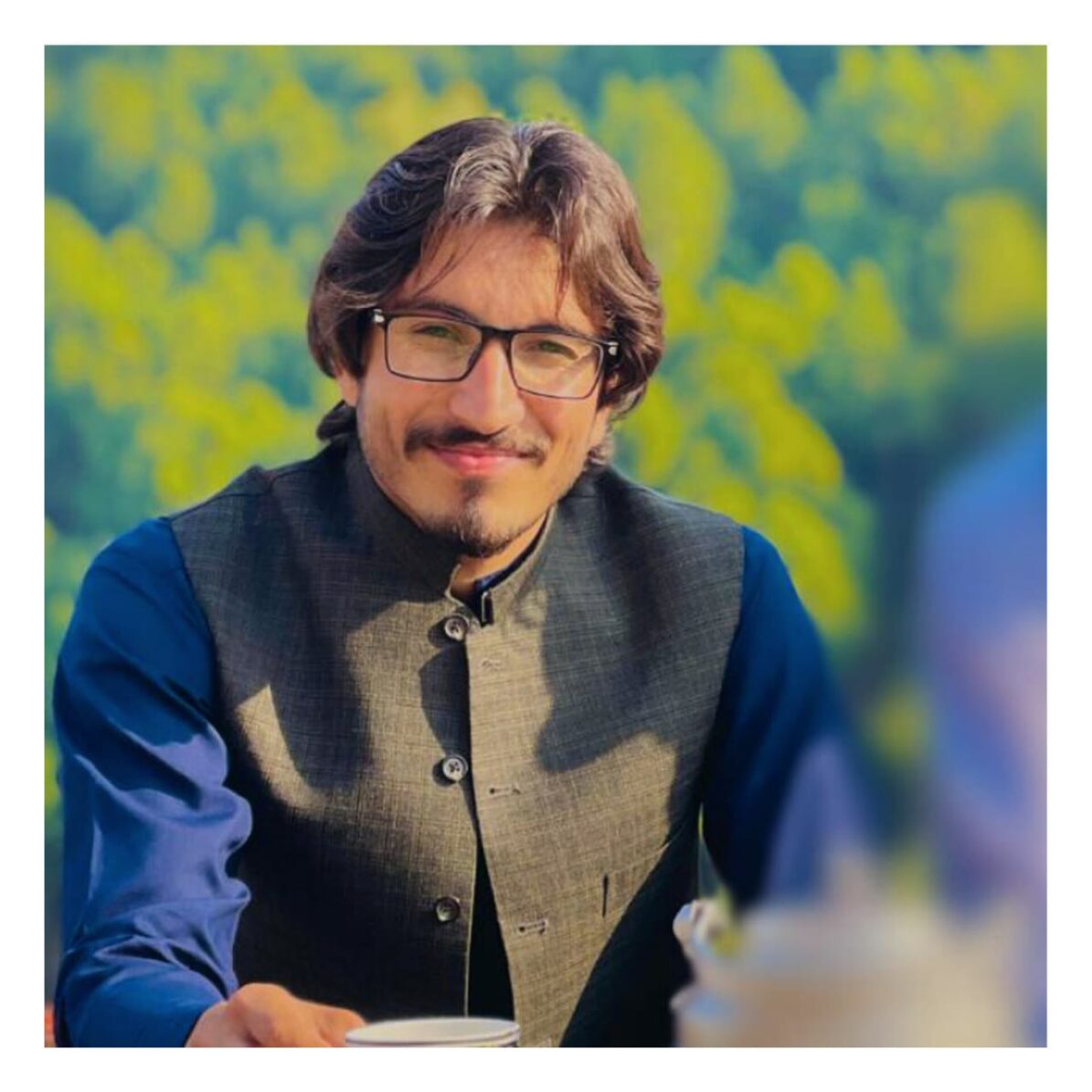
Adil Khan
M.Phil. Scholar at the National Institute of Pakistan Studies (NIPS), QAU
What can be expected when the erstwhile Superpower begins to count its days of influence in the far-off regions of the greater world. And how will the ‘wounded lion’ reassert its dominance in countering the ‘axis of resistance’ in the jungle? From the realist point of view, status quo has never been an option in the zero-sum game. The lust for power will inevitably explode in disaster, and any country coming in will be hit by the storm. An in-depth analysis of the contemporary geopolitical discourse and the fragile world order characterized by frequent hostilities, unrest and autocracies reinforces Hobbes’ ideal state where ‘everyone was at war with every other person’. The US-Israel joint airstrikes on Iran, Russian Invasion of Ukraine, and India’s attacks on Pakistan justifies how great power rivalries disregards the ‘rule-based order, normalizes the exercise of hard power and fuel authoritarianism across the world. While Iran has been widely praised for its well-calculated strategies and better resilience, this article analyzes how US-Israel airstrikes backfired and helped the Iranian regime to normalize dictatorship, facilitate the militarization of politics, and resort to oppressive state apparatus in suppressing political dissent thereby leaving the masses in miserable conditions.
Decades after the imposition of the western world order, America emerged as the single most superpower to act as the policeman while at the same time inhaling the fresh air of the emerging political discourse encompassing ‘the end of history’ and ‘the clash of civilization’. But this short-lived transitional phase ignored the rise of China, the re-emergence of Russia and the development of the resistance front in the global south pledging for a more representative, transparent and equitable alternative order thereby threatening American interests in the region. Meanwhile, subjected to countless US sanctions, economic blockade and diplomatic isolation due to its nuclear program and proxy networks, Iran was quick to join the ‘axis of upheaval’. However, the despotism of Khamenei accompanied by domestic recession and economic crisis turned the streets of Tehran into wider political protests pushing the regime to use excessive force to restore normalcy.
The regime was at its weakest position in January as the protests intensified with the ruthless state violence but the erroneous American interpretation of the events in Tehran derailed the trajectory of the movement with disastrous consequences. The understanding that the mullah regime in Tehran has lost the goodwill of the masses and that external involvement will further contribute to the collapse of the regime, to be replaced by a more democratic one in the aftermath, backlashed. The US-Israel airstrikes on Iran and the subsequent killing of the mainstream political leadership and the leaders of the Revolutionary Guards not only reversed the progressive movement but provided a much-needed opportunity to the Guards to generate sympathy and legitimize their rule even among those who were previously opposed to it. The funeral gatherings of the late supreme leader reveal how an environment of clamorous dissent and vociferous condemnations of the regime transitioned into tearful tributes and public mourning for Khamenei.
But the euphoria of President Trump and his like-minded for securing a regime change in Tehran, and the mourning tears of the masses will soon give way to a fresh wave of authoritarianism as the new generation of the regime belongs to the ideological cadre of the Iranian Revolutionary Guard. The institution had suffered great damage in the Iraq war and Khamenei had then restored its prestige butt he kept a strong check on their activities, concentrated all the decision-making powers in the office of the supreme leader and constitutionally restricted the role of the revolutionary Guards just to prevent external aggression, maintain internal stability, safeguard the ideological foundation of the state and to look after its nuclear program.
With the demise of key political leaders like Khamenei and Ali Larijani, there is hardly anybody lift to counter the hegemonic politics of revolutionary guards in Iran which is now stronger than ever. This means that the IRGC will concentrate more power in coercive institutions and military figures and will redirect funding to military spending thereby leaving little space for democratic engagements, human rights and socio-economic development. The rise of the military-aligned leaders like the new supreme leader Mojtaba Khamenei, Mohammad Bagher Ghalibaf, and Mohammad Bagher Zolghadr reveals that military is going to have a major say in the new administration of the Iran thereby blurring the line between the military and civilian leadership. This more hardline and reactionary set up left very little space for progressives to function as witnessed by the statement of President Pezehkshian issued to apologize neighboring states for Iranian attacks on their territories which was immediately rescinded after the criticism of the IRGC.
Had the United States not attacked Iran at the time when the anti-regime protest was touching the sky, the situation in Iran would have very different right now. But history reveals that every reactionary policy of America ranging from diplomatic isolation, economic blackout and sanctions backfired with a chance to the Iranian regime and then to the more hardliner IRGC to consolidate their powerbase while at the same time resort to oppressive means of suppressing dissents thereby normalizing authoritarianism. The regime has now a ‘national security state’ set up against the backdrop of the US-Israel threats thereby necessitating defense spending with maximum reliance on China and Russia. The weaponization of the strait of Hormuz provided much geostrategic leverage, but the domestic compulsions like worsening socio-economic crisis and reliance on oppressive state apparatus to suppress dissent will ultimately bring Iran to the table of negotiation to escape further disaster.
