
PROVINCE REPORT
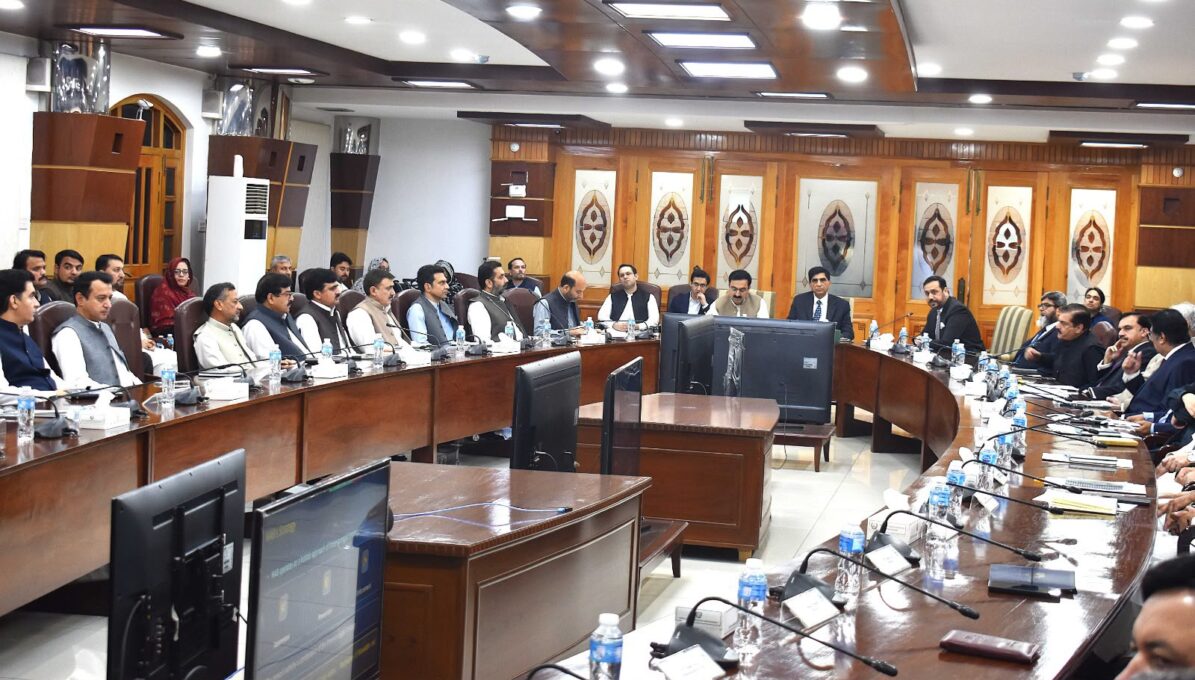
PESHAWAR: The National Accountability Bureau (NAB), Khyber Pakhtunkhwa, organized a comprehensive briefing session on the legal and administrative framework governing state land leasing, land revenue matters and the responsibilities of revenue authorities in the province.
The session was attended virtually by Chairman NAB Lt. Gen. (R) Nazir Ahmed, while Chief Secretary Khyber Pakhtunkhwa Shahab Ali Shah, Prosecutor General Accountability Syed Inhtesham Qadir Shah, advisers to the Chairman NAB, Director Generals of NAB, provincial secretaries, heads of departments and senior officers of NAB and the provincial administration attended the physical gathering.
Welcoming the participants, Director General NAB KP Naveed Haider Zahid said NAB was pursuing a three-pronged strategy of awareness, prevention and enforcement. He said the Chairman NAB had established the Land Directorate in 2025 to address the illegal occupation, allotment and fraudulent transfer of state assets.
He said NAB had retrieved 2.98 million acres of state land across the country in 2025, with the recovered land valued at Rs5.976 trillion, while efforts for further recovery were continuing in 2026.
Highlighting issues in KP, the DG said discrepancies had been identified between Deputy Commissioners’ records and departmental records due to the absence of a centralized repository for state land. He also pointed to confusion over departmental utilization rights and cases involving unauthorized leases, mortgages and occupations without approval of the Board of Revenue.
He said NAB KP had developed the State Land Management System (SLMS), a searchable database aimed at bringing provincial state land records onto a single platform.
Advisor to Chairman NAB on Land Matters Ahmed Ali Zafar delivered a detailed presentation on the legal framework of land revenue matters in KP and the responsibilities of revenue and concerned departments. He discussed the historical and prevailing legal framework, functions of revenue officers, jurisdiction of civil courts and issues relating to the exercise of discretion by provincial and local governments in state land matters.
DG Operations NAB Amjad Majeed Aulakh presented findings of NAB’s study on land leasing in KP, highlighting shortcomings in the existing system and recommending measures to improve transparency, institutional oversight and management of state land.
Prosecutor General NAB Syed Inhtesham Qadir Shah briefed participants on superior court judgments concerning the responsibilities of land revenue authorities in managing state land. He emphasized that state land constituted a public trust and stressed compliance with legal and judicial requirements.
He also discussed relevant judgments of the Supreme Court and Sindh High Court, noting that judicial decisions provide guidance to revenue authorities regarding the lawful, transparent and fair-market management and disposal of public land.
The presentations were followed by an interactive question-and-answer session, during which participants discussed legal, administrative and operational issues concerning land revenue administration, state land management and leasing.
Chief Secretary KP Shahab Ali Shah appreciated the initiative and said such collaborative engagements could help improve mechanisms for the retrieval and protection of state land. He said the recommendations could also assist in vetting and formulating legislation to address existing legal and administrative gaps.
In his concluding remarks, Chairman NAB expressed satisfaction over cooperation between NAB and the KP civil administration. He said coordinated institutional efforts could help unlock the economic and public value of state land resources.
The Chairman stressed the need for effective identification, protection and recovery of state land and called for government functionaries to exercise their authority strictly in accordance with the law and relevant statutory provisions.
He said shortcomings of the past should be addressed through corrective measures, institutional improvement and legal compliance, and advised that a comprehensive roadmap and mechanism be developed to implement the recommendations emerging from the session.
The workshop concluded with a shared understanding that good governance and anti-corruption efforts were complementary to effective management of public resources and that stronger coordination between NAB and the KP administration could contribute to making additional public resources available for provincial development and the broader public interest.
