
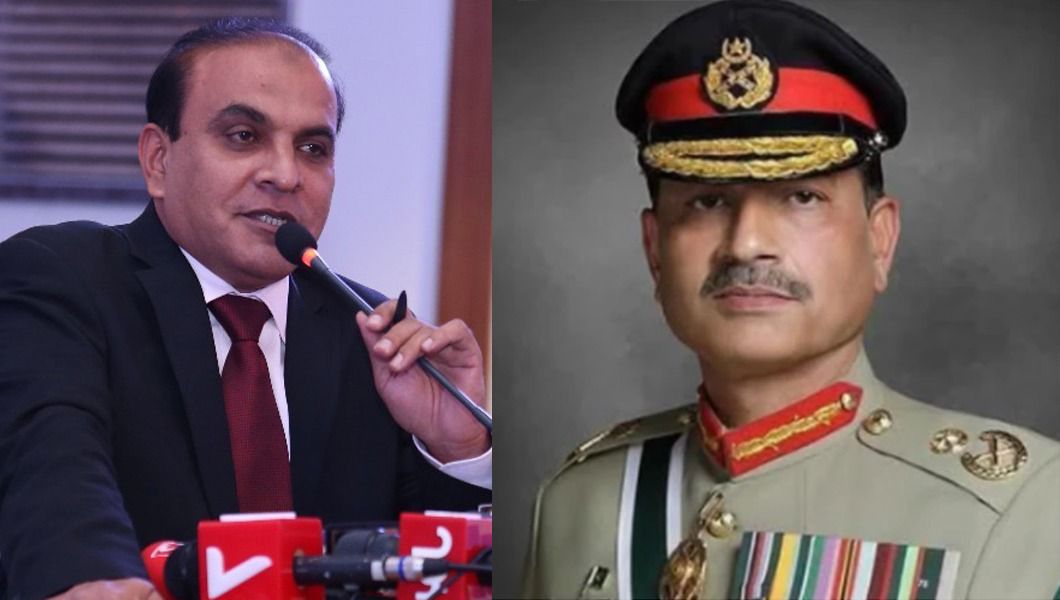
Asim Munir’s dual focus on defence and economy is laudable
Tax law amendments lauded, reduced business costs demanded
Staff Report
MIRPUR (AJK): United Business Group North Zone Vice Chairman and former vice president of the Federation of Pakistan Chambers of Commerce and Industry, Ch. Javeed Iqbal, on Sunday, welcomed recent amendments to tax laws, highlighting their positive impact on business confidence and economic stability.
Speaking to the business community, he praised the removal of provisions that previously allowed lower-grade tax officials to arrest businessmen without proper checks, calling it a vital reform to protect entrepreneurs’ rights and restore trust between the private sector and government authorities.
Ch. Javeed Iqbal credited Field Marshal Syed Asim Munir’s decisive leadership for addressing longstanding challenges faced by the business community. Munir’s balanced approach, focusing on both national defence and economic development, has generated renewed optimism among the public, investors, and stakeholders, encouraging a more conducive environment for growth.
The military’s role in safeguarding Pakistan’s sovereignty, while simultaneously supporting economic reforms, has been a source of pride and confidence for the nation, he said.
However, the business leader underscored that challenges remain, particularly the high cost of doing business. He pointed to the power sector’s tariff structure as a significant hurdle. Despite Pakistan’s competitive advantage of a 50 percent tariff on Indian goods, which should ideally boost exports, current electricity tariffs and high interest rates threaten to undermine this potential. He urged the government to reduce electricity tariffs to nine cents per unit and bring interest rates down to single digits to maintain global competitiveness.
Ch. Javeed Iqbal also strongly opposed SNGPL’s recent decision to impose retroactive gas levies for the past five years, terming it unfair and calling for its immediate reversal. Such financial burdens increase operational costs for businesses, discourage investment, and stall economic progress.
He emphasized the importance of a fair and transparent regulatory environment where tax compliance is encouraged but intimidation and arbitrary enforcement are eliminated. The business community remains committed to fulfilling its tax obligations but insists that reforms must protect entrepreneurs from unjust practices.
He urged swift action on these fronts, stressing that reducing power tariffs and interest rates is crucial for lowering production costs. Without these reforms, Pakistan risks losing valuable export orders to more competitive economies, which could have severe repercussions for employment and overall economic health.
Ch. Javeed Iqbal’s remarks underscore a critical juncture for the economy, where military leadership’s support for economic stability aligns with private sector demands for realistic reforms. Field Marshal Asim Munir’s dual focus on defence and economic progress offers hope for a more prosperous and secure Pakistan.
He also lauded SM Tanveer for his persistent and effective efforts in resolving the problems faced by the business community. His engagement and advocacy have played a significant role in bridging gaps between the government and entrepreneurs.
The path forward requires collaboration between the government, military, and business sectors to ensure policies foster investment, protect entrepreneurial rights, and enhance Pakistan’s position in global markets. Sustained commitment is necessary to translate these changes into tangible economic benefits.
