
For the first time, the Cherifian kingdom rose to the rank of the most industrialized economy on the African continent in 2025. This is revealed by a report by the “the African Development Bank (ADB)”. Morocco is certainly benefiting from the South African retreat, but it is also the result of a pro-industry political strategy launched twenty years ago.
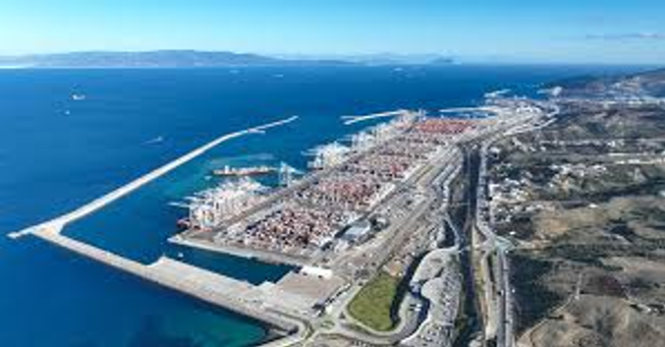
The port of Tangier Med in northern Morocco
In its report, the ADB highlights the successes of the Moroccan model: rising public and foreign investment, booming industrial zones and ever more connected infrastructure, especially with the port of Tangier Med, now the first African port.
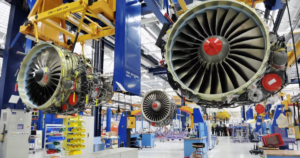
As a result, the industry of the kingdom is no longer based only on phosphates or the automobile, but also on other promising sectors such as aeronautics. “Every plane in the sky today produced after the 2005’s has at least one essential component produced in Morocco. It was one of the bets to bet on aeronautics as well as on the automobile, says Abdelmalek Alaoui, president of the Moroccan Institute of Strategic Intelligence and author of the book Morocco, the challenge of power. « When a country decides to put a lot of public investment into high-quality infrastructure – whether in connectivity, in in this ports or in telecoms, there are increasingly important international investors case but also accompanied by domestic investors. And that’s where we change category » says Abdelmalek Alaoui.
For Morocco remains a challenge: that the whole country benefits from this industrial success. « There is a Morocco that wins, a Morocco near the ports, a Morocco of globalization. And there is still a Morocco of fringes, of territories. And the fact that we had this forced industrialization has widened gaps between those who are very rich and those who are much lower in the social pyramid ». Because behind industrial performance, the disparities remain strong. In another report last month, the ADB noted that Morocco certainly has many companies, but struggles to create enough jobs for its population.
Morocco is, moreover, now “the economy closest to the frontier of industrial development, with a score of 0.8415, which puts it at 0.1585 points of the maximum value of 1″. This gap highlights the remaining margin of improvement, even for the highest-ranked economy, the study authors note. Now in 2nd place with a score of 0.8396 in 2024, South Africa “remains a continental industrial power, but continues to experience a gradual decline in its industrial competitiveness”. Egypt consolidates this year its 3rd place (0.7827), delighted in 2020 to Tunisia (0.7760), which remains in 4th position. Apart from this leading quartet, which retains “a clear lead in the Index”, the country ranked 5 e, Mauritius, is lagging significantly behind, with a score of 0.6731 in 2024, “more than 0.1 points less than the first four economies”. Finally, Algeria (0.6661), Eswatini (0,6509), Senegal (0.6368), Namibia (0.6295) and Côte d’Ivoire (0.6173) complement the group of the 10 best performing countries.
At the regional level, North Africa remains the continent’s most industrialized, followed by southern Africa. Next are East Africa, West and Central Africa. These three regions remain “well down, despite the steady progress made in recent years”, while the first two “concentrate the bulk of manufacturing production, export sophistication and industrial competitiveness”.
Through this 2025 edition, the ADB ultimately defends a much more integrated vision of African industrial development. The objective is no longer just to develop national industries, but to build real regional ecosystems capable of strengthening the continent’s competitiveness in global value chains. In this new configuration, Morocco now appears to be one of the countries best positioned to play a leading role in Africa’s next industrial transformation phase.
Note that the ADB’s 2026 Annual Meetings, which include the 61st Annual Meeting of the Bank’s Board of Governors and the 52nd Annual Meeting of the Board of Governors of the African Development Fund, are held until May 29 under the theme « mobilizing large-scale resources for financing Africa’s development
