
PROVINCE REPORT
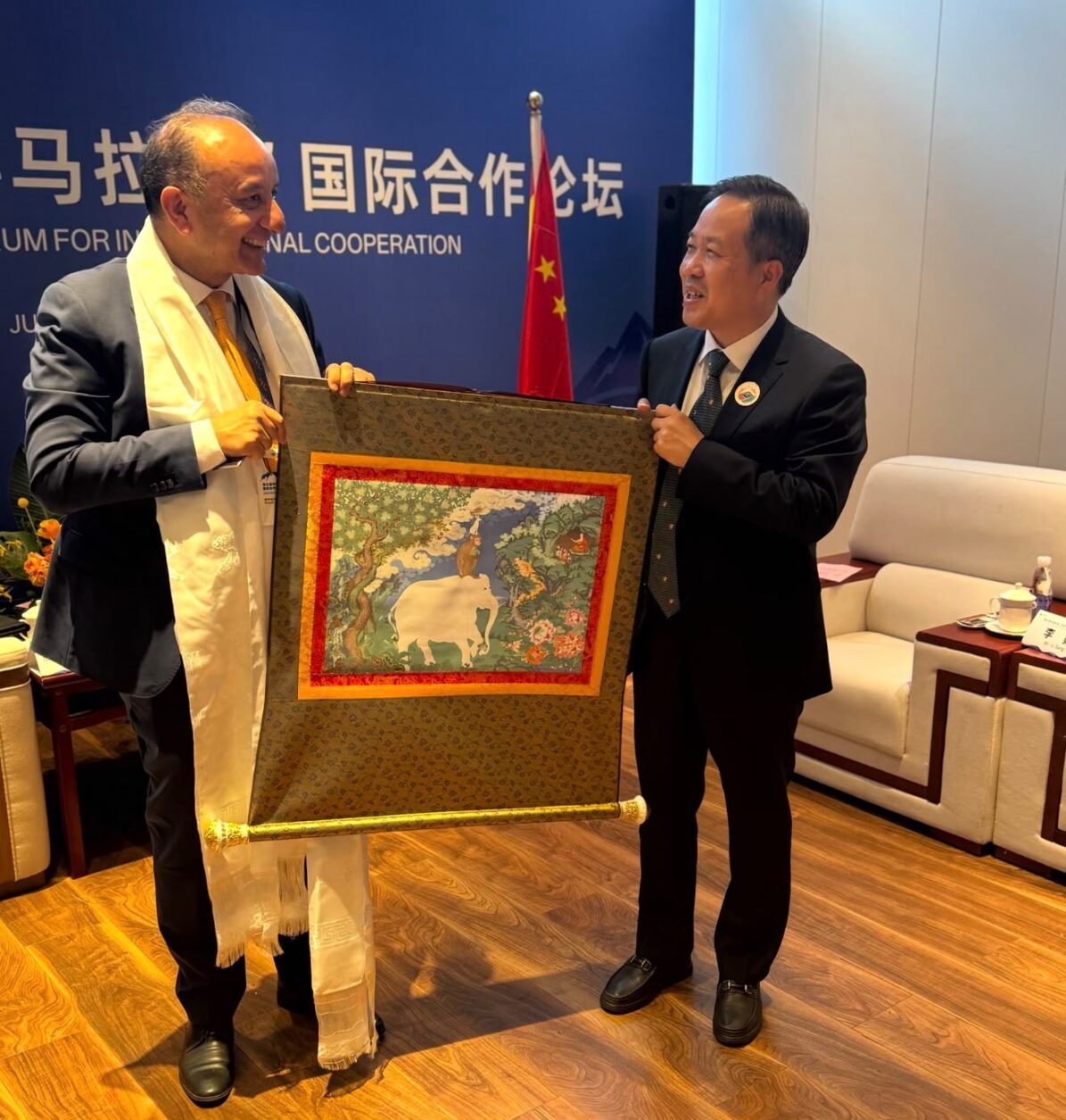
XIZANG, China: Federal Minister for Climate Change and Environmental Coordination, Dr. Musadik Malik, held a meeting with the Vice Chairman of the People’s Government of the Xizang Autonomous Region, His Excellency Mr. Xu Zitao, on the sidelines of the 5th China Xizang Trans-Himalaya Forum.
The Vice Chairman warmly welcomed the Federal Minister and briefed the Pakistani delegation on the history, geography, political development, economic progress, and rich cultural heritage of the Xizang Autonomous Region. He also highlighted the region’s development model, which places strong emphasis on ecological conservation and environmental protection.
During the meeting, the Vice Chairman noted that Xizang has undergone significant socio-economic transformation over the past several decades, underscoring the improvements in public welfare, infrastructure, and socio-economic development across the region.
The Vice Chairman informed the Minister that environmental protection remains a central component of Xizang’s development strategy. He stated that the region is home to 47 national parks and that development initiatives are being pursued while preserving its unique ecological and environmental characteristics. He also highlighted Xizang’s rich cultural and religious diversity and noted the historical presence of a small Muslim community of Kashmiri origin in the region.
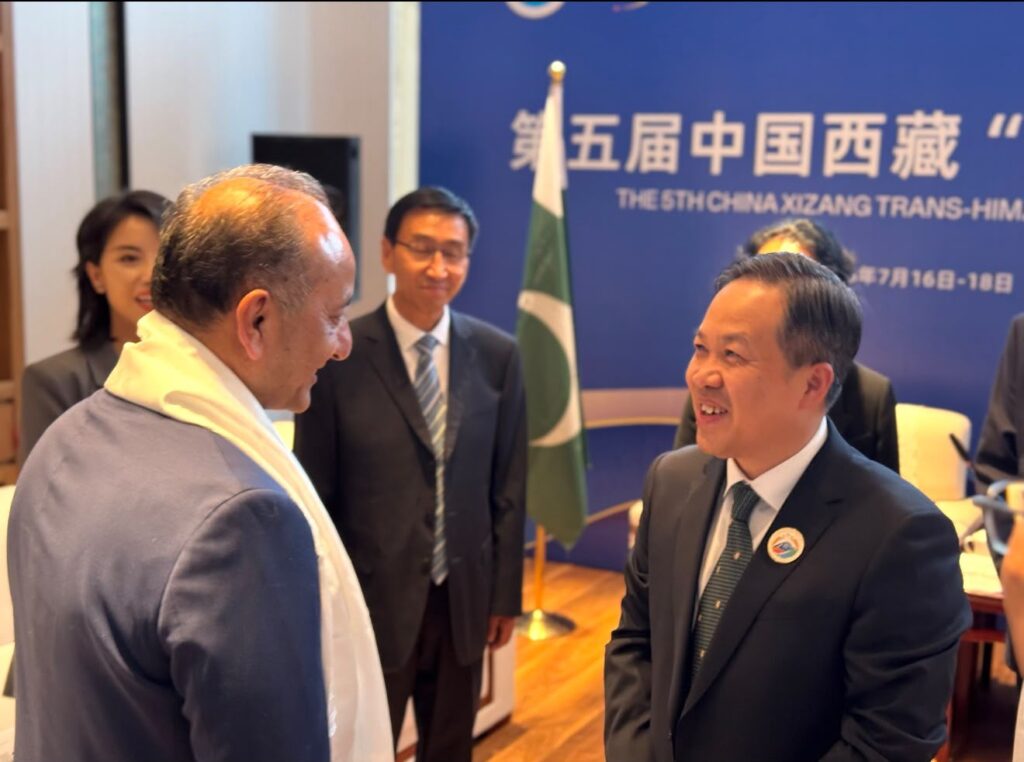
Dr. Musadik Malik thanked the Vice Chairman for his warm hospitality. He reaffirmed the longstanding friendship and Strategic Cooperative Partnership between Pakistan and China and noted that both countries continue to enjoy close cooperation across a wide range of sectors.
The two sides discussed opportunities to further strengthen collaboration in environmental protection, climate change, scientific research, innovation, mountain ecosystem conservation, biodiversity protection, and sustainable development. The Federal Minister emphasized that both Pakistan and Xizang share similar ecological and mountain environments and can benefit greatly from enhanced knowledge-sharing, and institutional partnerships.
The meeting also touched upon the importance of traditional knowledge systems, including Tibetan medicine. It was noted that several traditional medicinal practices associated with the region are also familiar in Pakistan’s Gilgit-Baltistan region, presenting further opportunities for academic and research collaboration.
Concluding the meeting, Dr. Musadik Malik reaffirmed Pakistan’s commitment to further strengthening cooperation with China and expressed confidence that closer collaboration in climate action and scientific research would further deepen the enduring friendship between the two countries.
