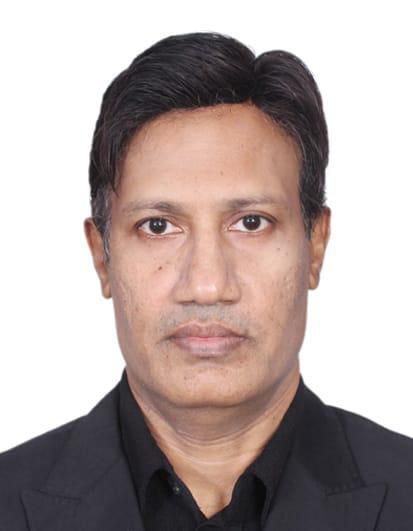
By Junaid Qaiser
“The Pakistanis have been incredible mediators throughout this process, and we really appreciate their friendship and their efforts to bring this deal to a close.” With these words, U.S. Press Secretary Karoline Leavitt did more than just extend diplomatic niceties—she highlighted Washington’s shifting perspective on Pakistan’s role during a crucial geopolitical moment. In a time when tensions could easily escalate, the United States is not merely engaging with Pakistan; it’s leaning on it.
This reliance isn’t just a coincidence. It stems from ongoing, behind-the-scenes work—much of which has been spearheaded by Pakistan’s military and political leaders. Field Marshal Asim Munir and Prime Minister Shehbaz Sharif have recently acted with a sense of urgency that underscores both the risks and the opportunities at hand. What started as a facilitation effort has gradually transformed into something much more significant: the management of a delicate diplomatic process.
The significance of this moment lies in the convergence of pressure and diplomacy. While Washington continues to apply economic and strategic pressure on Tehran, it has also made a deliberate choice to keep the diplomatic channel open—and to route it through Islamabad. The White House has made clear that further talks are “very likely” to take place again in Pakistan, effectively positioning it as the central conduit for engagement between two long-standing adversaries.
At the heart of this effort is Field Marshal Asim Munir’s increasingly visible diplomatic role. His visit to Tehran, carrying messages between Washington and Iranian leadership, underscores a hands-on approach rarely seen at this level. This is not ceremonial diplomacy; it is active mediation, involving real-time communication, trust-building, and the delicate task of keeping both sides engaged when mistrust runs deep. Reports confirm that exchanges between the U.S. and Iran have continued through Pakistani channels even after the initial talks concluded without agreement—an indication that Islamabad remains central to the process.
Alongside this, Prime Minister Shehbaz Sharif has anchored the political dimension of the effort. His outreach to key regional players, including Saudi Arabia, reflects an understanding that bilateral dialogue alone may not be enough. Stabilizing the broader environment—aligning regional stakeholders behind de-escalation—is equally critical. Sharif’s diplomacy has added depth to Pakistan’s role, transforming it from a host into a hub of coordinated international engagement.
What makes this moment particularly notable is the degree of recognition Pakistan has received from Washington. It is rare for the United States to so openly credit another country as the “only mediator” in a high-stakes conflict. However, that is precisely what has happened. The acknowledgment reflects a pragmatic calculation: in a fractured diplomatic landscape, effectiveness matters more than optics. Pakistan has proven it can deliver a platform where dialogue is not just possible, but sustainable.
The earlier round of talks in Islamabad may not have produced a deal, but it achieved something equally important—it prevented collapse. It established a working channel, clarified positions, and exposed the constraints on both sides, particularly the internal limitations within Iran’s negotiating structure. That clarity now feeds directly into the next phase, as discussions around a second round gather pace.
There is, of course, no guarantee of success. The gaps remain significant, especially on issues like Iran’s nuclear programme and regional security dynamics. But diplomacy rarely advances in dramatic leaps. More often, it moves in increments—through persistence, pressure, and the quiet work of intermediaries willing to stay engaged when others step back.
In this context, Pakistan’s role is not just timely; it is pivotal. By holding the line between confrontation and conversation, Islamabad has created space for diplomacy to function. And in doing so, it has positioned itself not merely as a mediator, but as a central actor in shaping the outcome.
The path to peace between Washington and Tehran remains uncertain. But for now, it runs through Islamabad—and through the relentless efforts of leaders who have chosen dialogue over disengagement, and persistence over pause.