
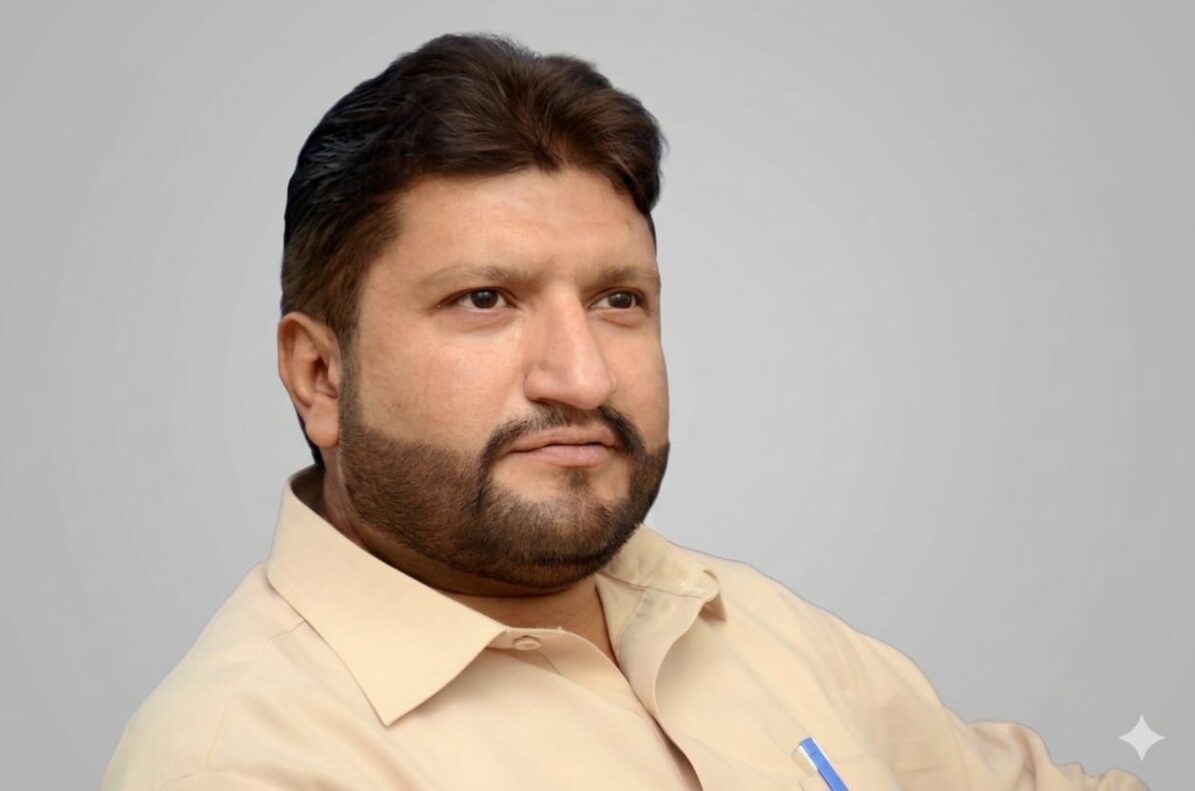
Amjad Hadi Yousafzai
If there is one political miracle that has consistently occurred in Pakistan, it is the remarkable unity between the government and the opposition. Unfortunately, this unity rarely emerges for the benefit of the people. It is seldom witnessed in the fight against inflation, unemployment, poor healthcare, failing education, or even the growing menace of terrorism. Instead, this miracle comes to life whenever the issue concerns legislators’ salaries, privileges, allowances, official protocol, or parliamentary powers. At that point, political ideologies disappear, bitter rivalries fade away, and the harsh accusations exchanged only moments earlier suddenly become irrelevant. The entire assembly begins to resemble one united family, sharing the same concerns and pursuing the same interests.
The recent sessions of the Khyber Pakhtunkhwa Assembly presented yet another example of this phenomenon. The same government and opposition members who had been accusing each other of constitutional violations, corruption, incompetence, and destroying the province were suddenly standing shoulder to shoulder. Their unity was not inspired by a national emergency or a landmark law aimed at improving the lives of ordinary citizens. Rather, it revolved around legislation concerning their own benefits, privileges, parliamentary protections, and institutional powers.
It appeared as though the political war that had raged inside the assembly for years had come to an abrupt end. There were no walkouts, no quorum objections, no angry speeches, and no passionate calls to prioritize the people’s welfare. Instead, every member quietly supported what had already become a matter of unanimous self-interest.
Had an ordinary citizen watched these proceedings without context, they might have assumed that the assembly was passing revolutionary legislation to eradicate poverty, create employment opportunities for young people, improve government hospitals, or provide quality education in public schools. The reality, however, was quite the opposite. The revolution taking place was not in the lives of the people but in the comfort and convenience of their elected representatives.
One of the peculiar features of Pakistan’s political system is that whenever public welfare is discussed, the national treasury is suddenly declared empty. We are told that resources are scarce, the economy is under immense pressure, budget deficits are overwhelming, international financial obligations leave little room for spending, and difficult times demand sacrifice. Yet the moment lawmakers’ own salaries and privileges come under consideration, these financial constraints mysteriously disappear. Budget shortages no longer matter, economic crises lose their urgency, and calls for austerity quietly fade into the background.
It almost seems as though the country’s economy becomes critically ill only when ordinary citizens need relief, but recovers miraculously whenever politicians seek additional privileges.
Even more ironic is the fact that political careers in Pakistan often begin with lofty promises of public service, simplicity, accountability, and sacrifice. Yet once elected, many politicians quickly shift their priorities toward securing greater comfort and institutional benefits for themselves.
Perhaps this is why many citizens have begun asking a simple but profound question: are legislative assemblies meant to serve the people, or are they primarily institutions for safeguarding the welfare of legislators themselves?
The issue extends beyond financial privileges. Around the same time, the assembly also passed legislation concerning the media that drew criticism from journalists and civil society organizations. The new provisions expanded the authority to regulate media access, reporting of assembly proceedings, and journalists’ entry into the legislature. Officially, these measures were presented as efforts to maintain discipline and prevent inaccurate reporting. Critics, however, argued that the real objective was to discourage critical journalism and bring parliamentary reporting more firmly under official control.
This raises a fundamental question.
If the assembly truly represents the people, why should it fear public scrutiny?
If legislation genuinely serves the public interest, why should there be discomfort with a free and independent press?
Transparency is the cornerstone of every healthy democracy. Around the world, mature democratic institutions openly broadcast parliamentary proceedings, provide journalists with broad access, and allow citizens to observe how their elected representatives perform. In Pakistan, however, the opposite often appears to be the case. Representatives elected through the people’s votes increasingly seem uncomfortable with allowing those same people to fully witness what happens inside the legislature.
The assembly doors may remain physically open, but access to the complete truth appears to be growing more restricted.
The contrast becomes even more striking when one considers how other segments of society are treated. Teachers protesting for their rights face police batons. Government employees seeking salary increases are reminded of fiscal constraints. Young people demanding jobs are advised to remain patient. Farmers asking for relief are told that resources are unavailable. Patients in public hospitals are informed that there is no budget for essential medicines.
Yet when the interests of legislators are involved, the machinery of government moves with astonishing speed. Files circulate without delay, sessions proceed efficiently, votes are cast smoothly, legislation is approved promptly, and objections become remarkably scarce.
One could almost conclude that the country’s most deprived class is its elected representatives, who apparently require periodic increases in benefits simply to carry out their responsibilities.
The real problem is not merely a handful of controversial laws. It is a political mindset that has gradually taken root. The true division inside the assembly no longer lies between the government and the opposition. Instead, it increasingly appears to exist between the political elite on one side and the ordinary people on the other.
Outside the assembly, political parties continue to accuse one another of corruption, incompetence, betrayal, and hostility toward the public. Press conferences, television debates, and social media remain battlefields of constant political warfare. But the moment legislation touching upon legislators’ own interests appears on the assembly floor, those differences rapidly dissolve. Political hostility fades, ideological divisions collapse, and self-interest emerges as the strongest political philosophy of all.
One cannot help wishing that the same spirit of consensus could one day be displayed in improving public schools, equipping hospitals with medicines, creating jobs for young people, strengthening local governments, reforming policing, combating terrorism, supporting farmers, revitalizing industry, and addressing the crushing burden of inflation.
Sadly, public welfare rarely inspires the same urgency as personal privilege.
The recent events in the Khyber Pakhtunkhwa Assembly did not establish a new political tradition. Rather, they once again exposed an old and familiar reality of Pakistani politics: ideologies, party affiliations, and political rivalries may dominate public discourse, but whenever personal interests are at stake, the walls separating government and opposition collapse almost instantly.
At that moment, citizens are reminded that the strongest alliance inside the assembly is not built upon political ideology or democratic principle. It is built upon the shared protection of privilege.
Perhaps that is why many Pakistanis now observe, with bitter irony, that while their elected representatives may fiercely oppose one another over public issues, they become one voice, one vote, and one united front whenever their own salaries, privileges, powers, and parliamentary benefits are involved.
That, regrettably, remains the most durable and successful political alliance in Pakistan’s parliamentary democracy.
