
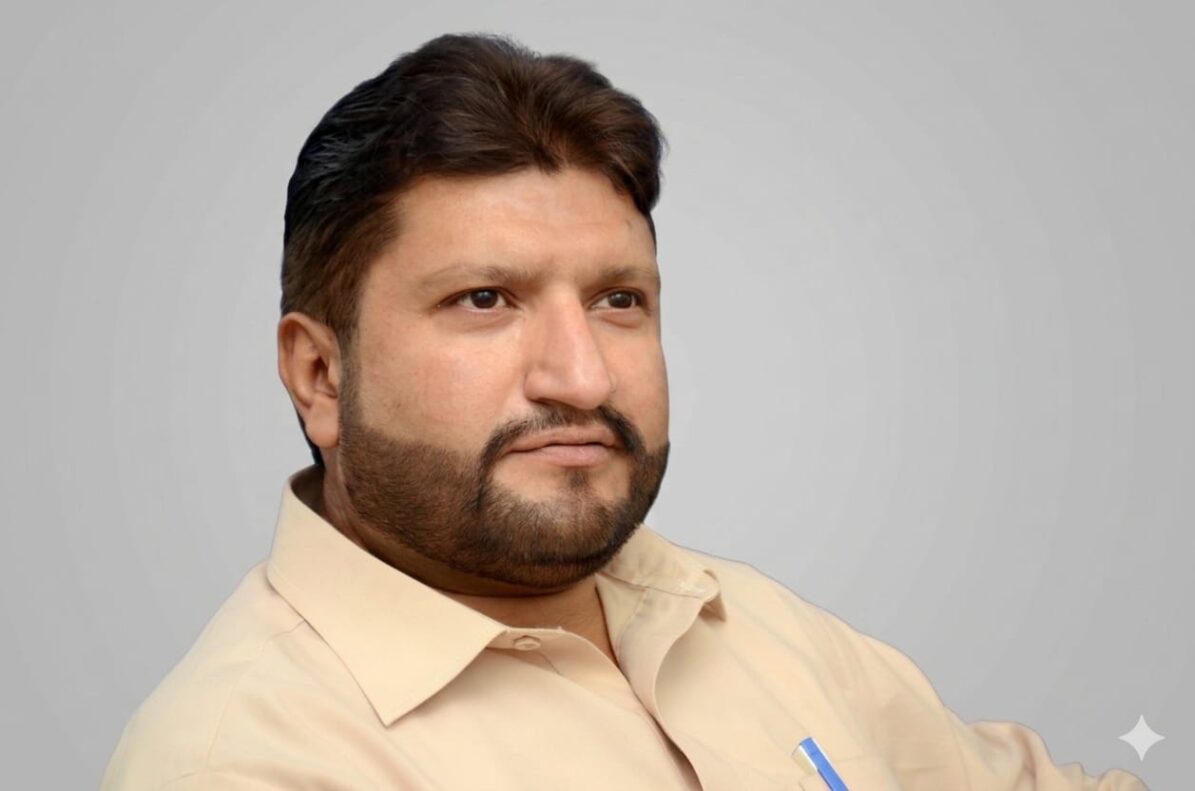
Amjad Hadi Yousafzai
A question frequently raised these days is: why do people not take to the streets against inflation, injustice, corruption, lawlessness, insecurity, and a host of other pressing issues? Has public awareness diminished? Has the tradition of raising one’s voice against oppression faded away? Or has society simply become indifferent?
To answer this question, we must first understand the harsh realities of people’s daily lives.
The truth is that in a society where individuals are constantly burdened by concerns about earning a livelihood, paying electricity bills, securing clean water and gas, providing education for their children, affording healthcare, and ensuring the safety of their families, there is little room left for protest, research, intellectual growth, or creativity. Under such circumstances, a person’s entire energy is consumed by the struggle to survive.
Psychologists generally agree that when a person’s basic needs remain unmet, it becomes difficult for them to focus on higher goals, collective concerns, or social change. This is why societies trapped in poverty and insecurity often lose their capacity for collective resistance.
The tragedy of our society is that the majority of people spend their days grappling with economic hardships. Laborers, farmers, government employees, small business owners, and the middle class are all under immense psychological pressure due to ever-rising inflation. When a person is preoccupied with ensuring two meals a day for their children, expecting them to actively participate in organized protest movements is detached from reality.
This is why many people today are forced to live like an ox tied to an oil press—working endlessly in circles without moving forward. They continue to toil, yet their destination remains unchanged. Their dreams become increasingly limited, and their hopes gradually fade away.
Another dangerous consequence of this situation is intellectual stagnation. When a society remains trapped in constant crises, it fails to create an environment conducive to research, science, literature, the arts, and innovation. Universities may continue to award degrees, but they often fail to cultivate new ideas. Young people end up exhausting their talents in the pursuit of employment rather than channeling them toward national development. As a result, a nation’s creative potential is wasted.
History bears witness to the fact that developed nations advanced only when their citizens moved beyond the struggle for survival and became capable of dreaming about progress, innovation, and prosperity. In societies where the rule of law, economic stability, quality education, healthcare services, and social protection exist, citizens can devote their energies to generating new ideas, making new discoveries, and bringing about positive change.
However, responsibility for this situation does not rest solely with the ruling elite. Other segments of society cannot be entirely absolved of their responsibilities either. Collective apathy, social divisions, the prioritization of personal interests over national interests, and the reluctance to take principled stands have all contributed to deepening the crisis.
For this reason, the solution lies not merely in changing governments or staging occasional protests, but in building a system that provides ordinary citizens with access to basic necessities and confidence in the future.
If inflation is brought under control, employment opportunities are expanded, access to education and healthcare is improved, and justice is delivered fairly and promptly, people’s lives can change for the better. Likewise, an impartial system of accountability, greater opportunities for young people in research, innovation, and entrepreneurship, and a stronger role for educational institutions, the media, and civil society in promoting civic awareness can lay the foundation for a society where people are not solely occupied with survival but are also able to think about their own progress and that of their country.
The state also has a responsibility to establish a social protection system that shields vulnerable segments of society from persistent insecurity and deprivation. When people have confidence in both their present and their future, they are more likely not only to stand up for their rights but also to contribute meaningfully to the development and prosperity of their society.
Ultimately, it is important to understand that nations do not progress merely because people take to the streets. They advance through awareness, organization, collective responsibility, and strong institutions. If we want people to raise their voices effectively against oppression, injustice, and corruption, we must first free them from the grip of fear, hunger, unemployment, and insecurity. For a person who is constantly fighting for survival does not think about revolution; they think only about making it through another day. And when an entire nation finds itself in that condition, society’s journey toward progress comes to a halt and stagnation sets in.
The need of the hour is not to criticize people for failing to protest, but to seriously examine the circumstances that have compelled them to live in silence and helplessness. The foundation of a strong, prosperous, and enlightened Pakistan will be laid only when every citizen is freed from the anxiety of survival and is able to dream of progress and a better future.
