
By Junaid Qaiser
At a time when global politics feels dominated by confrontation, Pakistan is trying something much more challenging—keeping the dialogue open between two opponents who aren’t even speaking to one another. With rising tensions between the United States and Iran, Islamabad is stepping into a role that’s both sensitive and strategically vital: serving as a bridge. This role isn’t about showing strength; it’s rooted in credibility, access, and the ability to connect with both parties when others can’t.
Pakistan’s ambassador to Washington, Rizwan Saeed Shaikh, has clearly articulated this viewpoint. He recently emphasized that Pakistan is “committed to providing every possible facilitation for fruitful dialogue,” while also highlighting that the final decisions rest with the involved parties. This perspective embodies both ambition and restraint—understanding that mediation is not about controlling the results, but about creating the right conditions for them to happen. By referring to the crisis as “highly complex,” influenced by political, economic, and regional elements, the ambassador has also shown a realistic understanding of the challenges Pakistan is currently facing.
This role is not without precedent. Pakistan has, at key moments in history, served as a quiet intermediary between rival powers, most notably during the Cold War when it helped bridge communication between the United States and China. Today, Islamabad appears to be drawing on that same diplomatic instinct—prioritizing engagement over alignment, and dialogue over distance. Its offer to mediate between Washington and Tehran, made in what officials describe as good faith and in coordination with regional partners, reflects a broader strategic calculation: that stability in the region is inseparable from Pakistan’s own national interest.
What really bolsters Pakistan’s standing is the cautious trust it seems to earn from both sides. Even if that trust is somewhat limited, it carries weight in a conflict marked by deep-seated suspicion. Support from certain members of the US political scene, including lawmakers who have openly recognized Pakistan’s role in promoting peace efforts, adds another layer of credibility. This indicates that Islamabad’s initiatives are not just for show; they’re being considered in a broader diplomatic strategy.
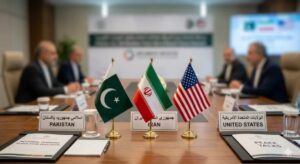
However, the road ahead is anything but smooth. Washington’s messaging keeps swinging between pressure and openness—issuing strong warnings aimed at Iran’s economic framework while also hinting at “serious discussions” and claims of progress. The US administration’s shifting “core objectives” only adds to the uncertainty, presenting both risks and opportunities. On one hand, it highlights the unpredictability of the situation; on the other, it opens the door for a negotiated exit, if the political will is there.
In this context, Pakistan’s focus on patience is especially important. As Ambassador Shaikh pointed out, diplomacy is a slow process—it takes time, determination, and a readiness to engage even when the results are uncertain. This isn’t a journey that leads to quick wins. Instead, it unfolds step by step: a message sent, a position made clearer, a line of communication maintained even when it could easily be severed. There’s also a larger regional aspect that we can’t overlook. Any tensions between the United States and Iran have repercussions for energy routes, economic stability, and the security framework of a region that’s already quite delicate. Pakistan’s approach to its mediation efforts, framed as being in the “wider regional interest,” shows a recognition that achieving peace here is a collective need, not just a matter between two countries.
At the end of the day, Pakistan’s initiative isn’t just about flexing its influence; it’s really about staying relevant during a time of crisis. Its role as a bridge isn’t marked by flashy breakthroughs, but rather by the subtle, often unnoticed efforts to keep communication flowing.
In situations where silence can quickly escalate tensions, this role becomes absolutely crucial. In a world where positions are hardening and options are dwindling, the ability to connect opposing sides is a rare and precious skill. For now, Pakistan seems ready to take on that challenge, rooted in the belief that even the most stubborn conflicts can still allow for dialogue.
