
The Date Where Time Stands Still
May 18th is a date when time stands still in mournful silence in every Crimean Tatar home. On the morning of May 18, 1944, while Crimean Tatar men were fighting Nazism on the front lines, 32,000 Soviet NKVD troops stormed their homes. Given just 15 to 20 minutes to pack, families were beaten with rifle butts and denied even water.
In merely three days, the Soviet totalitarian regime forcibly deported 193,865 people from the Crimean peninsula. Nearly half of them—92,208—were children. Packed 120 to 150 at a time into stifling freight cars at gunpoint, many did not survive the grueling 4,750-kilometer journey to Uzbekistan; guards simply cast their bodies onto the tracks. According to the Crimean Tatar National Movement, 46.2% of the deported population—nearly every second person—perished during the first years of exile.
Today, May 18 is observed in Ukraine as the Day of Remembrance of the Victims of the Crimean Tatar Genocide.
It is not just a day of mourning; it is a solemn recognition of one of humanity’s greatest crimes.
The Roots of Imperial Strategy
This genocide was no accident; it was the brutal culmination of an imperial strategy dating back to 1783. The Crimean Tatar people are an indigenous Turkic population of Crimea, professing Sunni Islam, whose centuries-old presence on the peninsula predates the arrival of the first Russian settlers by hundreds of years.
The Russian Empire and its successors—the USSR and the Russian Federation—have systematically sought to erase this indigenous population from history to sustain the myth of Crimea’s “originally Russian” identity. The living memory of the Crimean Tatars, their ancient culture, and their very existence stood as the ultimate barrier to colonization. That is why the decision was made to physically uproot and destroy them.
Dismantling Culture and Spirit
The goal of the 1944 genocide was to destroy not merely a people, but their spirit. Following the physical expulsion, the Soviet government systematically dismantled the foundations of Crimean Tatar life, destroying:
- 861 schools and all national universities;
- More than 1,100 libraries and 2,400 cemeteries;
- 1,600 coffee houses—the historic heart of their social and cultural life.
The ancient Zincirli Madrasa was converted into a psychiatric hospital, while 11 district centers and 327 villages were stripped of their historic names. Survivors were confined to “special settlements”—de facto reservations where crossing the perimeter carried a penalty of 20 years of hard labor. Even the Khrushchev “Thaw” offered no true reprieve. A 1956 decree lifted strict supervision but categorically forbade the Crimean Tatars from returning home or reclaiming their stolen property. The regime acknowledged the “injustice” on paper, but left a nation in exile.
The Unbroken Will and the Return
Yet, the Crimean Tatar people remained unbroken. In 1961, a fierce new wave of resistance emerged. Despite mass arrests for distributing leaflets and rigged trials masked as “hooliganism,” the people’s resolve hardened throughout the 1960s. Musa Mamut, who chose self-immolation in 1978 as his final, desperate protest, became the ultimate symbol of this unyielding struggle.
By 1989, the mass return finally began. Families lived in dugouts and tents, but they were back on their native land. Defying the authorities, they built 300 new settlements from the ground up. In June 1991, the Second Kurultai in Simferopol restored the Mejlis. Life had momentarily triumphed over death.
History Repeating: Modern Repression
Eight decades later, the nightmare has returned. Following the illegal annexation of the peninsula in 2014, Russian security forces, employing the exact methods of their NKVD predecessors, have transformed Crimea into a landscape of total surveillance and repression. Raids on Crimean Tatar homes have again become a grim routine, routinely commencing at 4 or 5 a.m.—the exact hours rifle butts pounded on doors in 1944. The true purpose of these raids is not to uncover weapons, but to publicly humiliate and terrorize the Crimean Tatar community, sending a chilling message: “You are being watched.”
In 2016, Russian occupation authorities declared the Mejlis of Crimean Tatar People an “extremist organization,” an unprecedented move that outlawed the primary assembly of an indigenous people and effectively criminalized Crimean Tatar identity itself. Fabricated terrorism charges have become the primary tool for neutralizing activists. Centuries of collective prison time imposed on an entire people is the price Crimean Tatars now pay for remaining loyal to their homeland.
Learning from past atrocities, Russia now pursues displacement through “soft deportation.” By various estimates, between 500,000 and one million Russian citizens have been illegally resettled in occupied Crimea, lured by preferential loans and subsidies. Meanwhile, the indigenous population is forced out through relentless persecution, economic blockades, and forced conscription into the Russian army. They are not loaded into freight cars today, but life in their own homeland is made utterly unbearable.
Shared Tragedy and Solidarity
Today, approximately 250,000 to 300,000 Crimean Tatars live in Ukraine, being an integral part of the Ukrainian nation. The Ukrainian people, having endured the Soviet-engineered genocide of the Holodomor in 1932–1933, deeply feel and share the pain of the Crimean Tatars. This shared tragedy forms an unbreakable bond.
In modern Ukraine, the Crimean Tatars are widely represented in public, cultural, and political life. The Muslim community has a strong, respected, and deeply valued voice in the defense of the state and the pursuit of lasting peace, strengthening Ukraine’s unity and demonstrating the inclusive nature of its society.
Looking to the Future
On November 12, 2015, Ukraine officially recognized the 1944 deportation as genocide — a move later joined by the Baltic states, Canada, Poland, and the Czech Republic. Ukraine actively campaigns to ensure this genocide receives full international recognition, knowing that the solidarity of survivors remains the most powerful barrier against the tyrants of tomorrow.
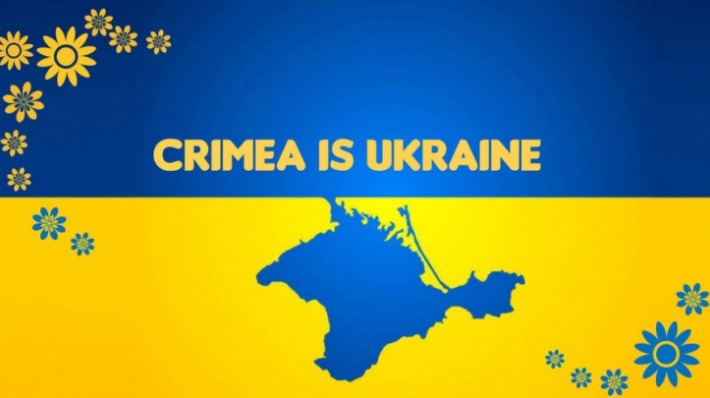
However, legal acknowledgment is only the first step. Until the historic and ongoing crimes of the Russian state face proper legal accountability, the survival of the Crimean Tatar people remains under existential threat. Looking forward, there is only one path to true justice: the complete de-occupation of Crimea and the full restoration of Ukrainian sovereignty and territorial integrity. Only then will the rights of its indigenous people be guaranteed, and only then will the Tamga once again fly as a symbol of freedom over a liberated Ukrainian Crimea.
BY: Writer Mr. Markian Chuchuk, Ambassador of Ukraine to Pakistan
