
PROVINCE REPORT
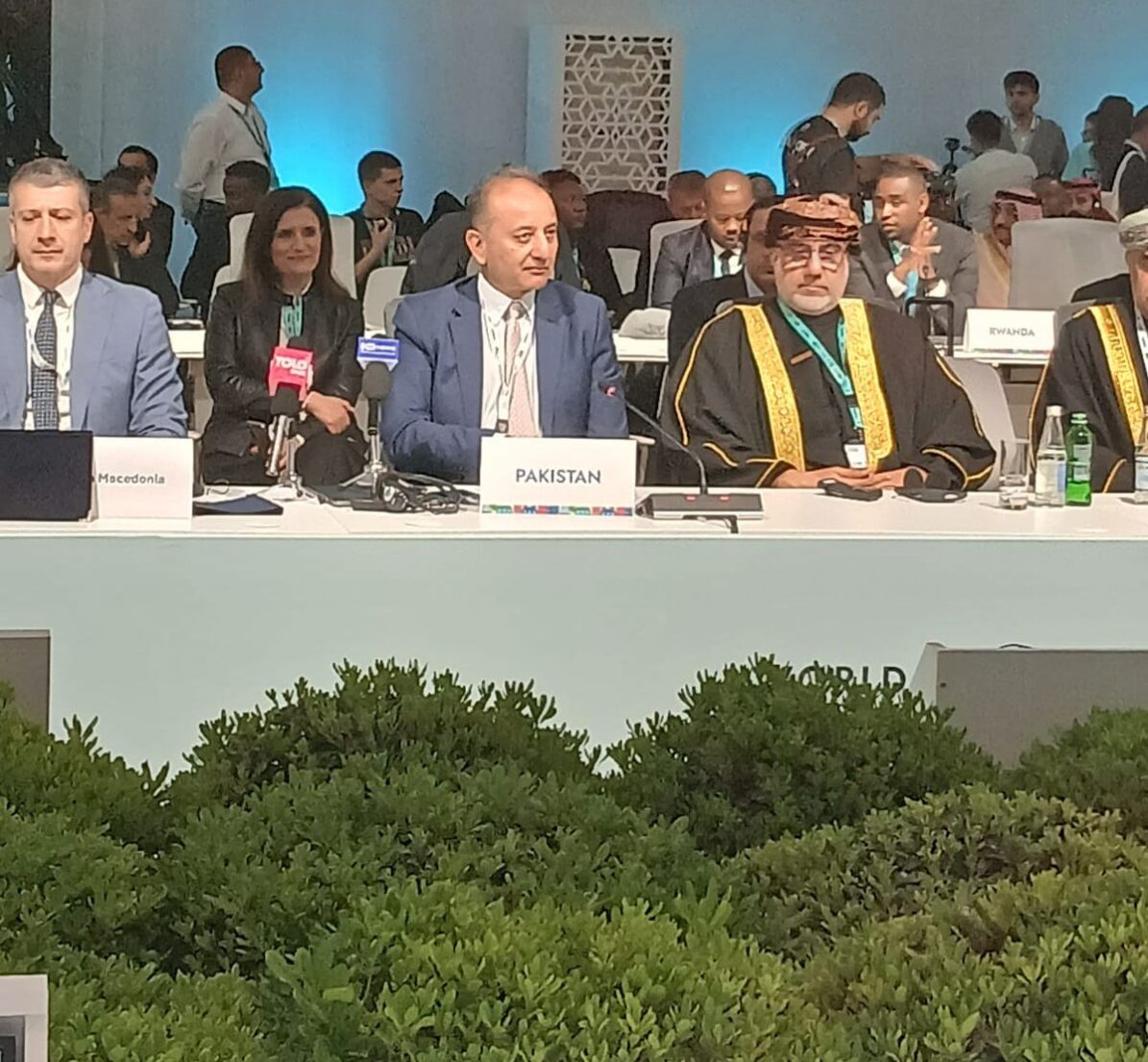
BAKU:Federal Minister for Climate Change and Environmental Coordination, Dr. Musadik Malik, delivered Pakistan’s National Ministerial Statement at the Thirteenth Session of the World Urban Forum (WUF13) being held in Baku, Azerbaijan under the theme “Housing the World: Safe and Resilient Cities and Communities.”
Addressing the forum, Dr. Musadik Malik highlighted the deep connection between climate change, urban inequality, poverty, and housing injustice. He stressed that vulnerable communities continue to bear the heaviest burden of climate disasters despite contributing the least to the crisis.
Dr. Musadik Malik stated that it can take two generations for a family to escape poverty, yet climate disasters such as floods can wipe out decades of progress within days due to unsafe and unsustainable housing infrastructure, forcing families back into poverty once again. He remarked that the issue is not merely a housing crisis but fundamentally a crisis of justice.
Dr. Musadik Malik emphasized the need to place justice and inclusion at the centre of urban planning and housing policies. He said, “We must put our voices together for the issue of justice so that the poor do not drown out, and their voices do not drown out. The people who die in floods, in heatwaves, and without access to health and education are not the ones designing cities. We are the ones designing them. They are victims of our policies and strategies.”
The Minister noted that nearly 50 percent of Pakistan’s population of approximately 240 million people now lives in urban areas, while nearly 55 percent of the urban population lives in informal settlements and slums. He remarked, “Slums are not merely a policy category. Slums are a life category. Real people live in these slums.”
Referring to the growing impacts of climate change on cities, Dr. Musadik Malik highlighted the severe heatwave experienced in Karachi in 2024 where temperatures reached 47 degrees Celsius. He stated that according to one estimate, nearly 560 people died within seven days due to the heatwave. He observed that the victims were predominantly poor and marginalized communities living in informal settlements without access to proper infrastructure, cooling systems, healthcare, or protection from extreme weather.
The Federal Minister further stated, “It is always the poor who bear the brunt of the crisis. The affluent living in air-conditioned homes and apartments are protected, while vulnerable communities continue to suffer the most.”
Highlighting the devastating impacts of floods in Pakistan, Dr. Musadik Malik said that around 6,000 people have lost their lives in the country’s last four major floods, while nearly 20,000 people suffered injuries or disabilities and approximately 40 million people were displaced. He remarked that the scale of destruction caused by climate disasters has exceeded the human toll of many conflicts and wars.
Dr. Musadik Malik stressed that affordable housing must be treated as a basic right rather than merely a welfare intervention. He stated, “We treat affordable housing as a welfare instrument and not as a right, and that must change.”
The Minister emphasized that sustainable urban development should not remain limited to aesthetics, slogans, or investment opportunities. He said, “Going green or sustainable should not become an aesthetic or jargon. We should not build housing for investors; we should build housing for people. We must hear the voices of the poor because their voices are not present here today.”
Concluding his address, Dr. Musadik Malik called for the “Baku Call for Action” to focus on justice-centred urban solutions that prioritize vulnerable populations and discourage speculative housing practices. He stressed the need for global cooperation to ensure that cities become safe, inclusive, resilient, and equitable for all communities.
