
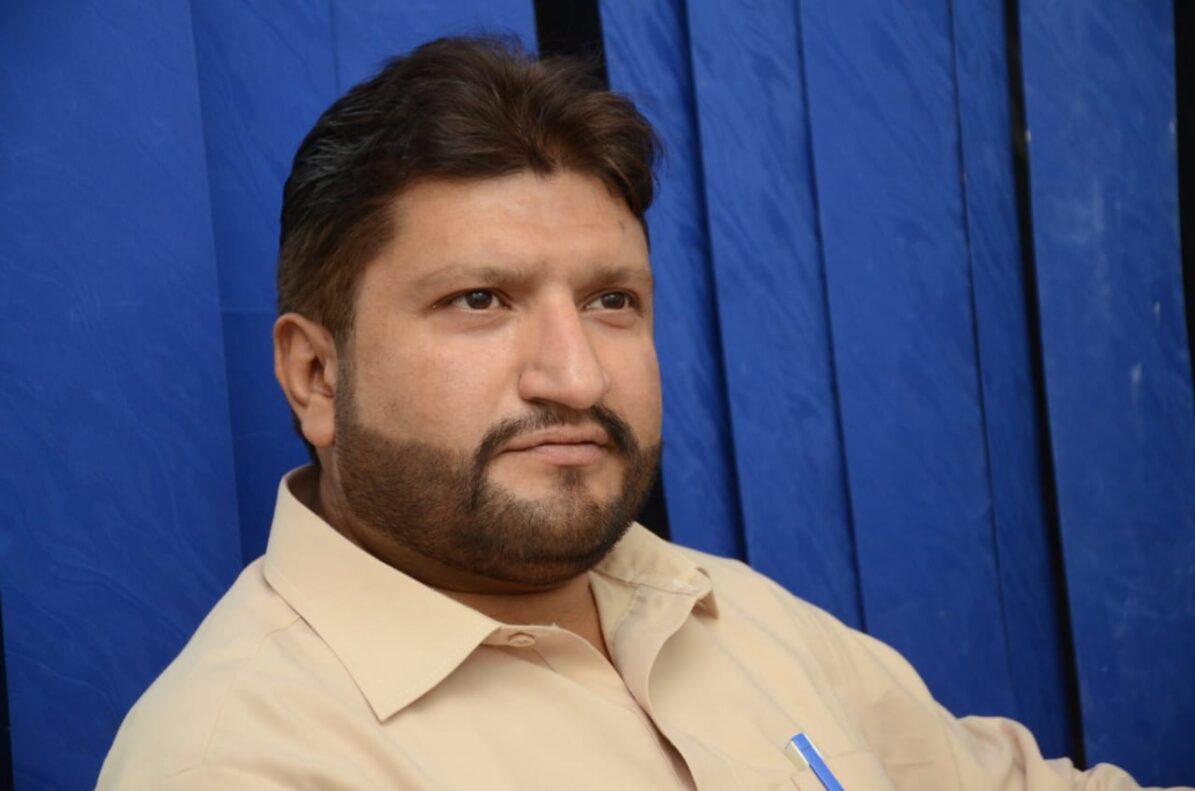
Amjad Hadi Yousafzai
This is not just a murder; it is the killing of an idea, an attempt to silence a voice, and a reflection of a society where speaking the truth is becoming increasingly dangerous. The blood of Sheikh al-Hadith Maulana Muhammad Idris Shaheed forces us to ask: since when has patriotism become a crime? Why does a religious scholar who speaks for love of the country and against extremism become a target of hatred? This tragedy is not just about one individual; it is a test of our collective conscience—and sadly, we are failing it repeatedly.
This incident forces us to reflect on where we stand. Has disagreement become so intolerable that it is answered with bullets? Or have we normalized hatred to such an extent that we are no longer shocked by its consequences? When tolerance disappears from a society, extremism naturally finds space to grow.
It is the responsibility of the state to protect the lives and property of its citizens, yet here a clear weakness is visible. The repetition of such incidents suggests either a lack of effective authority or misplaced priorities. The rule of law is not established through statements but through action—and when killers walk free, the question naturally arises: where is justice?
In this context, we must also remember that this tragedy is not new. The father-in-law of Sheikh al-Hadith Maulana Muhammad Idris Shaheed, Sheikh al-Hadith Maulana Hassan Jan Shaheed (may Allah have mercy on him), who opposed taking up arms against the state, was also a victim of similar blind violence. This continuity shows that the problem is not individuals but a mindset—one that refuses to tolerate disagreement.
Social media has further intensified this problem. Today, campaigns are launched against people without research or evidence, driven by emotions and political bias. False propaganda, character assassination, and hateful language against scholars have become common. These are not just words; they often lead to real violence. When a person is repeatedly labeled as a traitor or criminal, it creates space for extremists to act.
We must also understand that blind following—whether political or ideological—leads societies toward destruction. When people accept social media narratives without thinking critically, they become part of the same cycle of hatred. That is the moment when a society begins to lose its moral foundation.
Now is the time to ask ourselves: have we turned disagreement into enmity? Have we replaced reason with accusation? And above all, are we silently becoming part of this injustice?
The state must take immediate and firm action, bring the perpetrators to justice, and hold accountable all those who spread hatred and incite violence. At the same time, society must also play its role—because without changing thinking, changing faces changes nothing.
In the end, this is not just blood spilled on the ground; it is a stain on our conscience. If we do not learn and change now, tomorrow it will be another name—and we will again ask the same question: when will this ever end?
