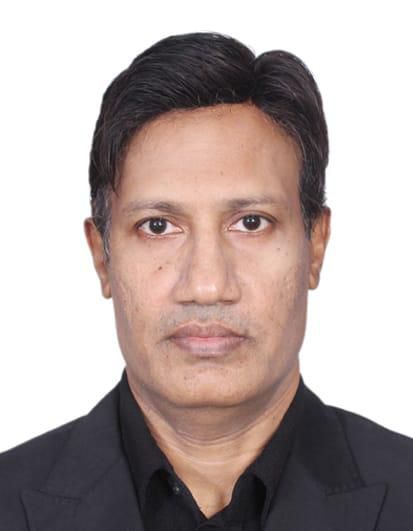
by Junaid Qaiser
As the Middle East finds itself perilously close to yet another extended crisis, the value of diplomacy has risen above that of military force. In this fraught context, Pakistan’s attempts to mediate between the United States and Iran are receiving more and more international attention, with Qatar’s robust public support providing a significant boost to Islamabad’s peace initiative.
Sheikh Mohammed bin Abdulrahman Al Thani, Qatar’s PM, has openly called on all parties in the US-Iran conflict to engage constructively with Pakistan’s mediation efforts, showcasing Doha’s increasing confidence in Islamabad’s diplomatic role. During a recent phone call with Pakistan’s PM Shehbaz Sharif, the Qatari leader highlighted the necessity of fostering conditions that could steer negotiations toward a comprehensive agreement aimed at achieving lasting peace in the region. According to Qatar’s Ministry of Foreign Affairs, Sheikh Mohammed reiterated Doha’s strong support for Pakistan’s mediation initiative, praising Islamabad’s contributions to securing the ceasefire between Washington and Tehran on April 8.
The conversation also focused on strengthening bilateral cooperation between Qatar and Pakistan at a time of deep regional instability. Since the war started in late February, the Middle East has faced escalating tensions, including Iranian attacks against the Gulf countries and the closure of the Strait of Hormuz. Although Pakistan successfully helped broker a ceasefire earlier this year, negotiations held later in Islamabad failed to produce a permanent settlement. Still, the truce remains in place after being extended by President Donald Trump, keeping hopes alive that diplomacy may eventually prevent another dangerous escalation in the region.
Due to war, the Middle East has remained trapped in a cycle of escalation. Airstrikes, missile attacks, naval confrontations, and the blockade of the Strait of Hormuz have created instability far beyond the battlefield. Energy markets have been shaken, economies disrupted, and millions of ordinary people forced to live under the constant fear of wider war.
In such circumstances, meaningful diplomacy requires trust from all sides — something few countries currently possess. Pakistan, however, occupies a unique position. It maintains strategic relations with Washington while also sharing historical, political, and regional ties with Tehran. More importantly, Islamabad has managed to avoid becoming directly entangled in the conflict itself. That neutrality has now become Pakistan’s greatest diplomatic strength.
The April 8 ceasefire, though fragile, demonstrated that dialogue is still possible even after months of confrontation. Pakistan’s mediation played a central role in making that breakthrough happen. The Islamabad talks that followed may not have delivered a permanent settlement, but they prevented a complete collapse of communication between the two adversaries.
Doha has emerged as one of the strongest regional supporters of Pakistan’s peace efforts. By publicly endorsing Islamabad’s mediation and urging all parties to engage constructively, Qatar has added both political legitimacy and diplomatic weight to the process. In many ways, the Qatar-Pakistan coordination reflects a broader regional realization that military escalation alone cannot solve this crisis.
Qatar also understands the stakes involved. The continuation of conflict around the Strait of Hormuz threatens not only regional security but also global economic stability. The decision to facilitate the safe transit of a Qatari LNG tanker toward Pakistan, reportedly approved by Iran, carried symbolic importance beyond energy trade. It signaled that confidence-building measures are still achievable despite the tensions.
Pakistan’s military leadership has also reinforced the country’s diplomatic posture. Field Marshal Asim Munir has repeatedly emphasized that Pakistan seeks lasting peace rather than geopolitical advantage. His statements describing Pakistan as an impartial mediator reflect a broader shift in Islamabad’s regional role. Rather than merely reacting to crises, Pakistan is increasingly attempting to shape outcomes through diplomacy and strategic engagement.
For years, Pakistan’s international image was often defined primarily through security concerns and regional instability. Today, however, Islamabad is demonstrating that it can also function as a responsible diplomatic actor capable of managing difficult geopolitical conversations. The ongoing mediation effort has projected Pakistan as a country willing to invest political capital in regional peace at a time when mistrust dominates international relations.
Diplomacy is rarely successful in a straight line. The real achievement is that talks have not collapsed entirely. Communication channels remain active, indirect negotiations continue, and both sides still appear willing to use Pakistan as a bridge for dialogue. That alone is significant considering how rapidly this conflict escalated only weeks ago.
Qatar’s support has strengthened this diplomatic architecture at a critical moment. Together, Doha and Islamabad are attempting to preserve the possibility of negotiation in a region increasingly dominated by confrontation. Their cooperation reflects a growing understanding that regional stability cannot be secured through force alone.
The coming days will determine whether these efforts can move beyond crisis management toward a more durable political settlement. The risks of renewed escalation remain high, especially around the Strait of Hormuz, where even a small incident could reignite wider conflict. But if diplomacy eventually succeeds, Pakistan’s role — strengthened by Qatar’s backing — will likely be remembered as one of the few stabilizing forces during one of the region’s most dangerous periods.
In a Middle East exhausted by war, that contribution carries immense significance.