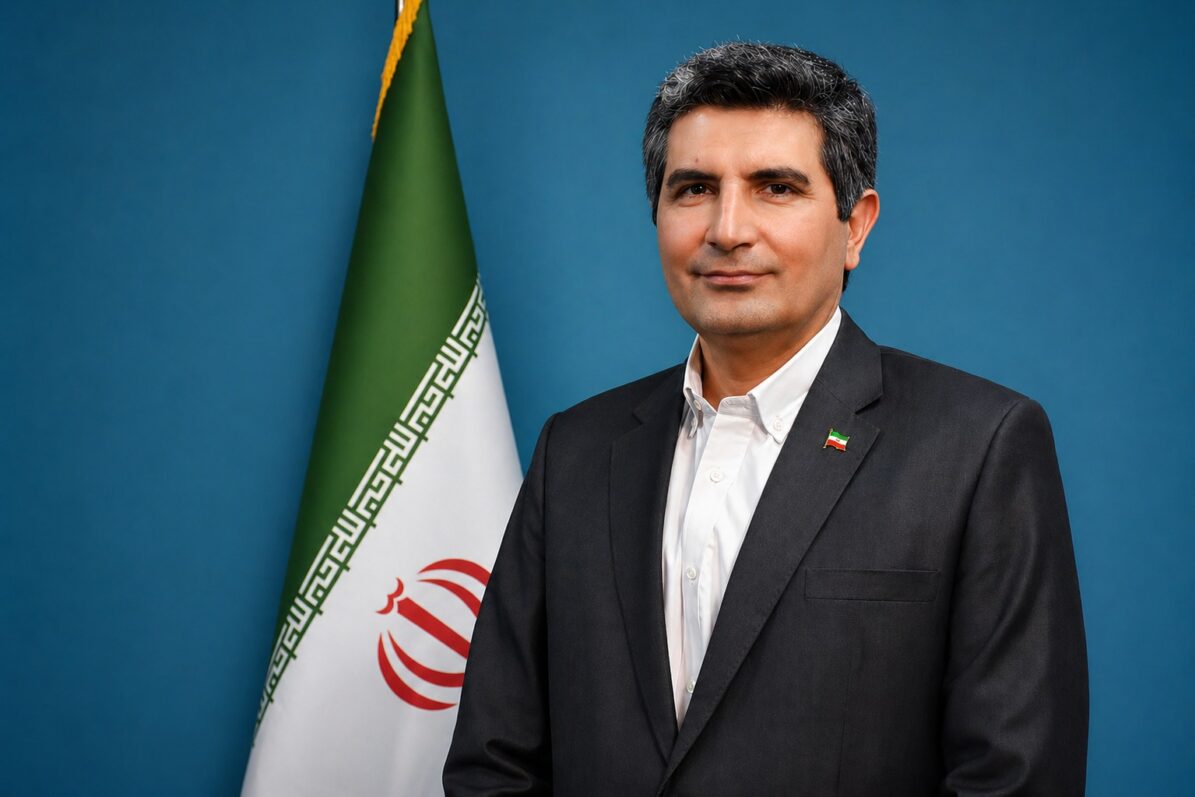
Dr. Mehdi Taheri
(Cultural Attaché, Embassy of the Islamic Republic of Iran, Islamabad)
Among the scientific and literary luminaries of Iran, few personalities can be found who embody such a remarkable combination of contrasts as Hakim Omar Khayyam Neyashabouri; a scholar who excelled in mathematics and astronomy during his own era, yet the world came to know him through quatrains that emerged from his philosophical inquiries and existential reflections. Today, as we commemorate this wise sage, we seek to revisit both dimensions of his personality — the scientist as well as the poet — and to speak about his lasting influence on the culture and literature of the Indian subcontinent, including the friendly and brotherly land of Pakistan.
A Scholar of Global Stature
Ghiyath al-Din Abu’l-Fath Omar ibn Ibrahim Khayyam Neyashabouri was born in 439 AH (1048 CE) in Neyashabour and passed away in 526 AH (1131 CE) in the same city. During his lifetime, he was renowned above all as an eminent scholar, and the title “Hujjat al-Haqq” (Proof of the Truth) reflected his lofty intellectual standing.
In mathematics, Khayyam was among the pioneers of his age. His famous treatise on algebra, Risalah fi’l-Jabr wa’l-Muqabalah (Treatise on Algebra), is considered one of the most important scientific works of the medieval period. He was the first scholar to conduct a systematic study of first-, second-, and third-degree equations, and he presented a general solution for cubic equations through the intersection of conic sections — a method later attributed centuries afterward to Descartes.
Perhaps Khayyam’s most enduring scientific achievement, however, was his contribution to the development of the Jalali calendar. At the invitation of the Seljuk ruler Malik Shah, he carried out astronomical calculations at the observatory in Isfahan and devised a calendar based on a 33-year cycle whose accuracy surpasses even that of the Gregorian calendar. Khayyam’s calculation of the solar year, with a precision of 365.24219858156 days, remains one of the marvels of medieval astronomy. This distinguished calendar still forms the basis of Iran’s official calendar today.
The Poet the World Came to Know
Despite all this, Khayyam’s global fame stems not from his treatise on algebra, but from the quatrains attributed to him. These short four-line poems, known as Rubaiyat, are a blend of philosophy, doubt, joy of living, and reflection on the mysteries of existence and the transience of life. In these verses, Khayyam speaks in a language that is simple yet profound — about the passage of time and seizing the moment; he questions the secret of creation and calls humanity to reflect upon destiny and fate.
The secret of Khayyam’s immortality in world literature is undoubtedly linked to the translation by the English poet and translator Edward FitzGerald. In 1859, FitzGerald produced a free yet brilliant English rendering of Khayyam’s Rubaiyat, thereby transforming him into a global literary figure. It is noteworthy that the manuscript used by FitzGerald for this translation had reached him through Calcutta in India — a fact that itself reflects Khayyam’s longstanding connection with the Indian subcontinent.
Khayyam in the Subcontinent: A Cultural and Historical Bond
The Indian subcontinent has long been one of the principal spheres of influence of Persian culture, literature, and language. In this context, Khayyam’s Rubaiyat occupies a special place and has been translated into many languages of the subcontinent, including Urdu, Hindi, Bengali, Sanskrit, and Punjabi. Khayyam’s quatrains are recited not only in literary circles but also among the general public of the region, and many of his verses have entered everyday speech as proverbs.
According to scholarly research, the finest period of translating Khayyam’s Rubaiyat in the subcontinent was between 1922 and 1933. Interestingly, the Urdu translation of Khayyam’s quatrains was carried out by a Hindu poet named Raja Makhan Lal — a fact that itself demonstrates the universal and trans-religious appeal of Khayyam’s thought. Furthermore, valuable manuscript copies of Khayyam’s Rubaiyat are preserved in libraries and museums across India and Pakistan. Among them is a manuscript discovered in Lucknow, whose transcription dates back to the year 1423 CE.
Khayyam and Iqbal: Shared Questions, Different Answers
From Pakistan’s perspective, it is impossible to speak of Khayyam without also remembering Allama Muhammad Iqbal of Lahore. Iqbal — the great poet and philosopher of the subcontinent and the spiritual father of Pakistan — was deeply connected to the tradition of Persian poetry and wisdom, and he knew Khayyam well. In his works, Iqbal engages in dialogue with Khayyam, at times implicitly and at times explicitly. Both reflected upon destiny, human will, and the mystery of existence, yet they offered different answers: where Khayyam, with a more deterministic outlook, speaks of the “Finger of Fate,” Iqbal, with optimism and faith in human agency, calls man the “Fellow traveler of God” and urges him to transform his own destiny. This intellectual dialogue between two great pillars of Persian poetry and philosophy is itself among the most beautiful manifestations of the cultural bond between Iran and the Indian subcontinent.
Khayyam’s Enduring Message for the Modern World
Today, nearly a thousand years after Khayyam’s passing, his message remains alive and deeply thought-provoking. He teaches us that knowledge and art are two sides of the same coin; that inquiry and philosophical doubt are not only compatible with faith and spirituality, but can also serve as gateways to a deeper understanding of existence. Khayyam reminds us that life is short and that we must value the present moment — not in the sense of superficial pleasure-seeking, but in the sense of recognizing the worth of each moment and the responsibility we bear toward ourselves and others.
As the cultural representative of the Islamic Republic of Iran in Pakistan, it is a matter of pride to witness that the people of this land, like their forefathers, continue to hold a deep love and reverence for the Persian language and its great luminaries, including Hakim Omar Khayyam. We believe that this shared cultural heritage is the strongest bridge of friendship between the peoples of Iran and Pakistan, and that commemorating figures such as Khayyam Neyashabouri provides an opportunity to strengthen these cultural ties.
May we, inspired by the thoughts of this great sage, always continue on the path of wisdom, tolerance, and friendship.
Note: The writer is the Cultural Attaché at the Embassy of the Islamic Republic of Iran, Islamabad.